 Bug FAQ
Orange Skimmer
Orthetrum testaceum · Order: Odonata · Family: Libellulidae
Also called: Scarlet Skimmer
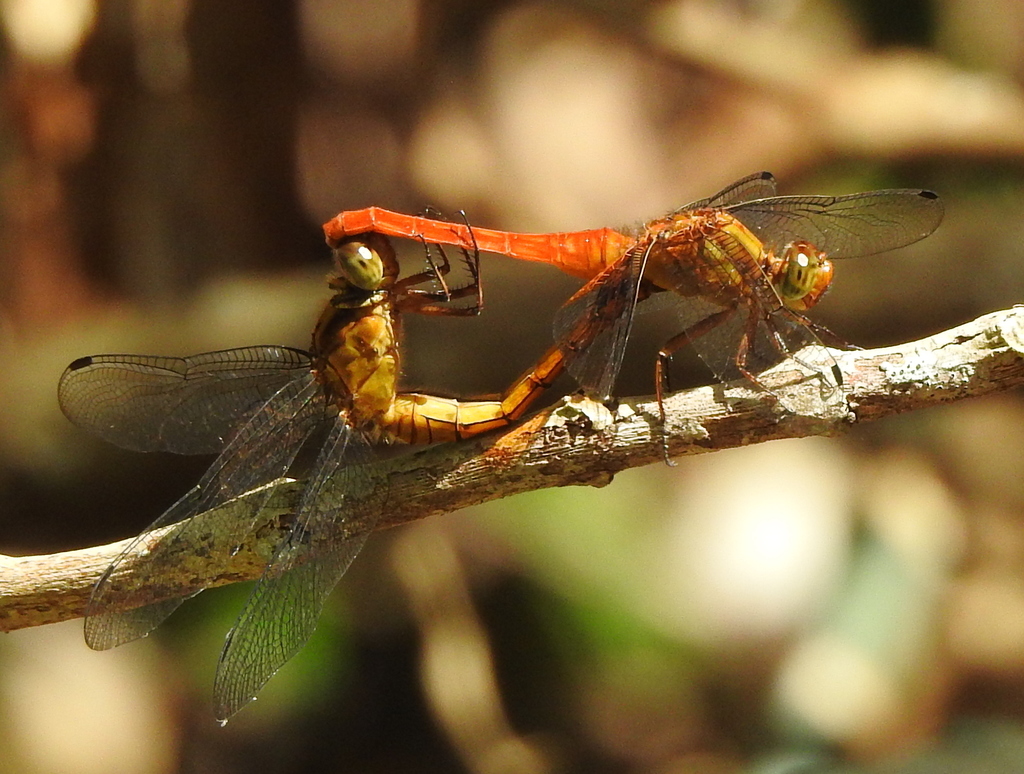
Adult males are about 43 to 48 mm long, with hindwings 34 to 38 mm. They have an orange-brown thorax, a vermilion red abdomen, light brownish eyes, and smoky transparent wings with an amber base patch. They live near standing water such as ponds, drains, marshes, rivers, streams, lakes and gardens, and are common in India, Indonesia, Malaysia, Philippines, Singapore and Thailand.
Source: Wikipedia
How to recognize it
Males show an orange-brown thorax, vermilion red abdomen, light brown eyes, and smoky transparent wings with an amber base patch.
Source: Wikipedia
Size
Body length is about 43 to 48 mm and hindwing length 34 to 38 mm in males.
Source: Wikipedia
Where it lives
They are found around ponds, drains, marshes, rivers, streams, lakes and garden water features.
Source: Wikipedia
What it eats
Males perch near ponds; females visit water mainly for mating and laying eggs.
Source: Wikipedia
Life cycle
Males guard the eggs by flying over them.
Source: Wikipedia
When you see it
Males stay near ponds while females come to water during the mating and egg-laying season.
Source: Wikipedia
Where it comes from
The species is widespread across India, Indonesia, Malaysia, the Philippines, Singapore and Thailand.
Source: Wikipedia
Lookalikes
It resembles Orthetrum chrysis but is more reddish, whereas O. chrysis has a reddish-brown thorax.
Source: Wikipedia
Same family (Libellulidae)

Sources
- Wikipedia: https://en.wikipedia.org/wiki/Orthetrum_testaceum
Look it up elsewhere: GBIF · iNaturalist · BugGuide · Wikipedia
Text written 2026-10-22 from the sources above and checked sentence by sentence against them. Data fetched 2026-10-22.