 Bug FAQ
Orange-necked Blister Beetle
Epicauta wheeleri · Order: Coleoptera · Family: Meloidae
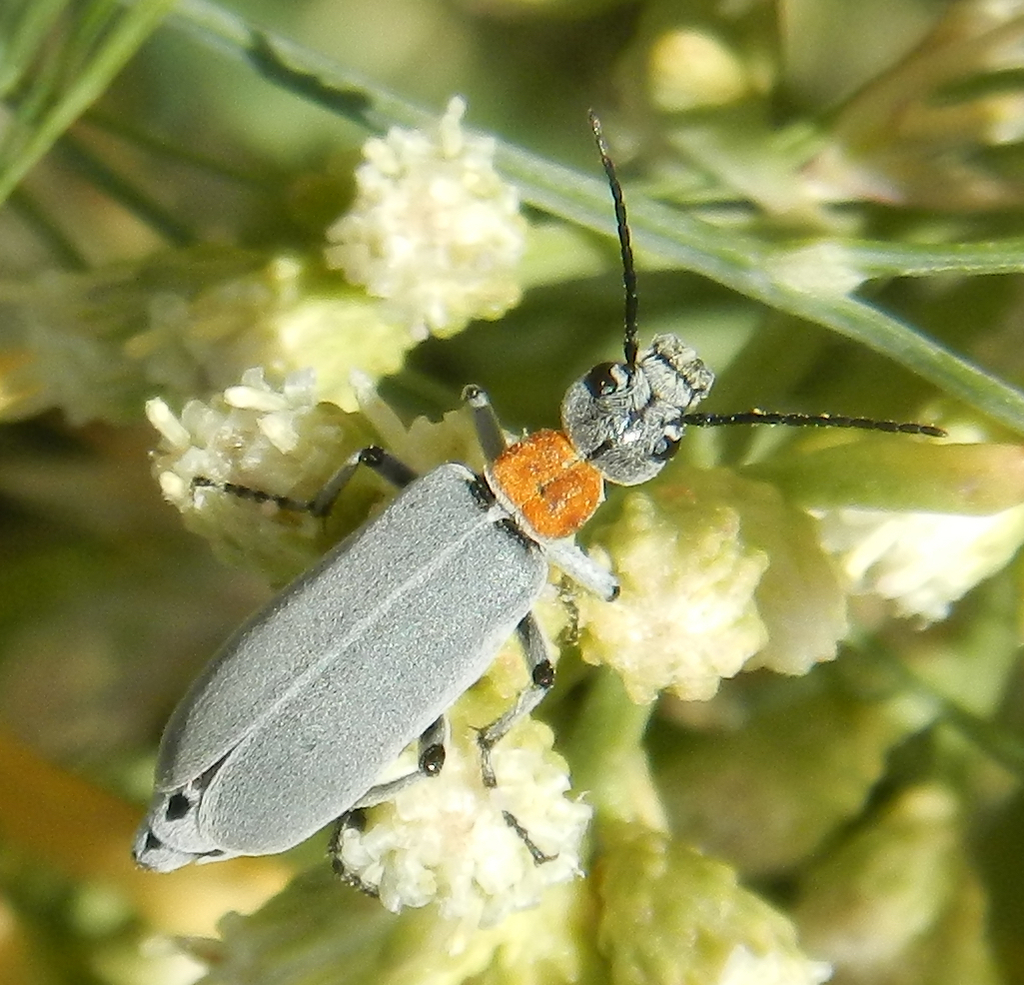
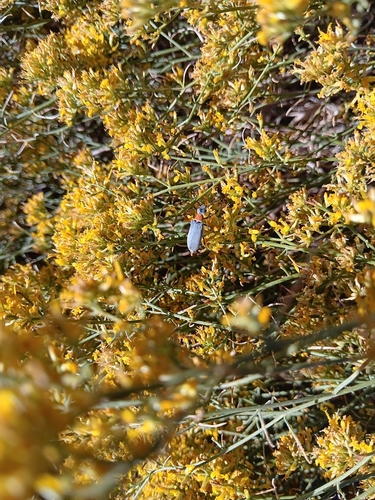
The orange-necked blister beetle is called the “ethereal beef weevil” by people in southern Utah, Nevada and other Southwest areas. The nickname comes from its bright iridescent shine in desert sun and its strongly segmented body that looks weevil-like. It lives in North America, especially near cattle pastures and ranches.
Source: Wikipedia
How to recognize it
Locals call it the “ethereal beef weevil” in parts of southern Utah and Nevada. The name refers to its vivid iridescence in strong sunlight and its pronounced body segments.
Source: Wikipedia
Where it lives
It is commonly found around cattle pastures and farms.
Source: Wikipedia
Where it comes from
The species is native to North America.
Source: Wikipedia
Lookalikes
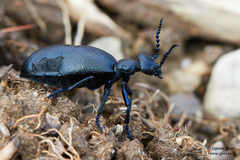
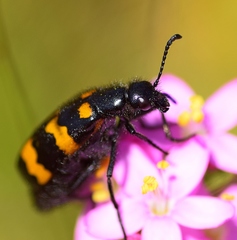
Although its nickname mentions a weevil, it is actually a blister beetle, not a true weevil.
Source: Wikipedia
Where it is found in the US
Recorded in 4 of 51 states and DC. Most records: Arizona, Utah, Nevada, California.
Darker = more records. Counts are museum and citizen-science records, not population size.
Source: GBIF
Months it is reported in the US
Source: GBIF
More photos
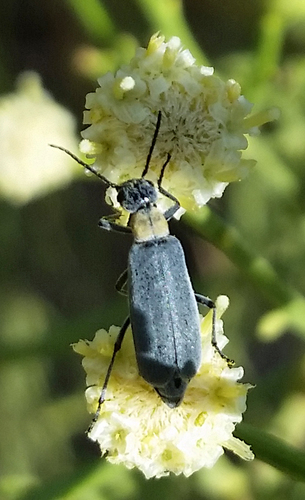
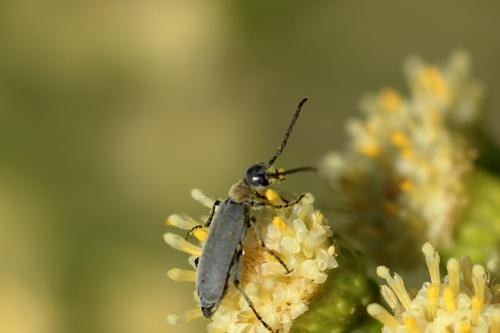
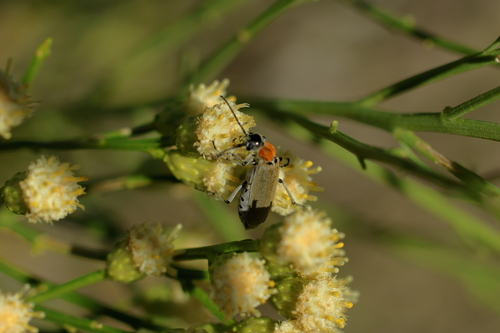
Questions people ask
What does the name “ethereal beef weevil” mean?
It describes the beetle’s bright iridescent color in desert sunlight and its weevil-like segmented body.
Source: Wikipedia
Where am I likely to see this beetle?
You’ll often find it near cattle pastures and ranches in the Southwest United States.
Source: Wikipedia
Same family (Meloidae)




Sources
- Wikipedia: https://en.wikipedia.org/wiki/Epicauta_wheeleri
Look it up elsewhere: GBIF · iNaturalist · BugGuide · ITIS · Wikipedia
Text written 2026-10-25 from the sources above and checked sentence by sentence against them. Data fetched 2026-10-25.