 Bug FAQ
Orange Mapwing
Hypanartia lethe · Order: Lepidoptera · Family: Nymphalidae
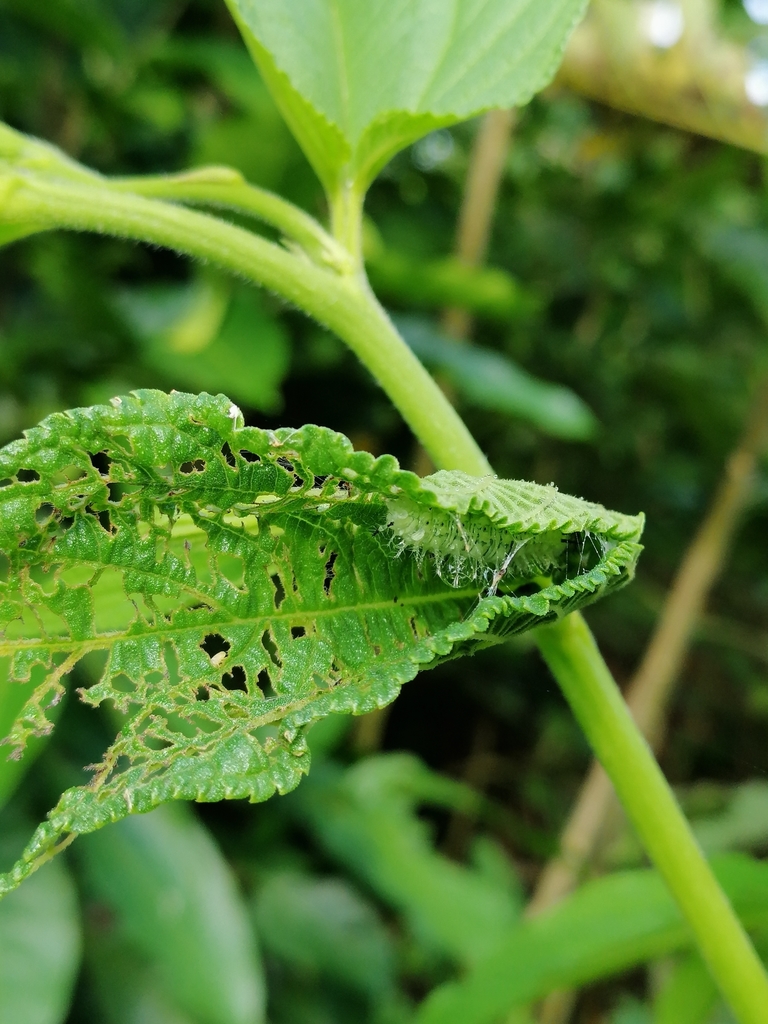
The Orange Mapwing has a wingspan of about 40 to 50 mm (1.6 to 2.0 in). It lives in forested mountain areas from 300 to 1,700 m elevation across a range that includes Texas, Mexico, much of Central and South America, and the Caribbean. Caterpillars feed on plants such as Phenax, Boehmeria, Celtis, Sponia and Trema micrantha, and adults have two hindwing tails of varying length.
Source: Wikipedia
Size
Wingspan is roughly 40 to 50 mm (1.6 to 2.0 in).
Source: Wikipedia
Where it lives
Found in forest habitats of mountain ranges between 300 and 1,700 m above sea level.
Source: Wikipedia
Life cycle
Adults have two hindwing tails that can vary in length.
Source: Wikipedia
Where it is found in the US
Recorded in 2 of 51 states and DC. Most records: Texas, Kansas.
Darker = more records. Counts are museum and citizen-science records, not population size.
Source: GBIF
Questions people ask
How big is an Orange Mapwing?
The butterfly’s wingspan measures about 40 to 50 mm (1.6 to 2.0 in).
Source: Wikipedia
Where can I find Orange Mapwings?
They live in forested mountain areas from 300 to 1,700 m elevation across Texas, Mexico, much of Central and South America, and the Caribbean.
Source: Wikipedia
What do Orange Mapwing caterpillars eat?
The larvae feed on plants such as Phenax, Boehmeria, Celtis, Sponia and Trema micrantha.
Source: Wikipedia
Same family (Nymphalidae)






Sources
- Wikipedia: https://en.wikipedia.org/wiki/Hypanartia_lethe
Look it up elsewhere: GBIF · iNaturalist · BugGuide · ITIS · Wikipedia
Text written 2026-10-23 from the sources above and checked sentence by sentence against them. Data fetched 2026-10-22.