 Bug FAQ
Orange-and-black Pear Spider
Leucauge fastigata · Order: Araneae · Family: Tetragnathidae
Also called: Pear-shaped Spider, Pear-shaped Leucauge, Pear-shaped Opadometa
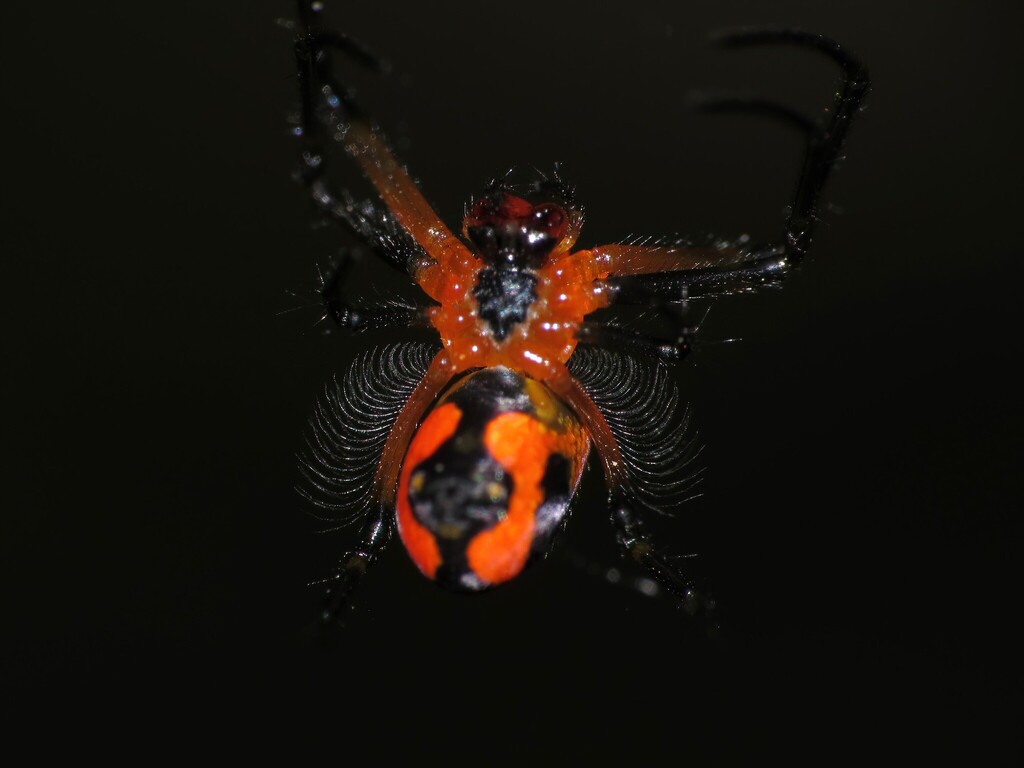
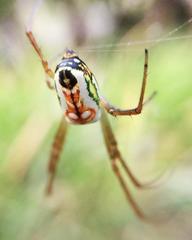
The orange-and-black pear spider has a pear-shaped abdomen with silvery or golden spots and a distinctive fourth leg covered in a thick brush of spines. It builds large horizontal orb webs over a metre wide, suspended by several long silk strands without a signal line or retreat.
Source: Wikipedia
How to recognize it
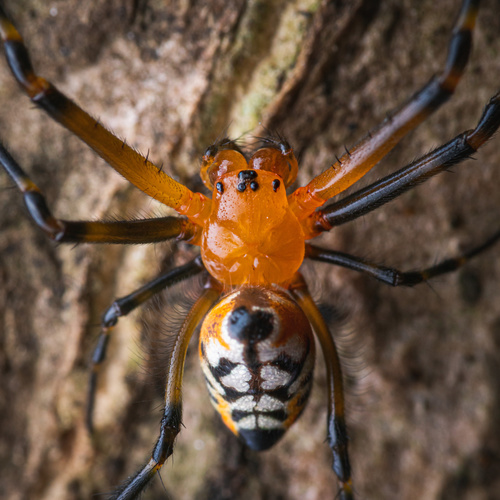
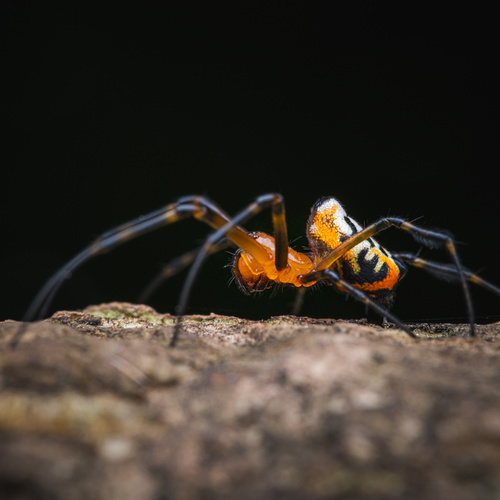
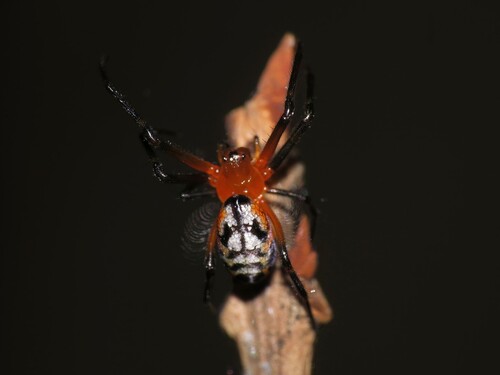
Its abdomen shows silvery or golden spots. A pear-shaped abdomen and a uniquely thick-bristled fourth leg set it apart from other Leucauge spiders.
Source: Wikipedia
Size
The spider is elongated with long legs and chelicerae.
Source: Wikipedia
Where it comes from
Its native range stretches from India through the Philippines to Sulawesi.
Source: Wikipedia
Lookalikes
The pear-shaped abdomen and the thick brush of spines on the fourth leg distinguish it from other Leucauge species.
Source: Wikipedia
More photos
Questions people ask
What does the web of the orange-and-black pear spider look like?
It is a large horizontal orb over a metre wide, with an open hub, few wide-set radii, and no retreat, hung by several long silk strands.
Source: Wikipedia
How can I tell this spider apart from other Leucauge spiders?
Look for a pear-shaped abdomen with silvery or golden spots and a fourth leg that has a thick brush of spines.
Source: Wikipedia
Same family (Tetragnathidae)


Sources
- Wikipedia: https://en.wikipedia.org/wiki/Leucauge_fastigata
Look it up elsewhere: GBIF · iNaturalist · BugGuide · ITIS · Wikipedia
Text written 2026-10-23 from the sources above and checked sentence by sentence against them. Data fetched 2026-10-22.