 Bug FAQ
Greater Leucauge
Leucauge argyra · Order: Araneae · Family: Tetragnathidae
Also called: longjawed orb weavers

Leucauge argyra builds orb webs that are part of a shared, multi-layered structure in vegetation, and individuals live in colonies with size-based positioning in the web. It occurs from the United States through Brazil and the Caribbean, and it can host the parasitoid wasp Hymenoepimecis argyraphaga.
Source: Wikipedia
How to recognize it
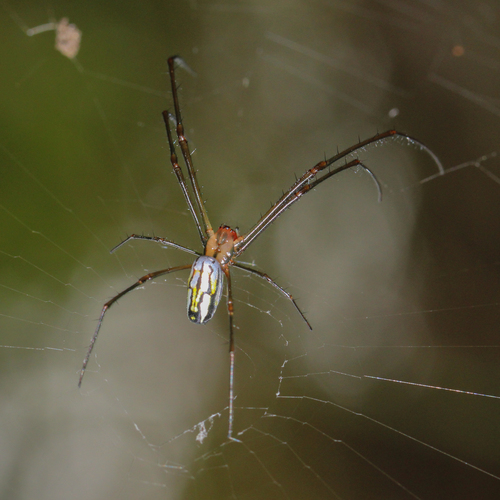
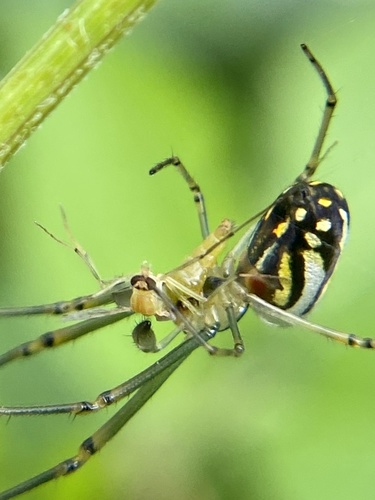
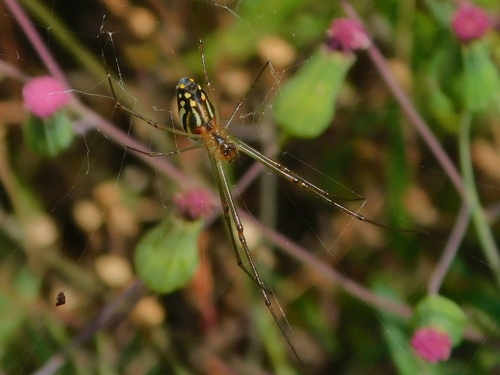
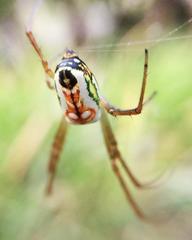
These markings may vary and differ from L. venusta, which has inverted V-shapes on the abdomen.
Source: Wikipedia
Size
Females have a distinctive ventral projection on the epigyne, a feature unique within the genus.
Source: Wikipedia
Where it lives
The species lives in colonies, each spider maintaining its own orb web within a communal framework of supporting lines. Its webs are multi-layered structures built among vegetation.
Source: Wikipedia
Life cycle
Colonies often contain multiple generations, with larger adults occupying higher positions in the web and juveniles lower down. It serves as a host for the Costa Rican parasitoid wasp Hymenoepimecis argyraphaga.
Source: Wikipedia
Where it comes from
Leucauge argyra is found throughout North, Central and South America, from the United States down to Brazil and the Caribbean.
Source: Wikipedia
Lookalikes
A similar species is Leucauge mariana.
Source: Wikipedia
Where it is found in the US
Recorded in 4 of 51 states and DC. Most records: Florida, Texas, Georgia, Mississippi.
Darker = more records. Counts are museum and citizen-science records, not population size.
Source: GBIF
Status: native in North America. Source: iNaturalist
Months it is reported in the US
Source: GBIF
More photos

Same family (Tetragnathidae)


Sources
- Wikipedia: https://en.wikipedia.org/wiki/Leucauge_argyra
Look it up elsewhere: GBIF · iNaturalist · BugGuide · ITIS · Wikipedia
Text written 2026-10-22 from the sources above and checked sentence by sentence against them. Data fetched 2026-10-22.