 Bug FAQ
Mabel Orchard Orbweaver
Leucauge argyrobapta · Order: Araneae · Family: Tetragnathidae
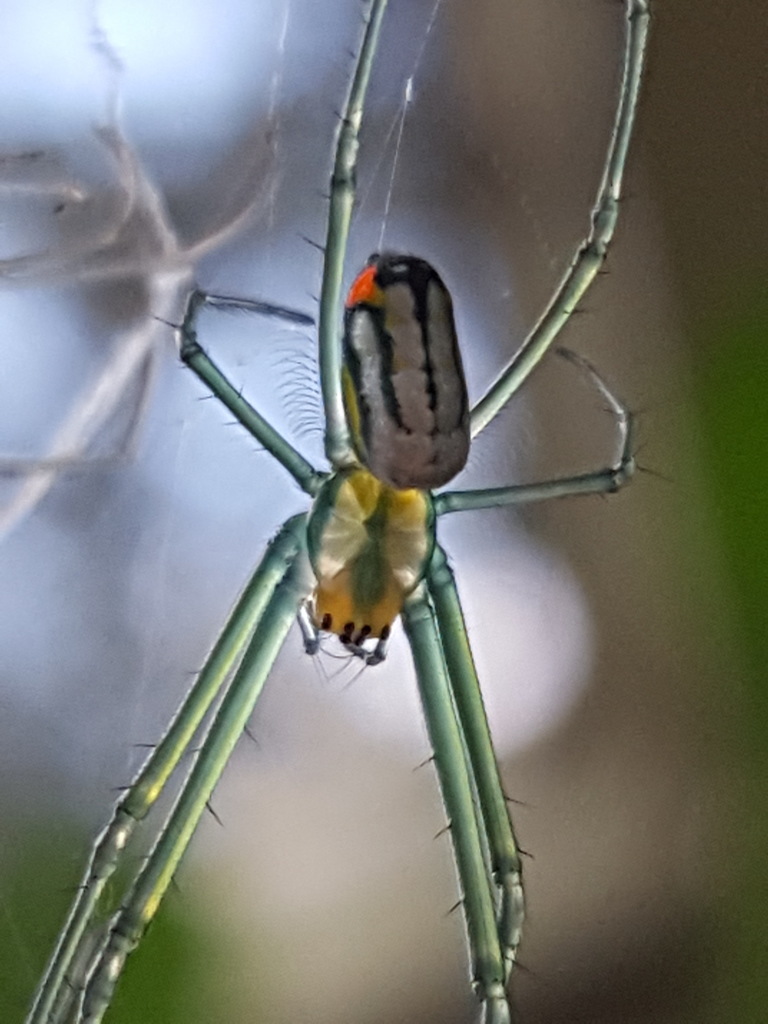
Mabel Orchard Orbweaver males can be told apart from the similar L. vetusta by the shape of the male palpal bulb, though some are harder to distinguish. Females of the two species look almost identical, so location is the main way to tell them apart. This species lives from the southern United States, especially Florida, through Mexico and down to Brazil.
Source: Wikipedia
How to recognize it
Male Mabel Orchard Orbweavers differ from L. vetusta males by the male palpal bulb, though some are easier to spot than others. Females of both species look practically identical; distribution is the main clue.
Source: Wikipedia
Where it comes from
Found in the southern USA, Mexico and Brazil, with possible wider Central and South American range.
Source: Wikipedia
Lookalikes
Males differ from L. vetusta by the male palpal bulb, though some are easier to differentiate. L. vetusta is found farther north, from the northern USA into Canada.
Source: Wikipedia
Where it is found in the US
Recorded in 11 of 51 states and DC. Most records: Florida, Texas, Louisiana, North Carolina, South Carolina, Georgia, Virginia, Alabama.
Darker = more records. Counts are museum and citizen-science records, not population size.
Source: GBIF
Status: native in North America. Source: iNaturalist
Months it is reported in the US
Source: GBIF
More photos
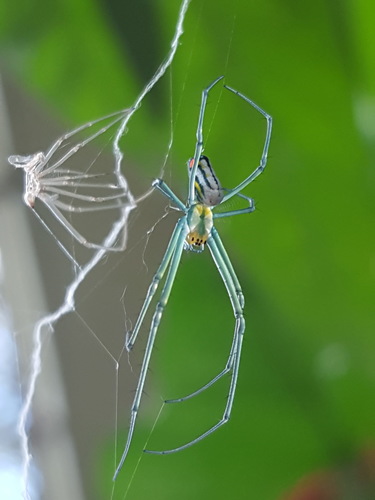
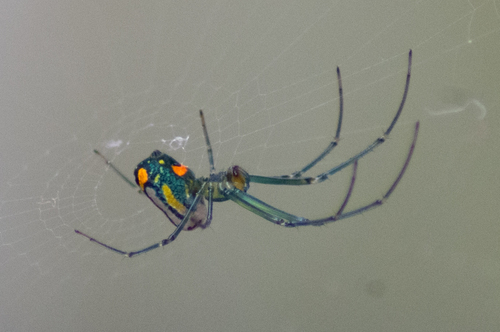
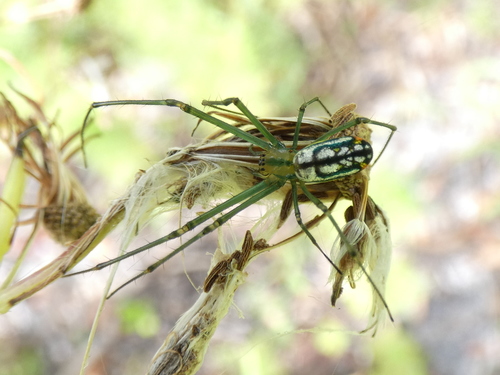
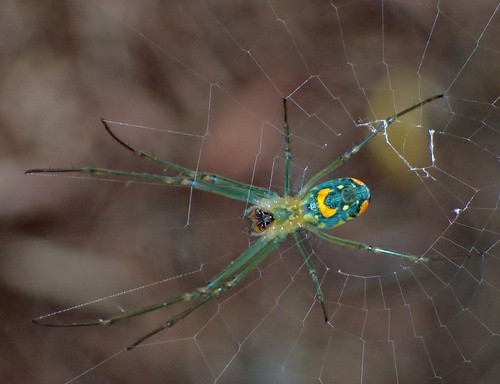
Same family (Tetragnathidae)


Sources
- Wikipedia: https://en.wikipedia.org/wiki/Leucauge_argyrobapta
Look it up elsewhere: GBIF · iNaturalist · BugGuide · Wikipedia
Text written 2026-10-22 from the sources above and checked sentence by sentence against them. Data fetched 2026-10-22.