 Bug FAQ
Old-fashioned potato beetle
Epicauta vittata · Order: Coleoptera · Family: Meloidae
Also called: striped blister beetle
Source: Wikipedia
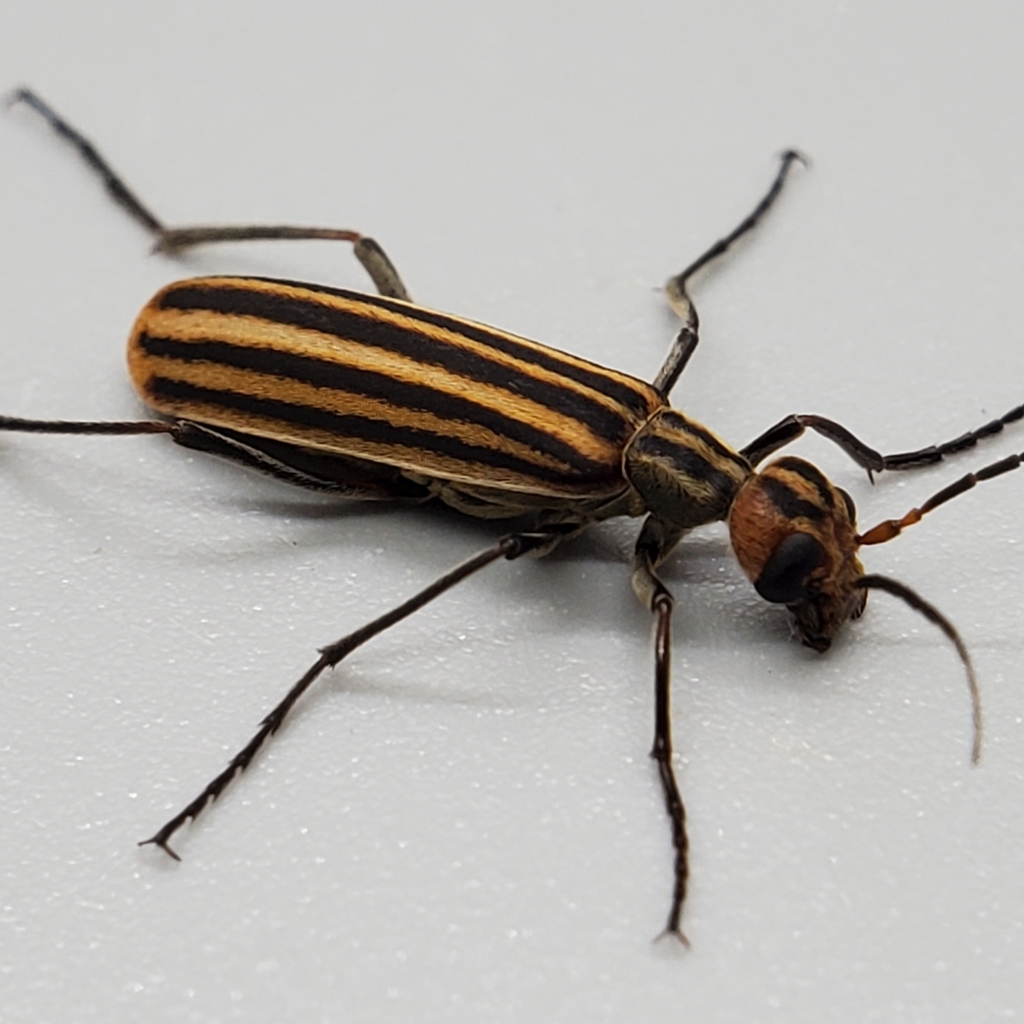
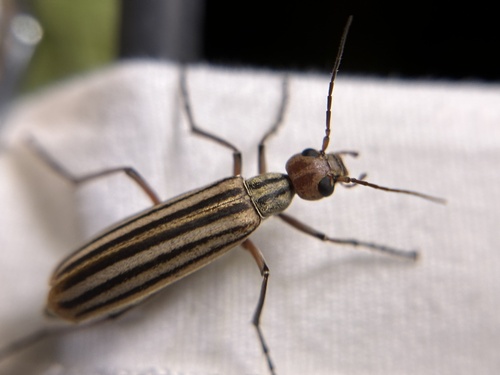
The eastern blister beetle is a black-and-yellow beetle 9 to 17 mm long that often forms large swarms and feeds on a wide range of crops, especially solanaceous plants and amaranths. It can cause serious problems for livestock because it contains the toxin cantharidin, which has caused horse fatalities.
Source: Wikipedia
Size
Adults measure between 9 and 17 mm in length.
Source: Wikipedia
Is it a pest in the house?
It feeds voraciously on crops, damages fruits, and can form large swarms that travel together.
Source: Wikipedia
Does it bite or sting?
The toxin can be fatal to livestock such as horses that eat beetles in hay.
Source: Wikipedia
How to get rid of it
Frogs appear unaffected by the beetle’s toxin and can eat them without harm.
Source: Wikipedia
Where it lives
It is known as an agricultural pest and is one of the most problematic blister beetles in its range.
Source: Wikipedia
What it eats
Adults are most active in the morning and late afternoon, feeding on plants, especially solanaceous species and amaranths.
Source: Wikipedia
Life cycle
Females lay eggs about every 10 days, depositing 100 to 200 eggs in a shallow tubular chamber in the soil and then covering them.
Source: Wikipedia
Where it is found in the US
Recorded in 37 of 51 states and DC. Most records: Kentucky, Texas, Illinois, Virginia, Missouri, Kansas, Tennessee, Oklahoma.
Darker = more records. Counts are museum and citizen-science records, not population size.
Source: GBIF
Months it is reported in the US
Source: GBIF
More photos
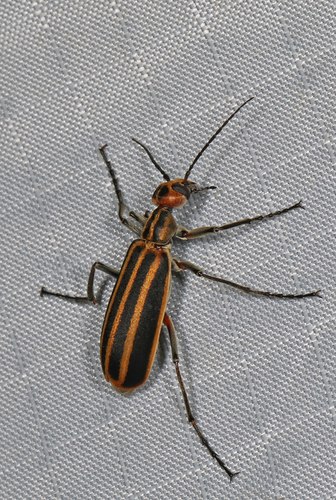
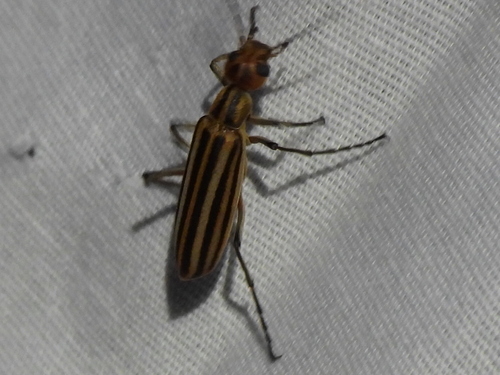
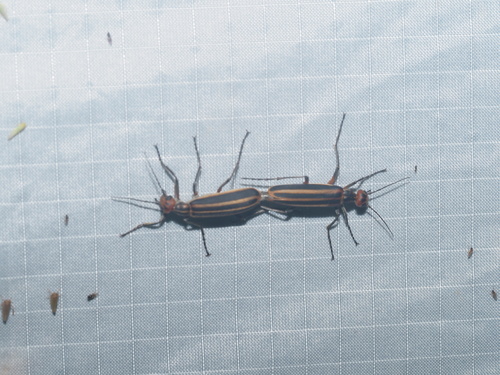
Questions people ask
How does this beetle damage crops?
Adults feed on a wide range of plants, especially solanaceous crops and amaranths, causing damage to fruits and foliage.
Source: Wikipedia
Is the beetle dangerous to livestock?
Yes, it contains cantharidin, which can be fatal to animals like horses that eat the beetles in hay.
Source: Wikipedia
When are these beetles most active?
They are most active in the morning and late afternoon, with adult numbers peaking in summer.
Source: Wikipedia
Same family (Meloidae)




Sources
- Wikipedia: https://en.wikipedia.org/wiki/Epicauta_vittata
Look it up elsewhere: GBIF · iNaturalist · BugGuide · ITIS · Wikipedia
Text written 2026-10-23 from the sources above and checked sentence by sentence against them. Data fetched 2026-10-23.