 Bug FAQ
Okinawa Mud Wasp
Delta esuriens · Order: Hymenoptera · Family: Eumenidae
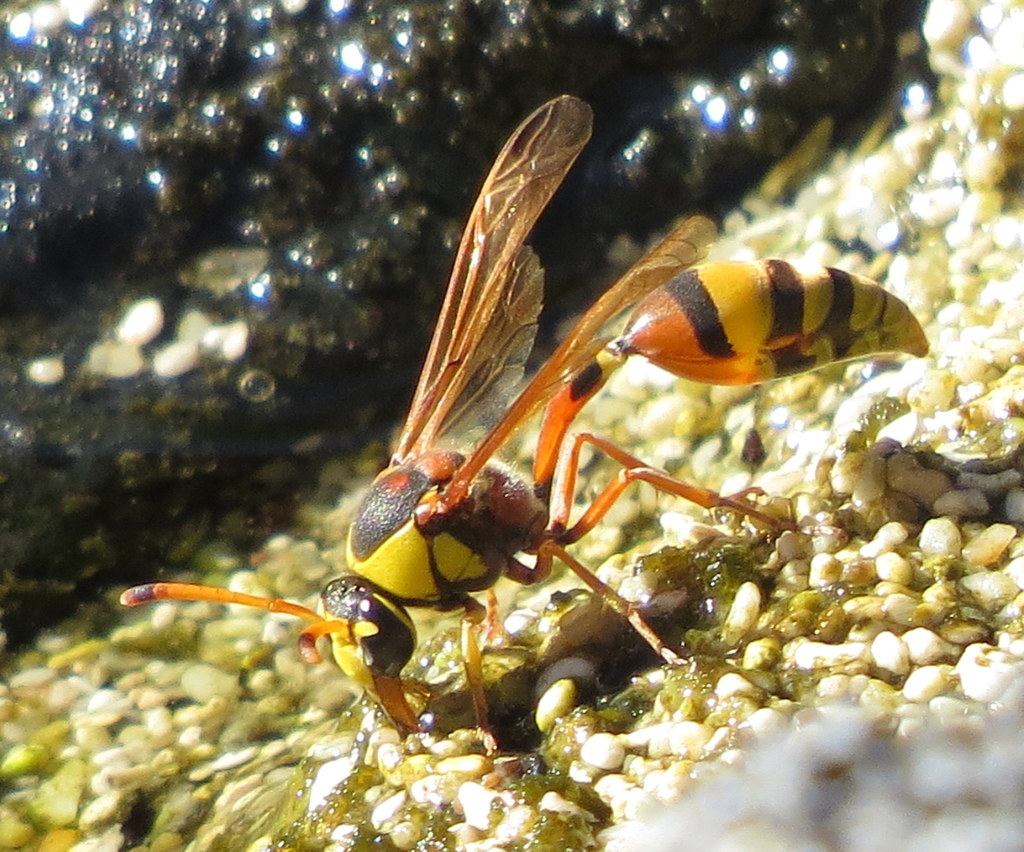
The Okinawa Mud Wasp (Delta esuriens) is a potter wasp found in tropical Asia. Females build mud nests with several cells, stock them with caterpillars, lay an egg, and seal the entrance. Eggs hatch in a few days, larvae feed for about a week, then pupate for two weeks before adults emerge in roughly a month.
Source: Wikipedia
Where it lives
It lives in tropical Asian environments as a member of the Vespidae family.
Source: Wikipedia
What it eats
Females provision their mud nests with lepidopteran caterpillars for their larvae.
Source: Wikipedia
Life cycle
Eggs hatch in a few days, larvae feed for about a week, then pupate for two weeks, with males developing slightly faster.
Source: Wikipedia
Where it comes from
Its native range is tropical Asia.
Source: Wikipedia
Lookalikes
It can be told apart from Delta pyriforme by the yellow band on the metasomal petiole.
Source: Wikipedia
Where it is found in the US
Recorded in 3 of 51 states and DC. Most records: Hawaii, Florida, California.
Darker = more records. Counts are museum and citizen-science records, not population size.
Source: GBIF
Status: introduced in United States. Source: iNaturalist
Months it is reported in the US
Source: GBIF
More photos
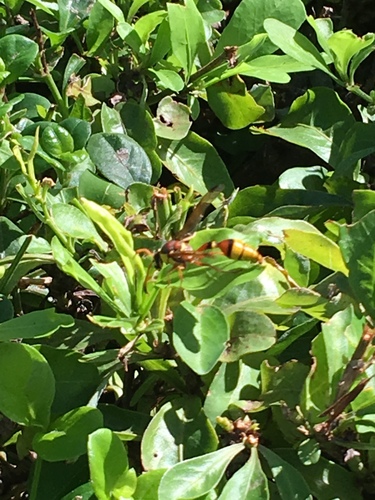
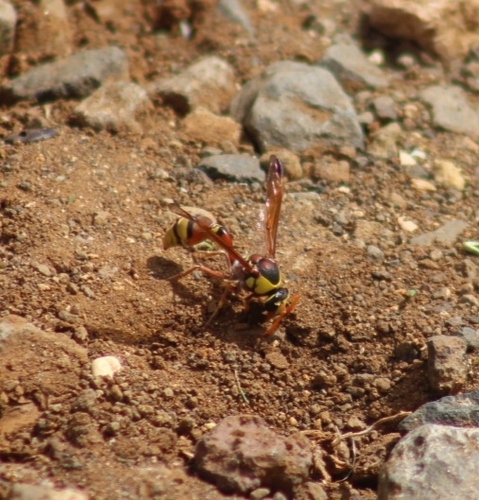
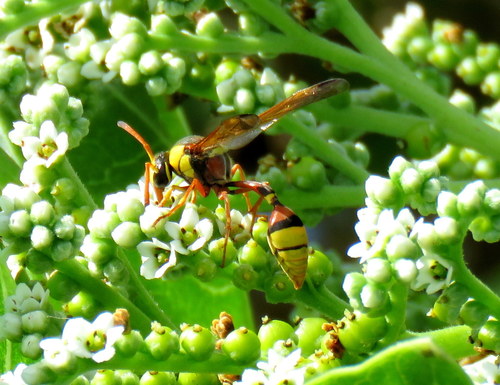
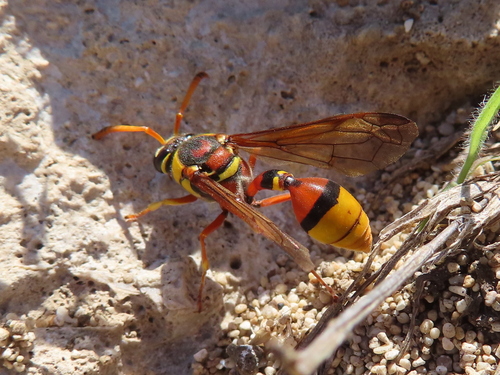
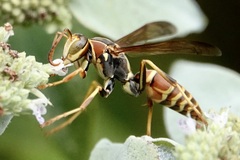
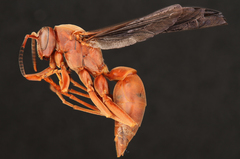
Same family (Eumenidae)
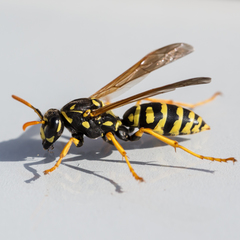

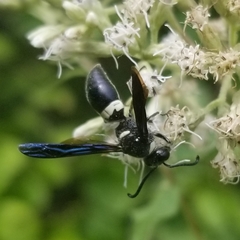
Sources
- Wikipedia: https://en.wikipedia.org/wiki/Delta_esuriens
Look it up elsewhere: GBIF · iNaturalist · BugGuide · Wikipedia
Text written 2026-10-23 from the sources above and checked sentence by sentence against them. Data fetched 2026-10-22.