 Bug FAQ
Okefenokee Fishing Spider
Dolomedes okefinokensis · Order: Araneae · Family: Pisauridae
Also called: Giant Swamp Fishing Spider
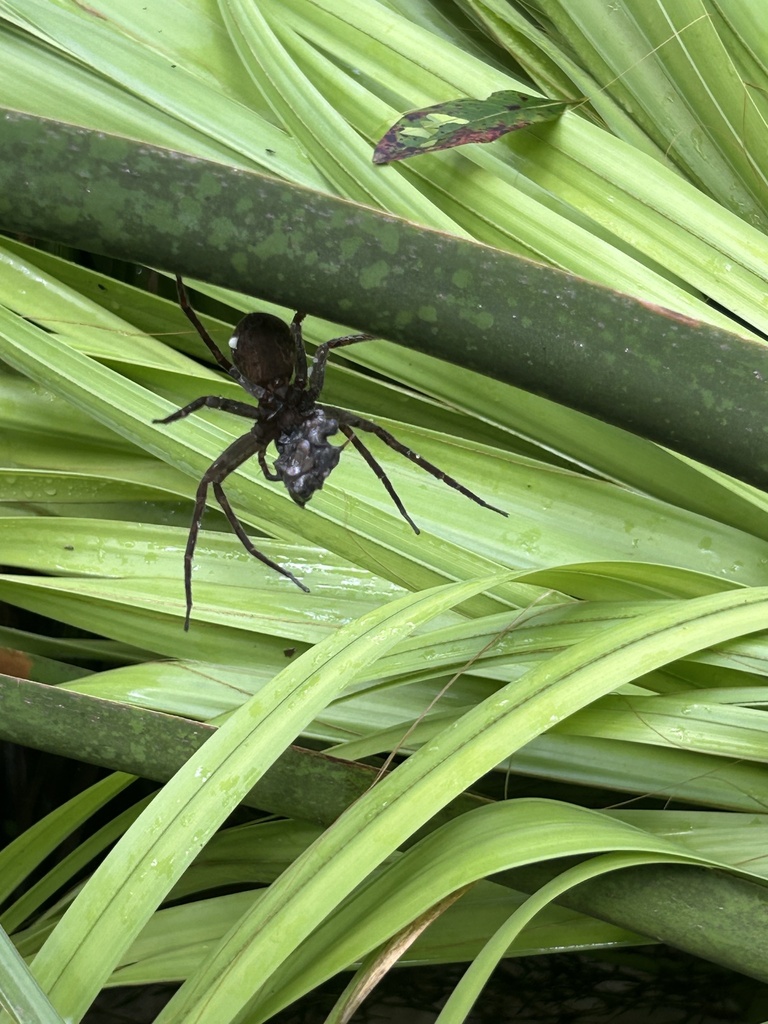
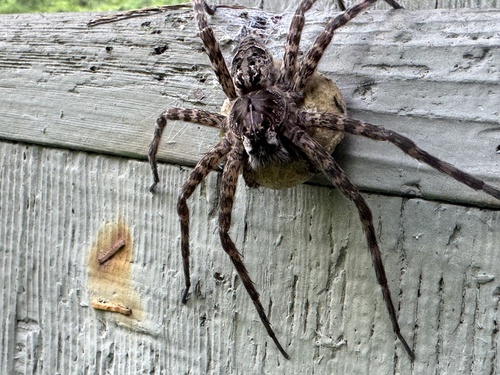
Females are about 30 mm long while males are around 8 mm. It lives in swampy areas of the southeastern United States, especially Georgia and Florida, and may also occur in Alabama and Louisiana. It mainly eats aquatic insects but will also take small vertebrates.
Source: Wikipedia
Size
Females reach about 30 mm in body length, while males are about 8 mm.
Source: Wikipedia
Where it lives
It is found in swampy habitats.
Source: Wikipedia
What it eats
It primarily feeds on aquatic insects and also captures small vertebrates.
Source: Wikipedia
Where it comes from
It is endemic to the southeastern United States, known from Georgia and Florida and possibly also Alabama and Louisiana.
Source: Wikipedia
Lookalikes
It is hard to tell apart from the slightly smaller Dolomedes tenebrosus.
Source: Wikipedia
Where it is found in the US
Recorded in 3 of 51 states and DC. Most records: Florida, Georgia, Illinois.
Darker = more records. Counts are museum and citizen-science records, not population size.
Source: GBIF
Months it is reported in the US
Source: GBIF
More photos
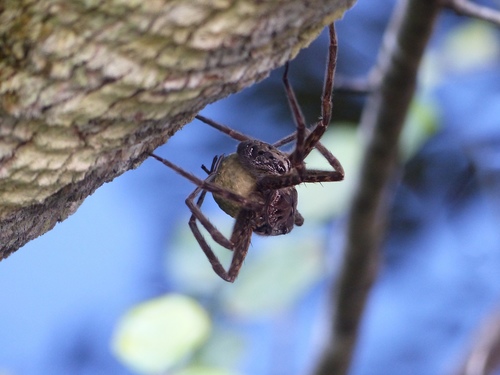
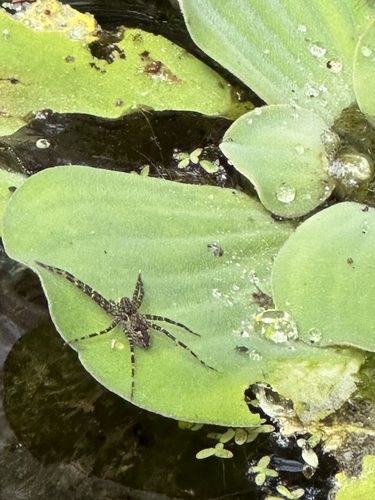
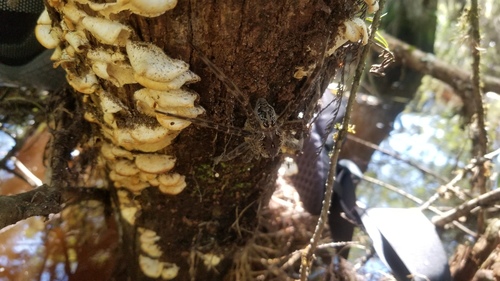
Questions people ask
How large are Okefenokee fishing spiders?
Females are about 30 mm long and males about 8 mm.
Source: Wikipedia
Where are Okefenokee fishing spiders found?
They are endemic to the southeastern United States, especially Georgia and Florida, and may also occur in Alabama and Louisiana.
Source: Wikipedia
What do Okefenokee fishing spiders eat?
They mainly eat aquatic insects and will also take small vertebrates.
Source: Wikipedia
Same family (Pisauridae)




Sources
- Wikipedia: https://en.wikipedia.org/wiki/Dolomedes_okefinokensis
Look it up elsewhere: GBIF · iNaturalist · BugGuide · ITIS · Wikipedia
Text written 2026-10-27 from the sources above and checked sentence by sentence against them. Data fetched 2026-10-27.