 Bug FAQ
Ochraceous Chimney Bee
Diadasia ochracea · Order: Hymenoptera · Family: Apidae
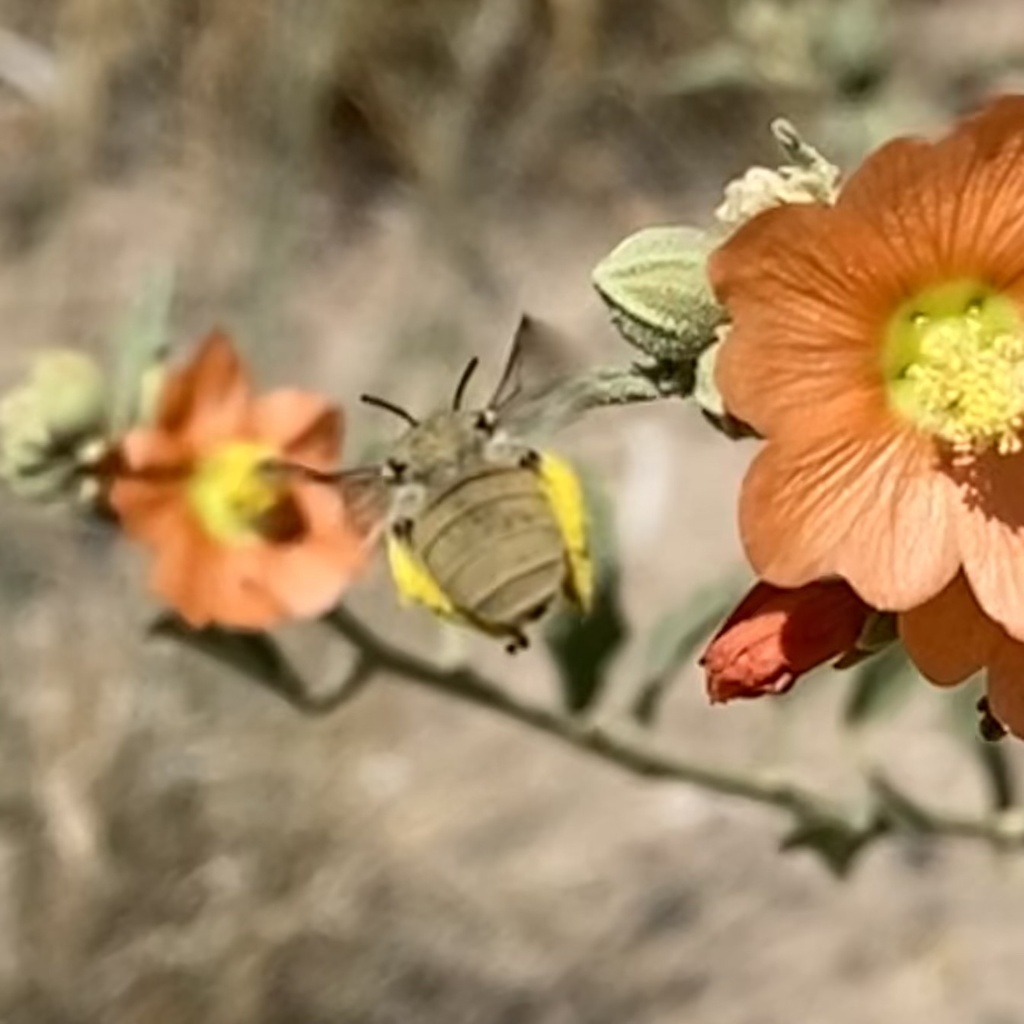
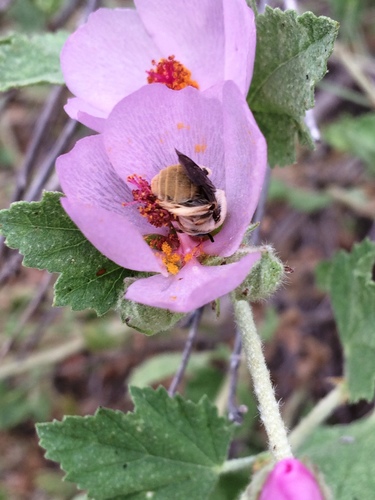
The ochraceous chimney bee is a small bee about 7 to 8 mm long, with pale-gold hairs covering its body. It lives in desert and arid grassland areas with hard or sandy soils, where females dig shallow vertical burrows that often have chimney-shaped turrets at the entrance. The species feeds mainly on pollen from Malvaceae plants such as Sphaeralcea and also gathers nectar from Texas thistle and wild petunia.
Source: Wikipedia
Size
Adult females are about 8 mm long, while males are roughly 7 mm.
Source: Wikipedia
Where it lives
Nests are often found in aggregated groups where the soil is suitable.
Source: Wikipedia
What it eats
It is oligolectic on plants in the Malvaceae family, especially species of Sphaeralcea. It also collects nectar from Texas thistle (Cirsium taxanum) and wild petunia (Ruellia nudiflora var. runyonii).
Source: Wikipedia
Life cycle
The species overwinters as a mature larva.
Source: Wikipedia
Lookalikes
Its pale-gold hairs, scopal hair arrangement, and chimney-shaped nest entrances help distinguish it from other Dasiapis species.
Source: Wikipedia
Where it is found in the US
Recorded in 9 of 51 states and DC. Most records: Arizona, New Mexico, California, Texas, Washington, Utah, Colorado, Oregon.
Darker = more records. Counts are museum and citizen-science records, not population size.
Source: GBIF
Status: native in North America; native in United States; native in Canada. Source: iNaturalist
Months it is reported in the US
Source: GBIF
More photos
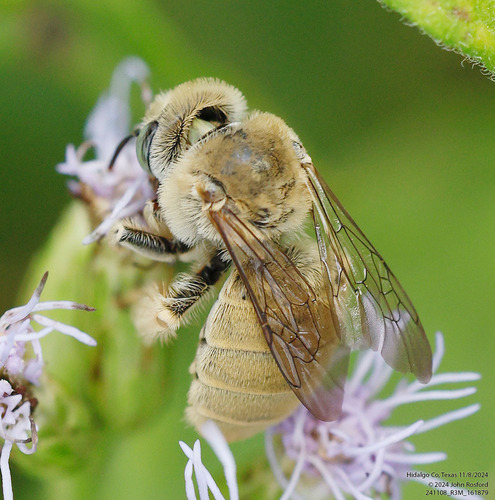
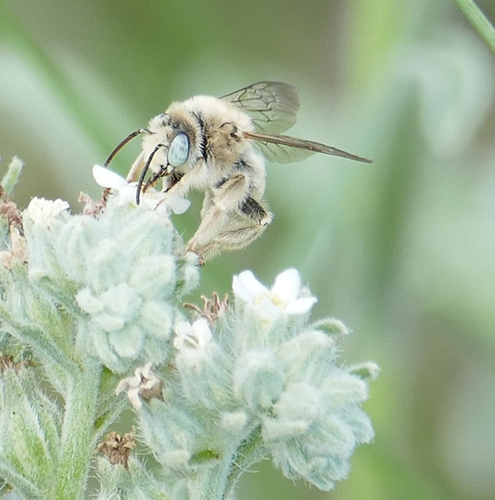
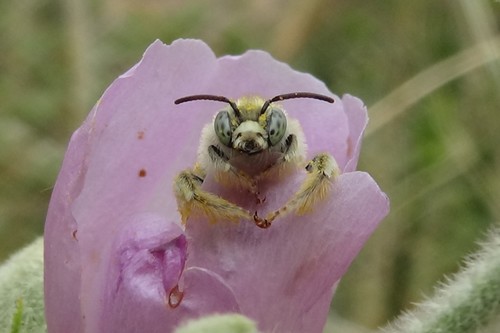
Questions people ask
What plants does the ochraceous chimney bee visit?
It gathers pollen mainly from Malvaceae plants like Sphaeralcea and drinks nectar from Texas thistle and wild petunia.
Source: Wikipedia
Where does this bee build its nest?
Females dig shallow vertical burrows in suitable soil, often ending with a small chimney-shaped turret at the entrance.
Source: Wikipedia
Same family (Apidae)


Sources
- Wikipedia: https://en.wikipedia.org/wiki/Diadasia_ochracea
Look it up elsewhere: GBIF · iNaturalist · BugGuide · ITIS · Wikipedia
Text written 2026-10-23 from the sources above and checked sentence by sentence against them. Data fetched 2026-10-23.