 Bug FAQ
Ocellated Emerald
Somatochlora minor · Order: Odonata · Family: Corduliidae
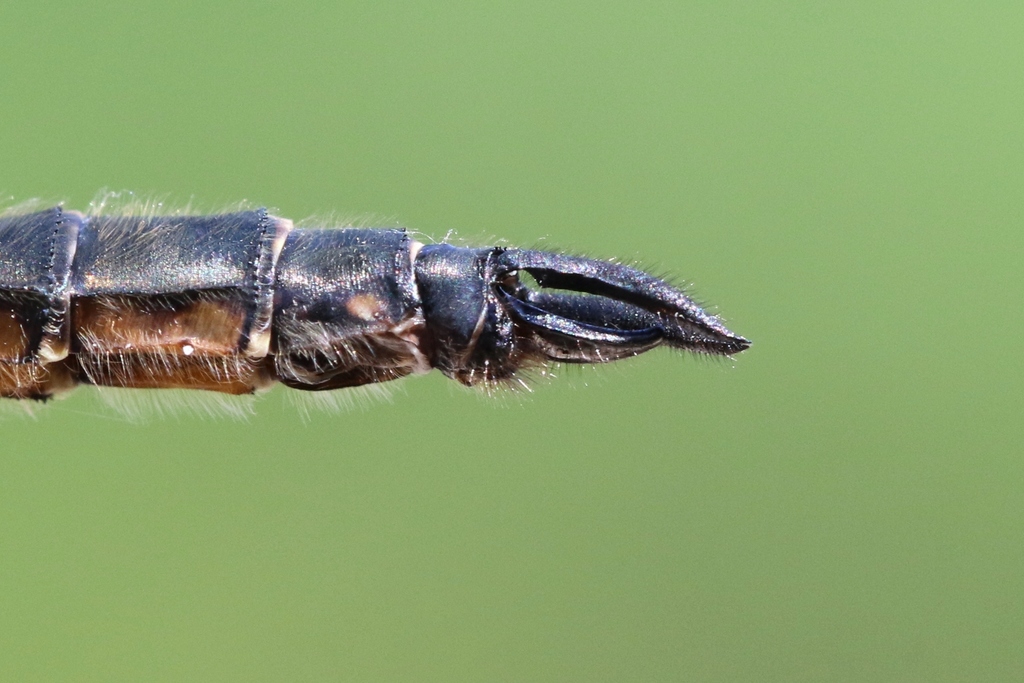
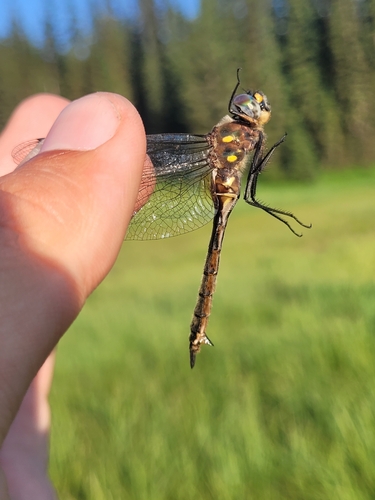
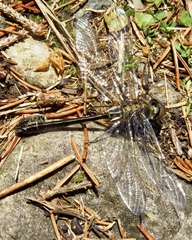
The ocellated emerald is a small dragonfly with a metallic green face, a brown-green thorax marked by pale yellow oval spots, and a black abdomen bearing yellow spots on the basal segments.
Source: Wikipedia
Size
The ocellated emerald is a small dragonfly.
Source: Wikipedia
Where it lives
It inhabits small to medium streams that flow slowly to moderately fast, often containing pools, in forested or open areas.
Source: Wikipedia
Where it is found in the US
Recorded in 16 of 51 states and DC. Most records: Michigan, Minnesota, Wisconsin, Maine, Montana, Vermont, Oregon, Washington.
Darker = more records. Counts are museum and citizen-science records, not population size.
Source: GBIF
Status: native in North America; native in Canada; native in United States. Source: iNaturalist
Months it is reported in the US
Source: GBIF
More photos
Questions people ask
Where does the ocellated emerald live?
It lives in small to medium streams with pools, in both forested and open settings, and its range includes most of Canada and the northern United States.
Source: Wikipedia
How can I recognize an ocellated emerald?
Look for a small dragonfly with a metallic green face, a brown-green thorax marked by pale yellow oval spots, and a black abdomen with yellow spots on the first few segments.
Source: Wikipedia
Same family (Corduliidae)


Sources
- Wikipedia: https://en.wikipedia.org/wiki/Somatochlora_minor
Look it up elsewhere: GBIF · iNaturalist · BugGuide · ITIS · Wikipedia
Text written 2026-10-25 from the sources above and checked sentence by sentence against them. Data fetched 2026-10-25.