 Bug FAQ
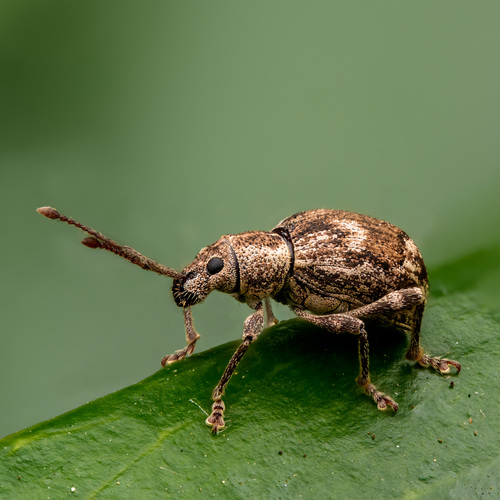
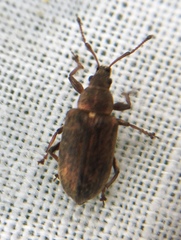
Obscure root weevil
Sciopithes obscurus · Order: Coleoptera · Family: Curculionidae
Source: Wikipedia
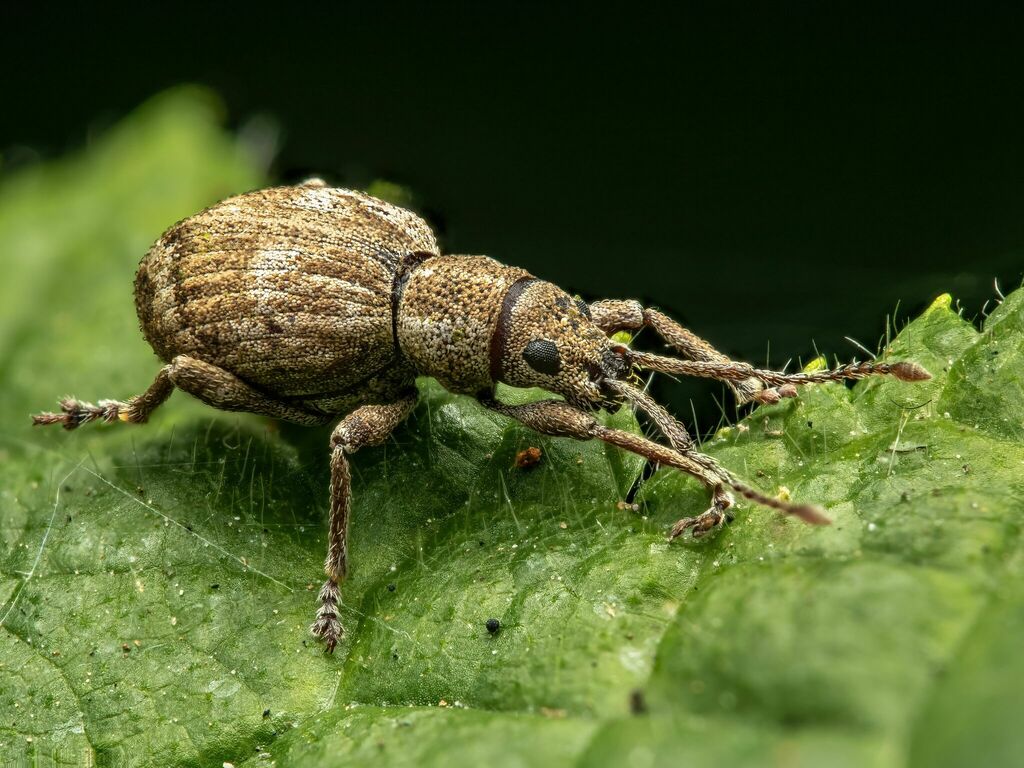
It lives in the Pacific Northwest of North America, where it is considered a pest on rhododendrons and strawberries, feeding on foliage at night and its larvae feeding on plant roots in the soil.
Source: Wikipedia
Size
They measure about 6 to 8 mm (0.24 to 0.31 in) long.
Source: Wikipedia
What it eats
Adults feed on plant foliage at night. Larvae hatch and immediately crawl into the soil to feed on roots.
Source: Wikipedia
Life cycle
There is one generation per year; larvae feed on roots after hatching. Females lay up to a hundred eggs in leaf folds or in the soil.
Source: Wikipedia
When you see it
Adults are nocturnal, feeding on foliage during the night.
Source: Wikipedia
Where it comes from
Their native range is the Pacific Northwest of North America.
Source: Wikipedia
Where it is found in the US
Recorded in 5 of 51 states and DC. Most records: Washington, Oregon, California, Alaska, Texas.
Darker = more records. Counts are museum and citizen-science records, not population size.
Source: GBIF
Status: native in North America; native in Canada. Source: iNaturalist
Months it is reported in the US
Source: GBIF
More photos
Questions people ask
What plants does the obscure root weevil damage?
It damages rhododendrons and strawberries.
Source: Wikipedia
Same family (Curculionidae)
 Green Immigrant Leaf WeevilPolydrusus formosusDamages trees, gardens or crops
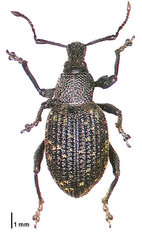 Black Vine WeevilOtiorhynchus sulcatusDamages trees, gardens or crops
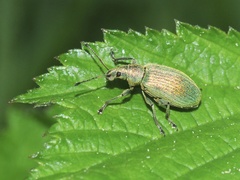 Nettle weevilPhyllobius pomaceusDamages trees, gardens or crops
 Asian Oak WeevilCyrtepistomus castaneusDamages trees, gardens or crops
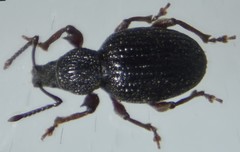 Strawberry Root WeevilOtiorhynchus ovatusDamages trees, gardens or crops
 Common Leaf WeevilPhyllobius pyriDamages trees, gardens or crops
Sources
- Wikipedia: https://en.wikipedia.org/wiki/Sciopithes_obscurus
Look it up elsewhere: GBIF · iNaturalist · BugGuide · ITIS · Wikipedia
Text written 2026-10-25 from the sources above and checked sentence by sentence against them. Data fetched 2026-10-25.