 Bug FAQ
Oblique-lined Tiger Beetle
Cicindela tranquebarica · Order: Coleoptera · Family: Carabidae
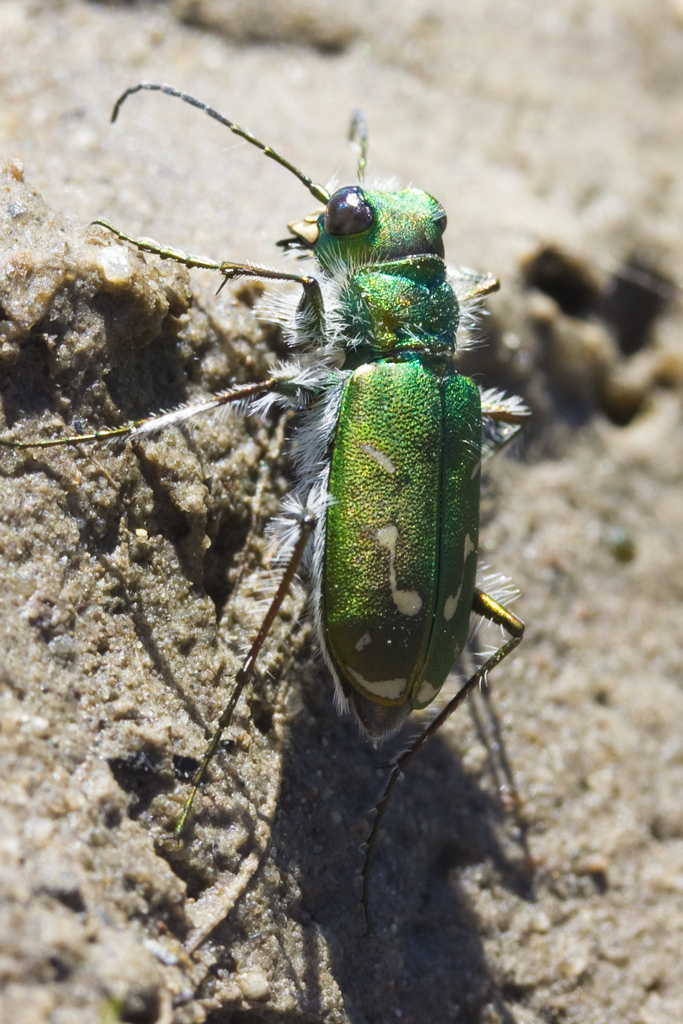
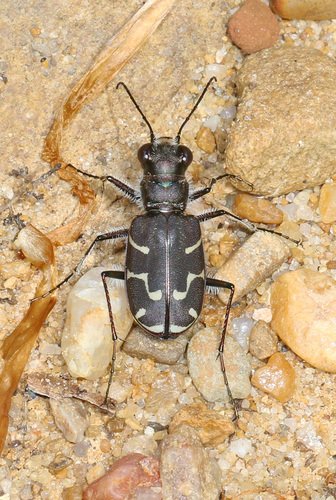
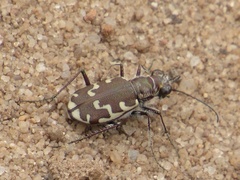
The oblique-lined tiger beetle measures about 12 mm long, with females a bit larger than males. It shows many colour forms, ranging from reddish-brown to black or green, with a purple or black abdomen, copper or dark-red thorax, and a red or purple head. It lives across most of the United States in a wide variety of habitats, from wet to dry sites.
Source: Wikipedia
How to recognize it
Colours vary from reddish-brown to black to green; abdomen is purple or black, thorax copper or dark red, head red or purple.
Source: Wikipedia
Size
Adults are 11 to 16 mm long, with females usually a little longer than males. Mean male length is 11.8 mm (range 11.1 to 12.2 mm) and mean female length is 12.6 mm (range 11.8 to 13.2 mm).
Source: Wikipedia
Where it lives
Found from the Atlantic coast to the Sierra Nevada and Cascades, occupying many habitat types.
Source: Wikipedia
What it eats
Adults and larvae overwinter; eggs are laid in moist areas and larvae dig down 22 to 50 cm.
Source: Wikipedia
Life cycle
The life cycle lasts two years and is similar to that of Cicindela purpurea.
Source: Wikipedia
When you see it
Adults shelter in shallow soil burrows overnight; larvae emerge in May or early June after overwintering.
Source: Wikipedia
Where it comes from
A North-American species of flashy tiger beetle. The species name refers to Tranquebar in southern India, a mislabelled origin of the type specimen.
Source: Wikipedia
Lookalikes
Its life history is essentially the same as Cicindela purpurea, and its daily movements have been studied in northeast Arizona.
Source: Wikipedia
Where it is found in the US
Recorded in 49 of 51 states and DC. Most records: Utah, California, Colorado, Oklahoma, Massachusetts, Ohio, New Jersey, Maryland.
Darker = more records. Counts are museum and citizen-science records, not population size.
Source: GBIF
Status: native in North America; native in Canada; native in United States. Source: iNaturalist
Months it is reported in the US
Source: GBIF
More photos
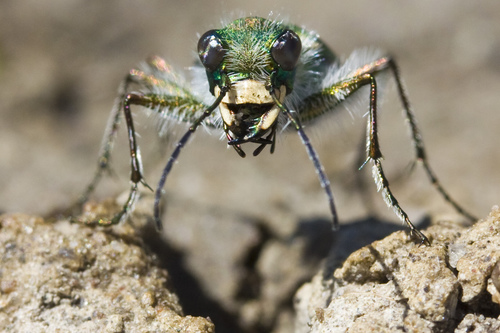
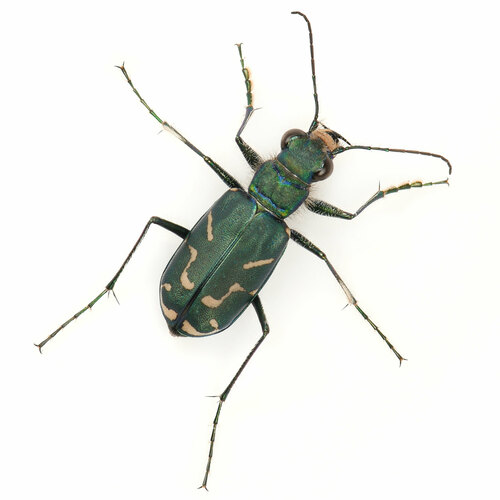
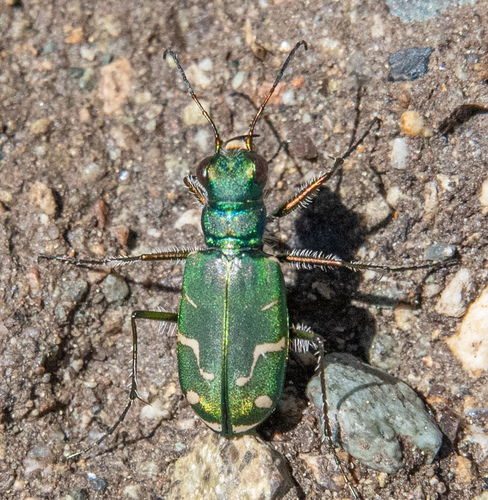
Same family (Carabidae)


Sources
- Wikipedia: https://en.wikipedia.org/wiki/Cicindela_tranquebarica
Look it up elsewhere: GBIF · iNaturalist · BugGuide · ITIS · Wikipedia
Text written 2026-10-22 from the sources above and checked sentence by sentence against them. Data fetched 2026-10-22.