 Bug FAQ
Oak Rough Bulletgall Wasp
Disholcaspis quercusmamma · Order: Hymenoptera · Family: Cynipidae
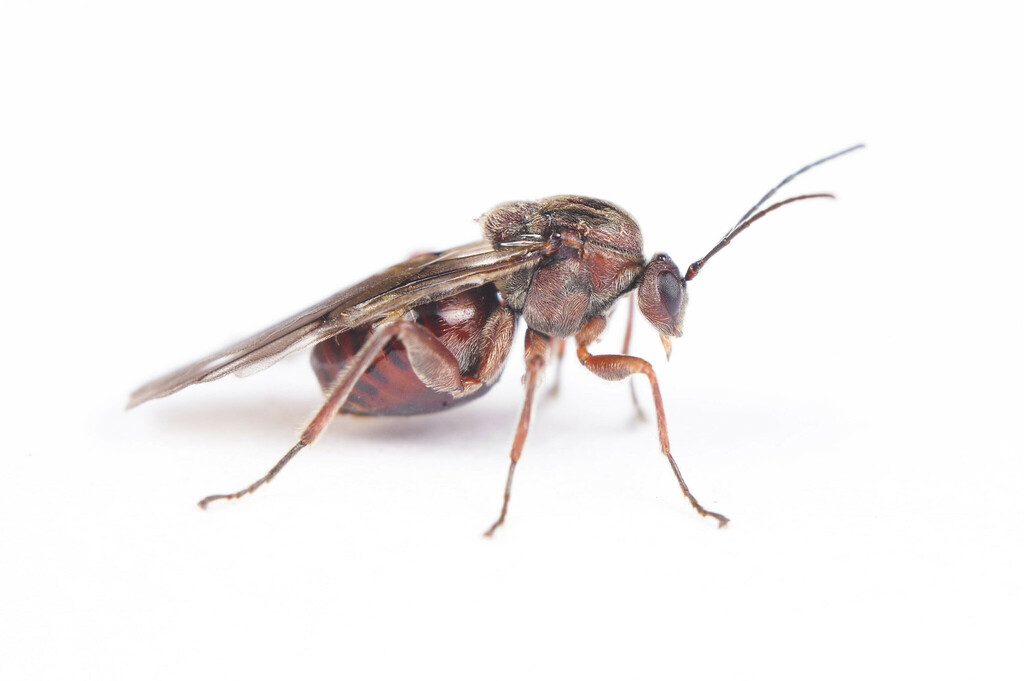
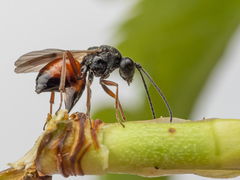
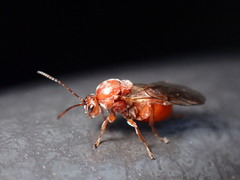
Adult females appear in late fall, lay eggs in new twigs without mating, and the larvae can be parasitized by several other wasp species.
Source: Wikipedia
How to recognize it
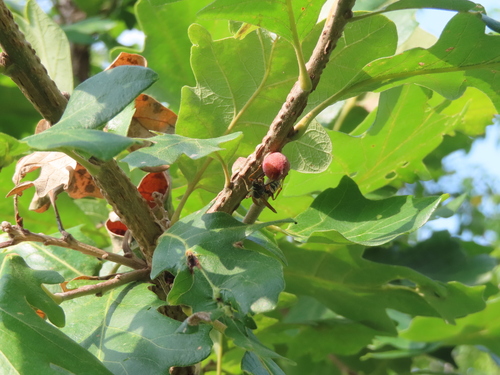
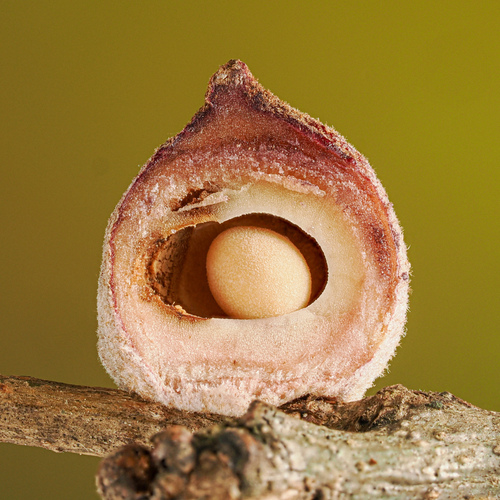
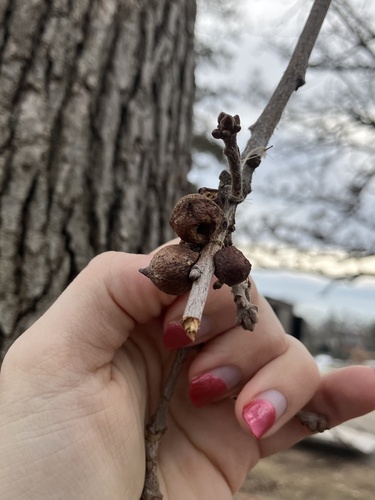
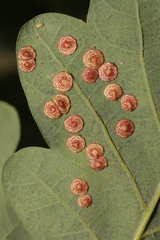
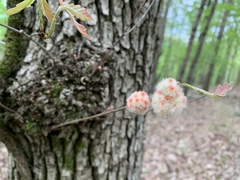
The galls have a soft, velvety surface and a pointed tip that looks like a nipple.
Source: Wikipedia
Is it a pest in the house?
The galls can cause the tree to exude a sweet honey-dew that promotes sooty mold and attracts hornets, yellowjackets, and carpenter ants, which may protect the wasp larvae.
Source: Wikipedia
What it eats
The developing larvae inside the galls can be attacked by parasitoid wasps such as Sycophila dubia, Torymus denticulatus, Mesopolobus spp., and Pteromalus spp.
Source: Wikipedia
When you see it
Adults emerge in late autumn and reproduce without mating. Mated females crawl or fly to newly elongated twigs, insert eggs through the bark, and trigger the formation of bullet-shaped galls.
Source: Wikipedia
Lookalikes
These galls look like those of Disholcaspis quercusglobulus, but can be told apart by their velvety texture and nipple-like tip.
Source: Wikipedia
Where it is found in the US
Recorded in 47 of 51 states and DC. Most records: Texas, California, Massachusetts, Illinois, Virginia, Minnesota, Oregon, Ohio.
Darker = more records. Counts are museum and citizen-science records, not population size.
Source: GBIF
Status: native in North America; native in Canada; native in United States. Source: iNaturalist
Months it is reported in the US
Source: GBIF
More photos

Questions people ask
When do the adult wasps appear?
Adults emerge in late fall and lay eggs without needing to mate.
Source: Wikipedia
What other insects are attracted to the galls?
The honey-dew from the galls draws hornets, yellowjackets, and carpenter ants.
Source: Wikipedia
Same family (Cynipidae)


Sources
- Wikipedia: https://en.wikipedia.org/wiki/Disholcaspis_quercusmamma
Look it up elsewhere: GBIF · iNaturalist · BugGuide · Wikipedia
Text written 2026-10-22 from the sources above and checked sentence by sentence against them. Data fetched 2026-10-22.