 Bug FAQ
Oak Curved-leaf Gall Wasp
Andricus curvator · Order: Hymenoptera · Family: Cynipidae
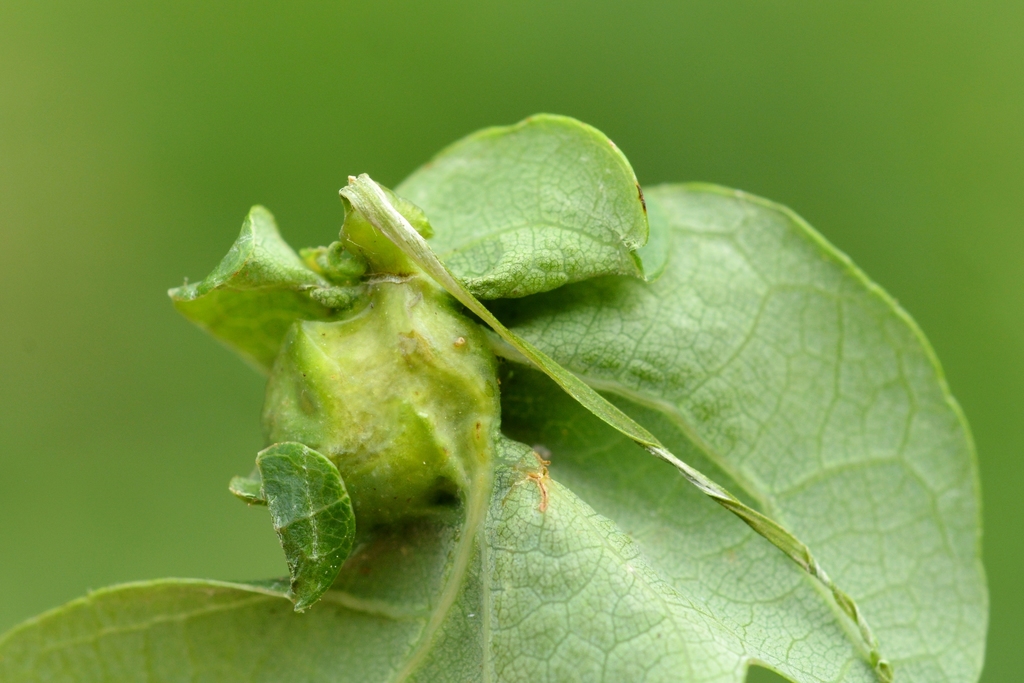
The oak curved-leaf gall wasp makes small, smooth, brown galls about 3 mm long that sit on oak buds and are often hidden by bud scales. Adults emerge in spring from the previous year’s galls, lay eggs on new buds, and the larvae overwinter inside the gall.
Source: Wikipedia
How to recognize it
The gall looks like a smooth brown skittle with a nipple-like tip and a pale ring around it, though the ring may fade on older galls.
Source: Wikipedia
Size
The adult wasp is about 8 mm long and roughly spherical with thin walls. The asexual gall that hides the larva is roughly 3 mm long.
Source: Wikipedia
Where it lives
It was first described in Germany in 1840 and occurs throughout most of Europe.
Source: Wikipedia
Life cycle
Adults emerge in spring from galls that formed on the previous year’s buds. The wasp spends the winter inside the gall before emerging.
Source: Wikipedia
When you see it
Female wasps develop inside the gall and come out in May or June to lay eggs on young oak buds.
Source: Wikipedia
Where it comes from
The species is found from Ireland east to Ukraine and from northern Scandinavia down to the Mediterranean.
Source: Wikipedia
Where it is found in the US
Recorded in 3 of 51 states and DC. Most records: Virginia, Texas, California.
Darker = more records. Counts are museum and citizen-science records, not population size.
Source: GBIF
More photos
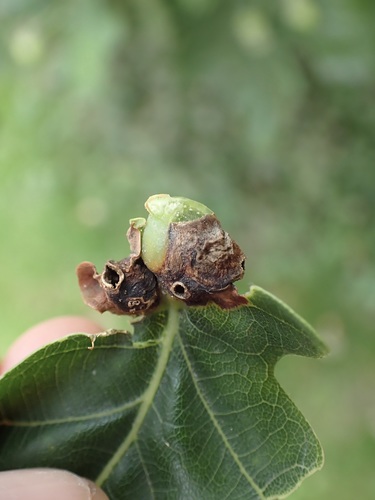
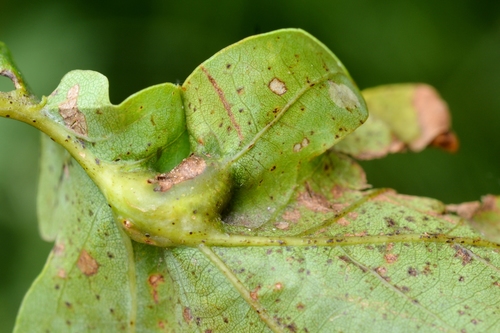
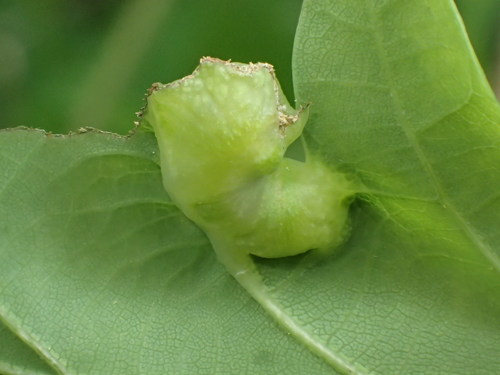
Questions people ask
When do these wasps appear?
Adults emerge in spring, usually in May or June, from the galls that formed the year before.
Source: Wikipedia
What trees do they affect?
They form galls on several oak species, including sessile oak, pedunculate oak, and Turkey oak.
Source: Wikipedia
Same family (Cynipidae)


Sources
- Wikipedia: https://en.wikipedia.org/wiki/Andricus_curvator
Look it up elsewhere: GBIF · iNaturalist · BugGuide · ITIS · Wikipedia
Text written 2026-10-23 from the sources above and checked sentence by sentence against them. Data fetched 2026-10-22.