 Bug FAQ
Nuttall's Sheep Moth
Hemileuca nutalli · Order: Lepidoptera · Family: Saturniidae
Also called: Nuttall's Sheepmoth
Source: Wikipedia
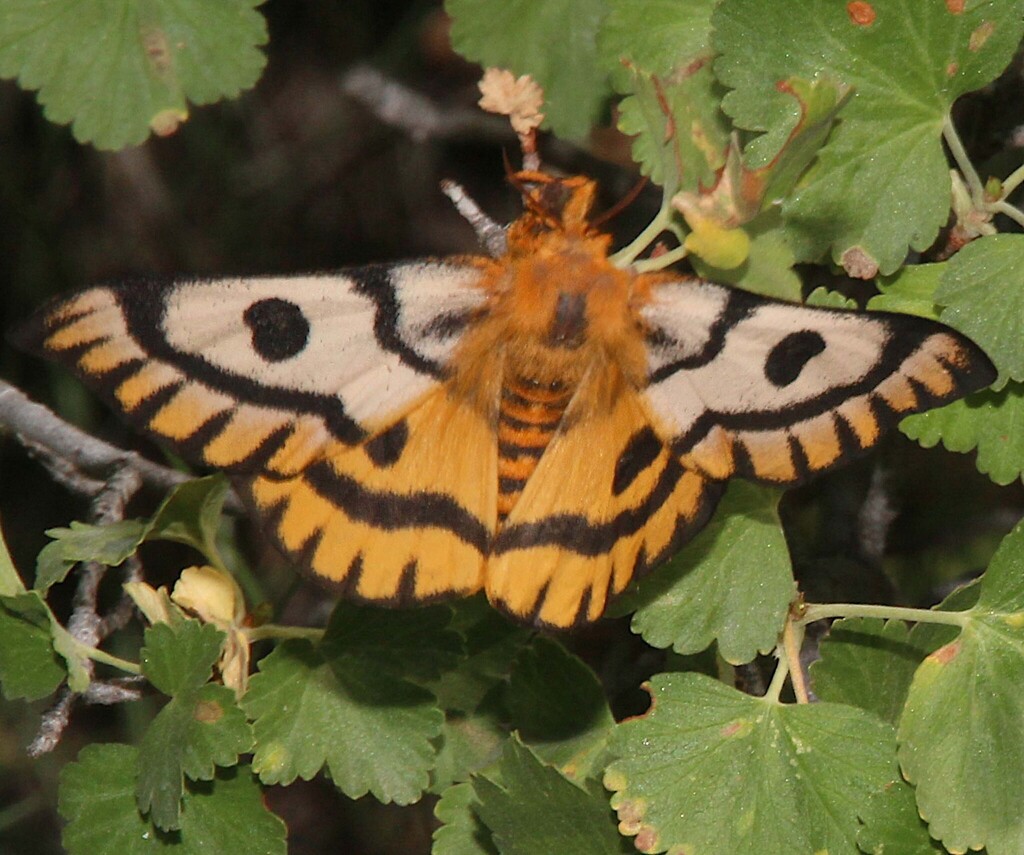
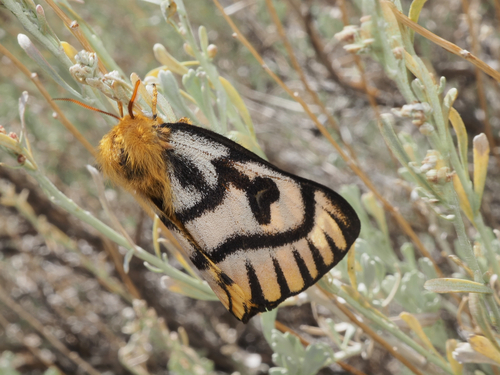
The adult has a wingspan of about 60-65 mm and yellow-orange body color. It lives in western North America from southeastern British Columbia through many western US states. Caterpillars feed on Purshia, Symphoricarpos and Ribes plants and have yellow spines that can sting skin.
Source: Wikipedia
How to recognize it
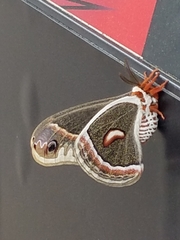
The forewings are yellowish on the lower side and fade to white toward the top. Each wing has black-tipped veins and a black eyespot with a white center.
Source: Wikipedia
Size
Wingspan ranges from 60 to 65 mm.
Source: Wikipedia
Can it bite, sting or make you sick?
The caterpillar’s spines can sting skin if touched.
Source: Wikipedia
Life cycle
The black larvae are covered with yellow spines that can sting skin on contact.
Source: Wikipedia
Where it comes from
Native to western North America, spanning southeastern British Columbia and many western US states.
Source: Wikipedia
Where it is found in the US
Recorded in 9 of 51 states and DC. Most records: Colorado, Utah, California, Idaho, Wyoming, Nevada, Washington, Oregon.
Darker = more records. Counts are museum and citizen-science records, not population size.
Source: GBIF
Status: native in North America; native in United States; native in Canada. Source: iNaturalist
Months it is reported in the US
Source: GBIF
More photos
Questions people ask
What do the caterpillars look like?
They are black with yellow spines that can sting skin.
Source: Wikipedia
Where is this moth found?
It occurs from southeastern British Columbia through many western US states such as Washington, Oregon, California, Idaho, Nevada, Arizona, Utah, Montana, Wyoming, Colorado and New Mexico.
Source: Wikipedia
Same family (Saturniidae)


Sources
- Wikipedia: https://en.wikipedia.org/wiki/Hemileuca_nuttalli
Look it up elsewhere: GBIF · iNaturalist · BugGuide · ITIS · Wikipedia
Text written 2026-10-25 from the sources above and checked sentence by sentence against them. Data fetched 2026-10-25.