 Bug FAQ
Nuttall's blister beetle
Lytta nuttallii · Order: Coleoptera · Family: Meloidae
Source: Wikipedia
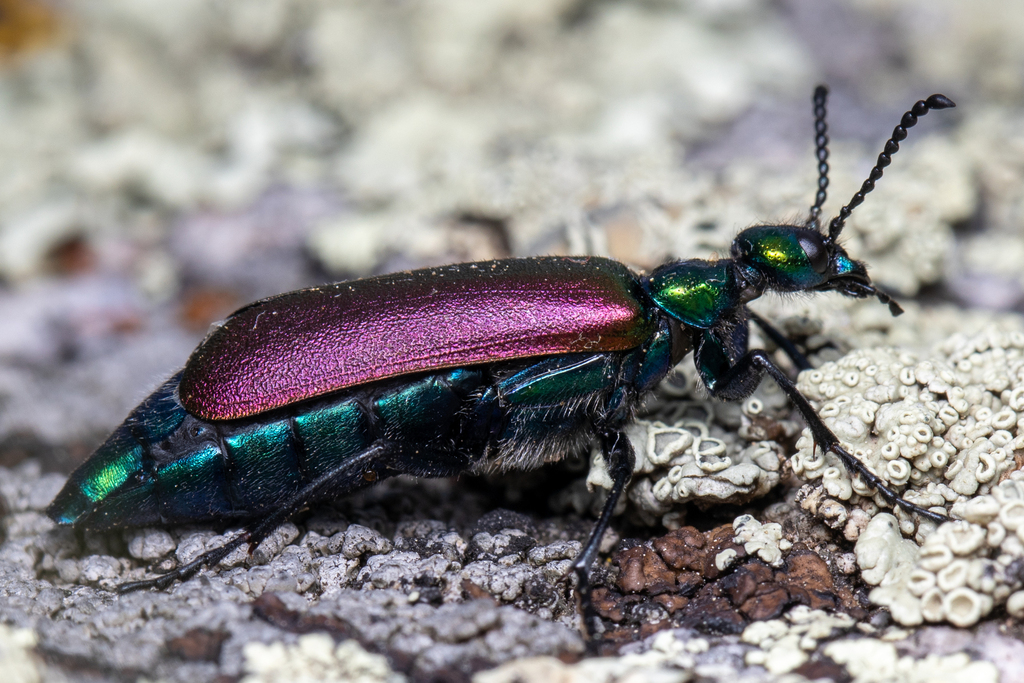
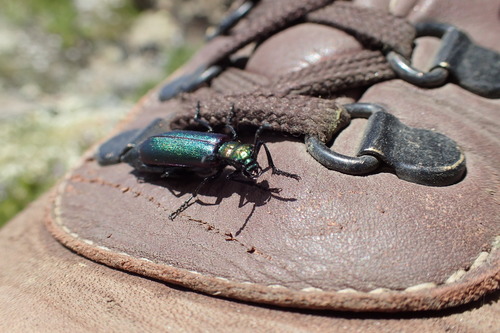
Nuttall's blister beetle has a shiny purple-green metallic shell that stands out against prairie plants. It lives in western North America from Alberta and Manitoba down through Idaho to Arizona and east to Minnesota and New Mexico, with a separate high-altitude group in eastern California. Both adults and larvae produce the irritating chemical cantharidin, which can blister skin or poison animals that eat them.
Source: Wikipedia
How to recognize it
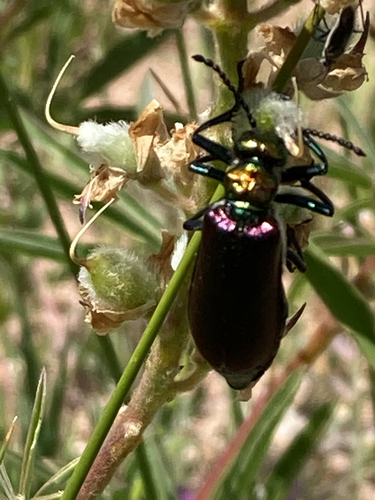
The beetle’s exoskeleton shows bright purple and green iridescence.
Source: Wikipedia
Is it a pest in the house?
They are not a serious agricultural pest because they need native ground-nesting bees for their larvae.
Source: Wikipedia
Does it bite or sting?
Adults produce cantharidin, which can irritate or blister skin if the beetle is handled. Animals that ingest the beetles may be poisoned by this chemical.
Source: Wikipedia
What it eats
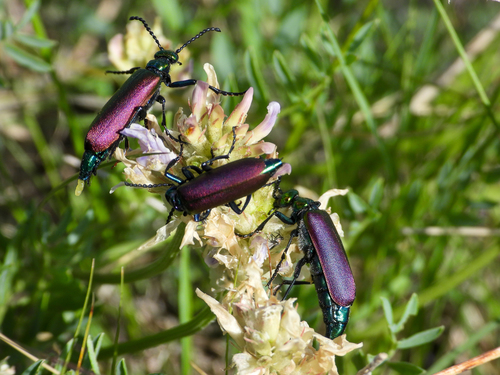
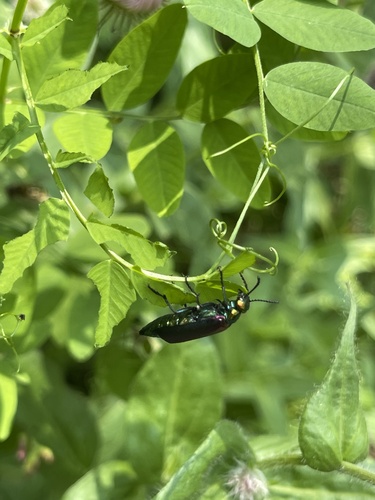
Adult beetles feed in groups on green plants, especially legumes. Larvae develop in the nests of solitary ground-nesting bees, eating bee larvae and stored pollen.
Source: Wikipedia
Life cycle
The larvae live inside solitary bee nests, consuming the bee’s offspring and food stores. Adult beetles can synthesize cantharidin, a chemical used for defense.
Source: Wikipedia
Where it comes from
Its native range includes Canadian provinces from Alberta to Manitoba and many western U.S. states. A disjunct population lives at higher elevations in eastern California.
Source: Wikipedia
Where it is found in the US
Recorded in 12 of 51 states and DC. Most records: Colorado, Wyoming, North Dakota, Utah, California, Montana, South Dakota, New Mexico.
Darker = more records. Counts are museum and citizen-science records, not population size.
Source: GBIF
Status: native in Canada. Source: iNaturalist
Months it is reported in the US
Source: GBIF
More photos
Questions people ask
What should I do if the beetle touches my skin?
Wash the area with soap and water; the cantharidin can cause irritation or blisters.
Source: Wikipedia
Are these beetles a problem for crops?
They are not considered a serious agricultural pest because their numbers depend on native ground-nesting bees.
Source: Wikipedia
Can pets be harmed by eating these beetles?
Yes, animals that eat them can be poisoned by their chemical defense.
Source: Wikipedia
Same family (Meloidae)




Sources
- Wikipedia: https://en.wikipedia.org/wiki/Lytta_nuttalli
Look it up elsewhere: GBIF · iNaturalist · BugGuide · ITIS · Wikipedia
Text written 2026-10-24 from the sources above and checked sentence by sentence against them. Data fetched 2026-10-24.