 Bug FAQ
Nomad
Sympetrum fonscolombii · Order: Odonata · Family: Libellulidae
Also called: Red-Veined Darter, Red-Veined Sympetrum, Red-veined Darter Dragonfly

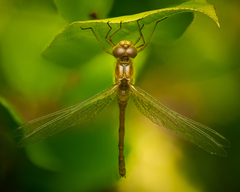
The Red-veined Darter is a small dragonfly about 33 to 40 mm long with red wing veins and a bright red abdomen in males. It lives near water such as marshes, lakes, ponds and rivers, and is common across much of Europe, North Africa and parts of Asia. Adults can be seen year-round in the Mediterranean, while further north they fly mainly May to October; the species can have two generations per year and some larvae overwinter.
Source: Wikipedia
How to recognize it
Males have bright red wing veins and a red abdomen that is redder than most other Sympetrum species.
Source: Wikipedia
Size
Body length ranges from 33 to 40 mm, with hindwings 26 to 31 mm long.
Source: Wikipedia
Where it lives
It breeds in many wet habitats, including marshes, lakes, ponds and both permanent and seasonal rivers.
Source: Wikipedia
Life cycle
Eggs and larvae develop in a few months, and in warm areas the species can produce two generations each year. Some larvae survive the winter before emerging as adults.
Source: Wikipedia
Lookalikes
Male Red-veined Darter can be confused with the similarly red Crocothemis erythraea, which also has yellow wing bases, red veins and a pale pterostigma.
Source: Wikipedia
Questions people ask
How can I tell it apart from similar dragonflies?
Look for the distinctive red wing veins and the very red abdomen of the male; these features differ from the similar Crocothemis erythraea.
Source: Wikipedia
Same family (Libellulidae)

Sources
- Wikipedia: https://en.wikipedia.org/wiki/Red-veined_darter
Look it up elsewhere: GBIF · iNaturalist · BugGuide · Wikipedia
Text written 2026-10-22 from the sources above and checked sentence by sentence against them. Data fetched 2026-10-22.