 Bug FAQ
Nodding Thistle Receptacle Weevil
Rhinocyllus conicus · Order: Coleoptera · Family: Curculionidae
Also called: Weevil, thistle head weevil
Source: Wikipedia
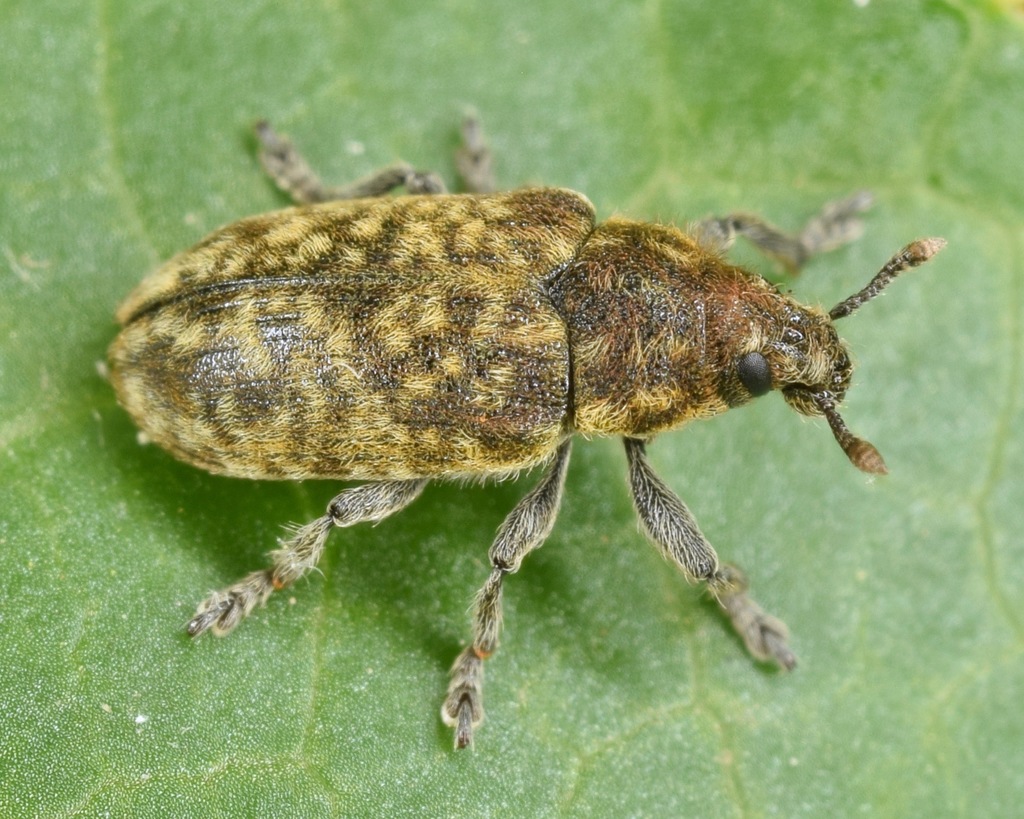
The nodding thistle receptacle weevil is a small black beetle about 6 mm long, covered in thin black and yellowish hairs. Females lay over a hundred eggs on thistle flower heads, and the larvae burrow inside to eat flower parts and developing seeds. Adults also feed on thistle foliage, adding to the plant damage.
Source: Wikipedia
How to recognize it
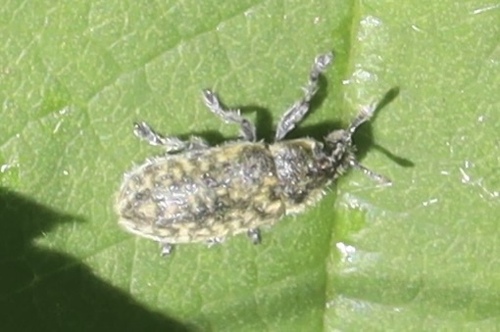
Adults are black with a thin mottled coat of black and yellowish hairs.
Source: Wikipedia
Size
They grow up to about 6 mm in total length.
Source: Wikipedia
Is it a pest in the house?
The weevil is mainly a biocontrol agent, not a household pest. Damage to thistles comes from larval destruction of flower heads, which stops seed production.
Source: Wikipedia
How to get rid of it
It was first released in the United States in 1969 and is now widespread there. Because it is now established, it is no longer recommended for further release as a biocontrol agent.
Source: Wikipedia
Where it lives
They have been introduced to control invasive thistles such as Carduus, Cirsium, Onopordum and Silybum.
Source: Wikipedia
What it eats
Larvae feed inside thistle flower heads on flower parts and developing seeds. Adults also chew thistle foliage.
Source: Wikipedia
Life cycle
A female can lay more than 100 eggs on or near thistle bracts. After pupating for up to two weeks, the adult stays in its chamber for a few weeks before emerging.
Source: Wikipedia
Where it comes from
The species originates from Eurasia and North Africa.
Source: Wikipedia
Where it is found in the US
Recorded in 33 of 51 states and DC. Most records: California, Texas, Colorado, Washington, Kansas, Oregon, New Mexico, Virginia.
Darker = more records. Counts are museum and citizen-science records, not population size.
Source: GBIF
Status: introduced in North America; introduced in Canada; introduced in United States. Source: iNaturalist
Months it is reported in the US
Source: GBIF
More photos
Questions people ask
How does this weevil affect thistles?
The larvae eat the flower heads and developing seeds, preventing the plant from producing seeds.
Source: Wikipedia
Is the nodding thistle receptacle weevil used for biological control?
Yes, it has been introduced to control several invasive thistle species.
Source: Wikipedia
Same family (Curculionidae)
 Green Immigrant Leaf WeevilPolydrusus formosusDamages trees, gardens or crops
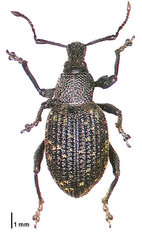 Black Vine WeevilOtiorhynchus sulcatusDamages trees, gardens or crops
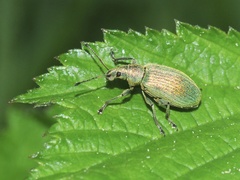 Nettle weevilPhyllobius pomaceusDamages trees, gardens or crops
 Asian Oak WeevilCyrtepistomus castaneusDamages trees, gardens or crops
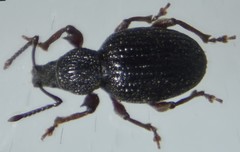 Strawberry Root WeevilOtiorhynchus ovatusDamages trees, gardens or crops
 Common Leaf WeevilPhyllobius pyriDamages trees, gardens or crops
Sources
- Wikipedia: https://en.wikipedia.org/wiki/Rhinocyllus_conicus
Look it up elsewhere: GBIF · iNaturalist · BugGuide · ITIS · Wikipedia
Text written 2026-10-23 from the sources above and checked sentence by sentence against them. Data fetched 2026-10-22.