 Bug FAQ
New Zealand giant centipede
Cormocephalus rubriceps · Order: Scolopendromorpha · Family: Scolopendridae
Also called: Giant centipede
Source: Wikipedia

New Zealand giant centipedes can grow over 20 cm long, while Australian individuals usually stay under 4 cm. They live in damp places such as rotten logs, leaf litter and occasionally caves. They are predators of insects, other invertebrates and small reptiles, and will bite if threatened.
Source: Wikipedia
How to recognize it
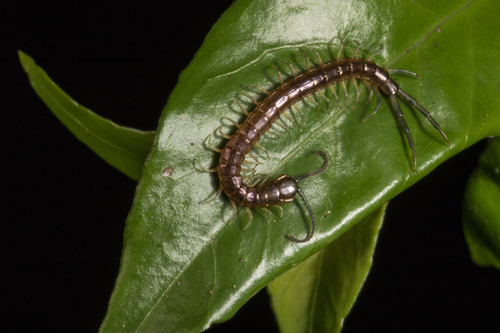
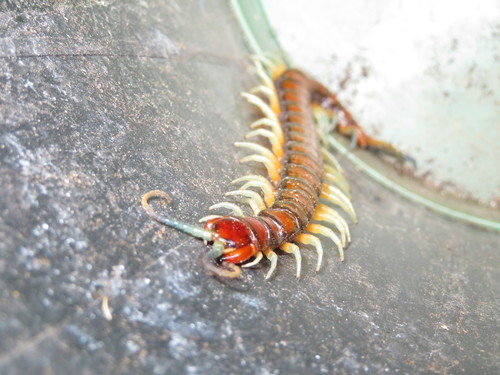
The head and first body segment are reddish-brown; the remaining segments are olive-brown. They have large black, fang-like forcipules.
Source: Wikipedia
Size
They can exceed 20 cm (8 in) in length in New Zealand. In Australia they usually reach a maximum of about 3.9 cm (1.5 in).
Source: Wikipedia
Does it bite or sting?
When threatened they can deliver a painful bite. The bite can cause swelling and, in at least one case, severe pain with vomiting.
Source: Wikipedia
Where it lives
They prefer damp habitats such as rotten logs and leaf litter. They are sometimes found in caves, acting as trogloxenes to they can enter but not permanently live there.
Source: Wikipedia
What it eats
They are predators that eat a variety of invertebrates and small reptiles. In captivity they accept tree wētā, katydids and black field crickets.
Source: Wikipedia
Life cycle
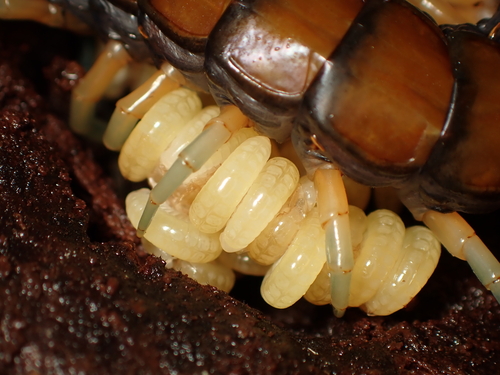
Females guard their young. Their bodies have 21 dorsal (tergites) and ventral (sternites) plates.
Source: Wikipedia
Where it comes from
They are native to New Zealand and Australia. In New Zealand they occur only on the North Island.
Source: Wikipedia
More photos

Questions people ask
Can they bite people?
Yes, they can bite, causing pain, swelling and sometimes severe discomfort.
Source: Wikipedia
How large do they get?
In New Zealand they can exceed 20 cm, while Australian individuals usually stay under 4 cm.
Source: Wikipedia
Where are they found?
They are native to New Zealand (North Island only) and Australia, living in damp places like rotten logs, leaf litter and occasionally caves.
Source: Wikipedia
What do they eat?
They prey on insects, other invertebrates and small reptiles; in captivity they will eat tree wētā, katydids and black field crickets.
Source: Wikipedia
Same family (Scolopendridae)
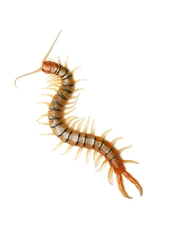 Common Desert CentipedeScolopendra polymorphaCan bite
 Giant Desert CentipedeScolopendra herosCan bite
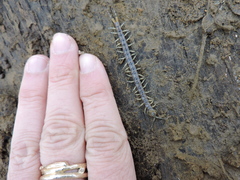 Eastern Bark CentipedeHemiscolopendra marginata
 Mediterranean Banded CentipedeScolopendra cingulataCan bite
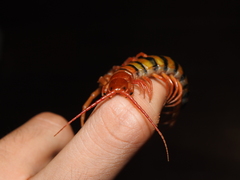 Red-headed CentipedeScolopendra morsitansCan bite
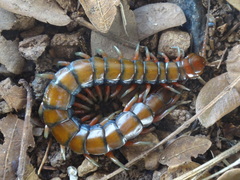 Pacific Giant CentipedeScolopendra subspinipesVenomous
Sources
- Wikipedia: https://en.wikipedia.org/wiki/Cormocephalus_rubriceps
Look it up elsewhere: GBIF · iNaturalist · BugGuide · ITIS · Wikipedia
Text written 2026-10-23 from the sources above and checked sentence by sentence against them. Data fetched 2026-10-23.