 Bug FAQ
Mediterranean Banded Centipede
Scolopendra cingulata · Order: Scolopendromorpha · Family: Scolopendridae
Also called: Megarian banded centipede
Source: Wikipedia
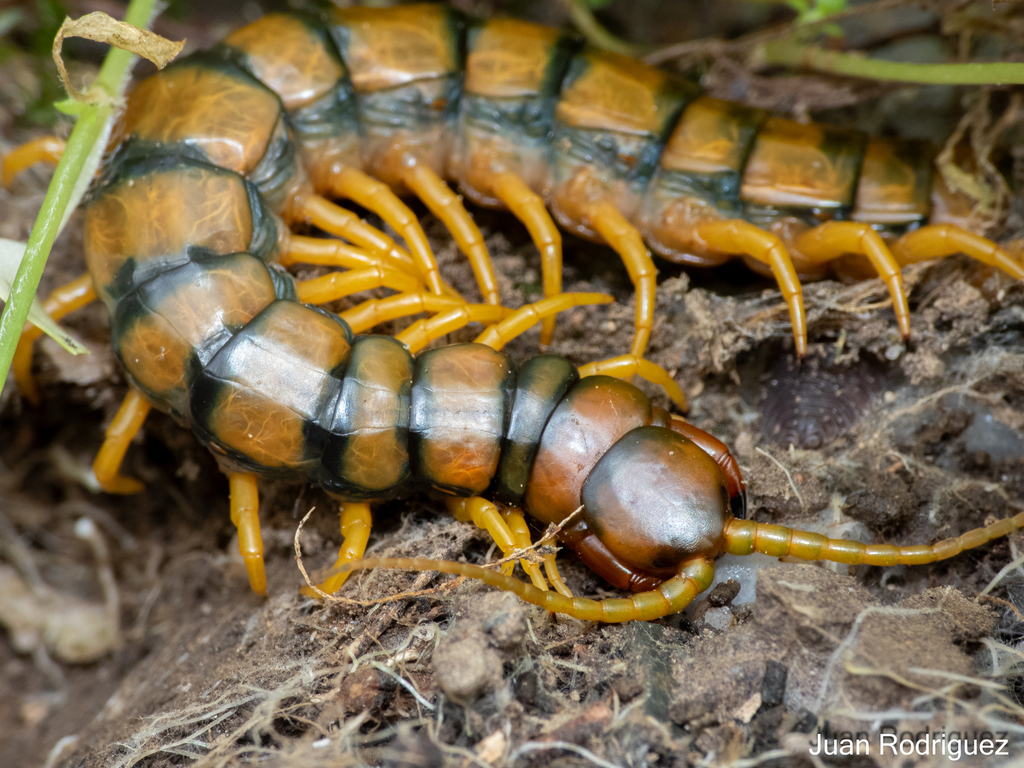
The Mediterranean Banded Centipede is a small, 15 to 18 cm burrowing centipede with black and yellow-gold bands. It lives in damp places under logs or leaf litter across southern Europe and parts of North Africa, and it eats insects and small lizards.
Source: Wikipedia
How to recognize it
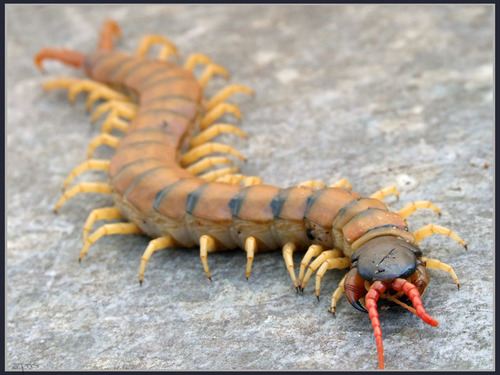
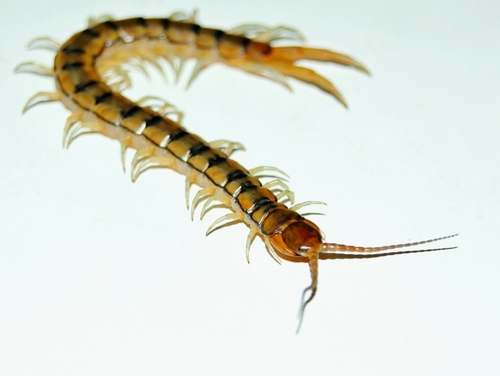
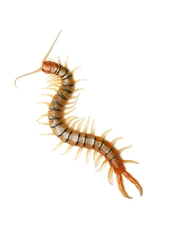
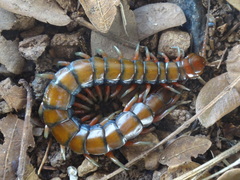
Its body shows alternating black and yellow-gold bands.
Source: Wikipedia
Size
Adults are about 15 to 18 cm long, making it one of the smaller scolopendrids.
Source: Wikipedia
Does it bite or sting?
Its bite delivers venom that is milder than that of many other centipedes.
Source: Wikipedia
Where it lives
It prefers dark, damp habitats such as under logs and in leaf litter, where it can burrow.
Source: Wikipedia
What it eats
It is an opportunistic carnivore that preys on insects and small lizards that are not larger than itself.
Source: Wikipedia
Where it comes from
It is found throughout southern Europe, the Mediterranean region, the Black Sea area, and parts of North Africa.
Source: Wikipedia
More photos
Questions people ask
Do Mediterranean Banded Centipedes bite humans?
Yes, it can bite. Its venom is not as toxic as that of other large centipedes.
Source: Wikipedia
Same family (Scolopendridae)


Sources
- Wikipedia: https://en.wikipedia.org/wiki/Scolopendra_cingulata
Look it up elsewhere: GBIF · iNaturalist · BugGuide · ITIS · Wikipedia
Text written 2026-10-22 from the sources above and checked sentence by sentence against them. Data fetched 2026-10-22.