 Bug FAQ
Nephrotoma flavipalpis
Nephrotoma flavipalpis · Order: Diptera · Family: Tipulidae
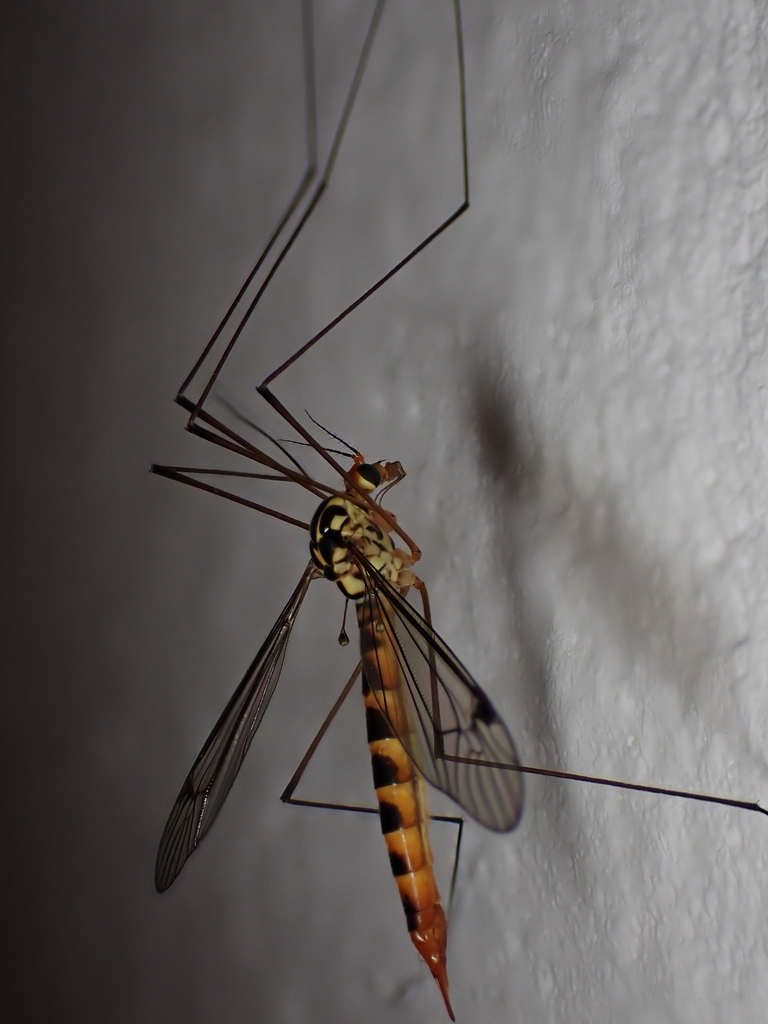
Nephrotoma flavipalpis is a crane fly about 12 to 18 mm long with yellow and black markings and a dark spot on the wing. Adults appear from June to October in woods and hedgerows across most of Europe and parts of North Africa.
Source: Wikipedia
How to recognize it
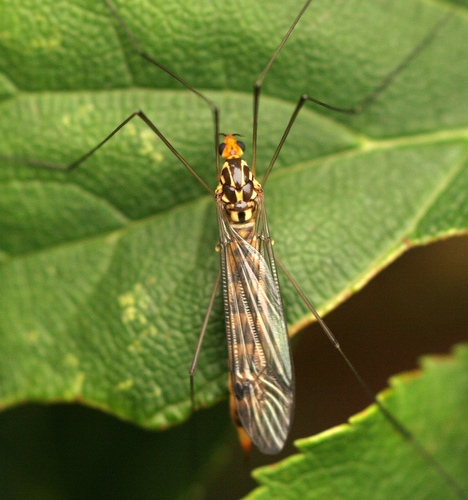
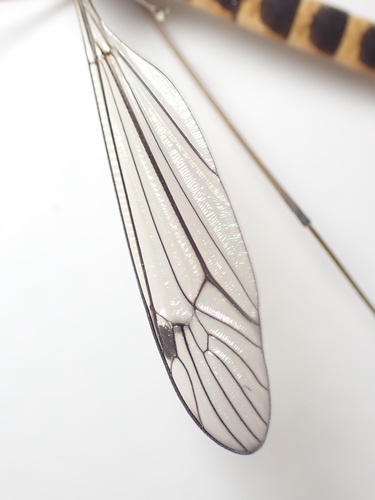
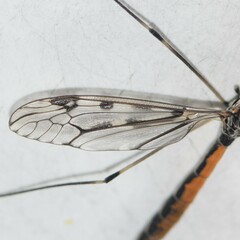
It has a shiny body, a mostly yellow head with a short proboscis, verticillate antennae, a yellow-black thorax, and black-yellow bands on the abdomen; the wings show a dark stigma.
Source: Wikipedia
Size
Body length ranges from about 12 to 18 mm and wing length from 10 to 18 mm.
Source: Wikipedia
Where it lives
It lives in woods and hedgerows.
Source: Wikipedia
What it eats
The larvae develop in soil.
Source: Wikipedia
Life cycle
Adults are present from June to October, while the larvae live in the soil.
Source: Wikipedia
When you see it
Adults can be seen from June through October.
Source: Wikipedia
Where it comes from
Found throughout most of Europe and in Algeria and Tunisia in North Africa.
Source: Wikipedia
Lookalikes
It looks very similar to Nephrotoma scalaris.
Source: Wikipedia
More photos
Questions people ask
What does Nephrotoma flavipalpis look like?
It is a medium-sized crane fly with a lustrous body, yellow head, yellow-black thorax, banded abdomen and a dark spot on each wing.
Source: Wikipedia
When can I see adult Nephrotoma flavipalpis?
Adults are active from June to October.
Source: Wikipedia
Where does this crane fly live?
It inhabits woods and hedgerows across most of Europe and parts of North Africa.
Source: Wikipedia
Same family (Tipulidae)



Sources
- Wikipedia: https://en.wikipedia.org/wiki/Nephrotoma_flavipalpis
Look it up elsewhere: GBIF · iNaturalist · BugGuide · Wikipedia
Text written 2026-10-23 from the sources above and checked sentence by sentence against them. Data fetched 2026-10-22.