 Bug FAQ
Cranefly
Nephrotoma cornicina · Order: Diptera · Family: Tipulidae
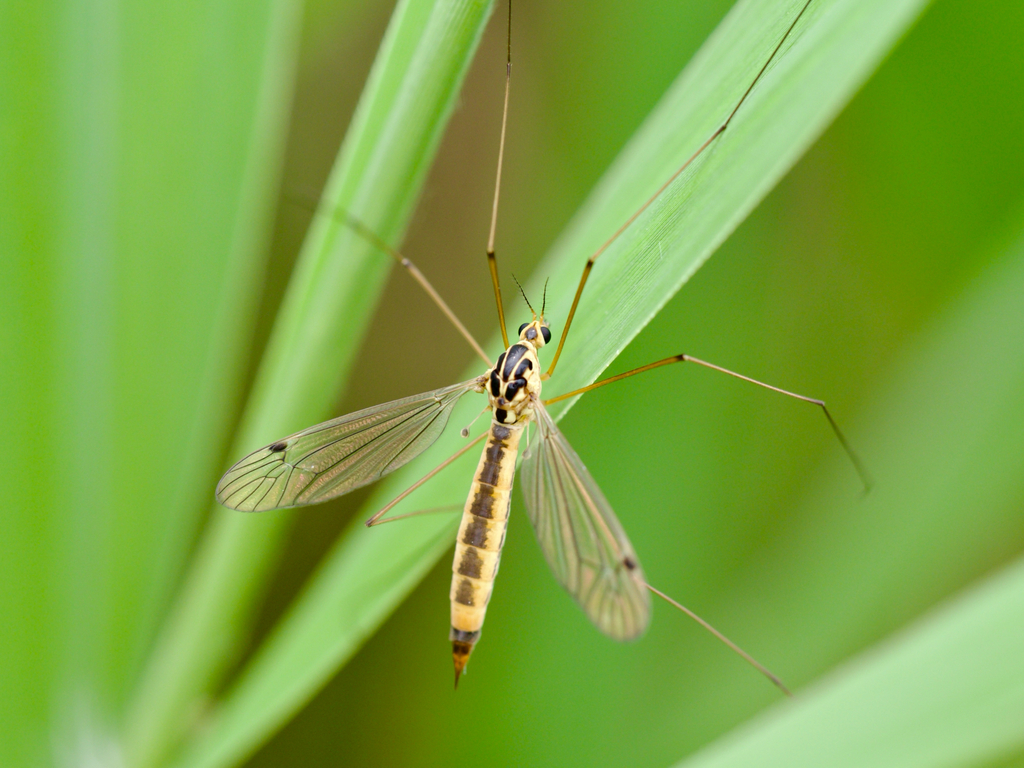
Nephrotoma cornicina adults are 12 to 15 mm long with wings 11 to 15 mm long. The wings have a small, dark stigma and the abdomen is mainly yellow with a central dark stripe that may be missing on the last two segments. They live in turf grass and hedge rows across the Palearctic region and feed on the nectar of dandelion and wild chervil.
Source: Wikipedia
How to recognize it
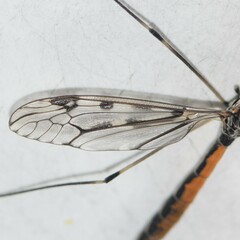
The wing stigma is small and dark, standing out clearly.
Source: Wikipedia
Size
Body length ranges from 12 to 15 mm and wing length from 11 to 15 mm.
Source: Wikipedia
Where it lives
They are found mainly in turf grass and hedge rows.
Source: Wikipedia
What it eats
Adults feed on nectar of common dandelion (Taraxacum officinale) and wild chervil (Anthriscus sylvestris).
Source: Wikipedia
Life cycle
Adults are present from late April through mid-September.
Source: Wikipedia
When you see it
You can see them from late April to mid-September.
Source: Wikipedia
Where it comes from
The species is widely distributed throughout the Palearctic realm.
Source: Wikipedia
Where it is found in the US
Recorded in 11 of 51 states and DC. Most records: Illinois, Michigan, New York, Wisconsin, Maine, Minnesota, Pennsylvania, Vermont.
Darker = more records. Counts are museum and citizen-science records, not population size.
Source: GBIF
Status: introduced in United States; introduced in Canada. Source: iNaturalist
Months it is reported in the US
Source: GBIF
More photos
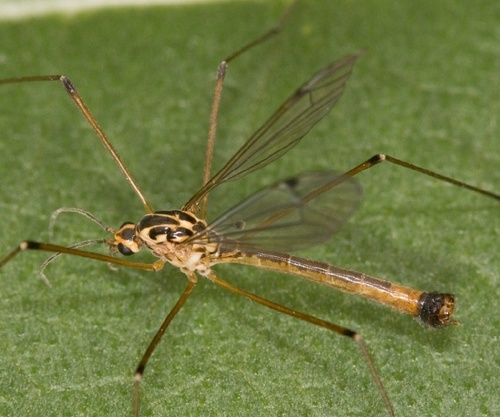
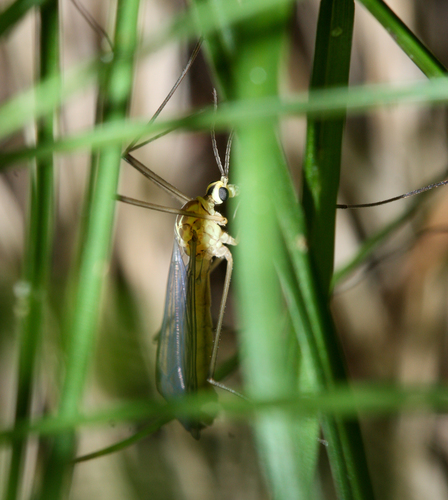
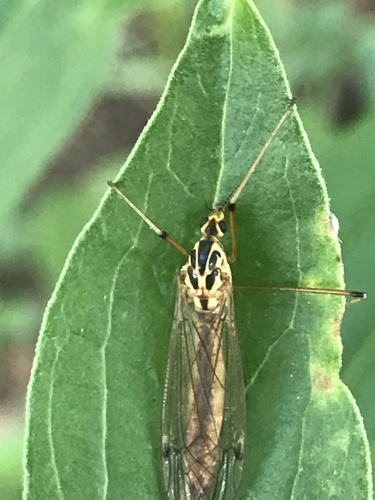
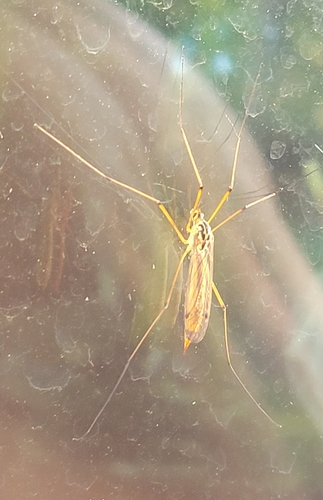
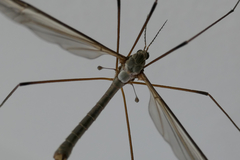
Same family (Tipulidae)




Sources
- Wikipedia: https://en.wikipedia.org/wiki/Nephrotoma_cornicina
Look it up elsewhere: GBIF · iNaturalist · BugGuide · ITIS · Wikipedia
Text written 2026-10-23 from the sources above and checked sentence by sentence against them. Data fetched 2026-10-22.