 Bug FAQ
Narrow Stingless Bee
Tetragonisca angustula · Order: Hymenoptera · Family: Apidae
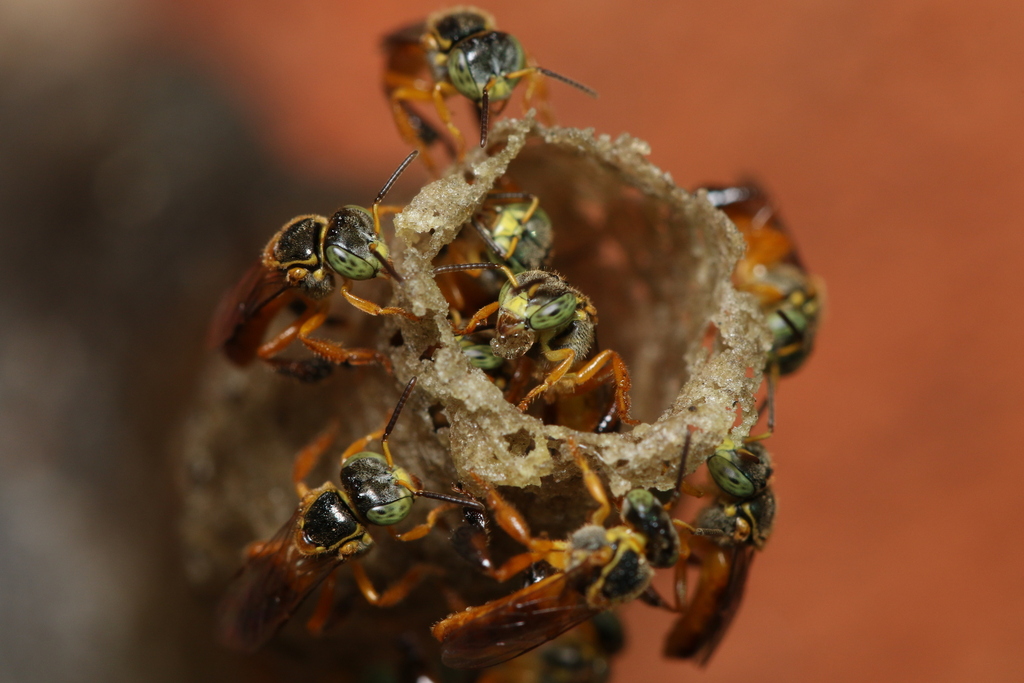
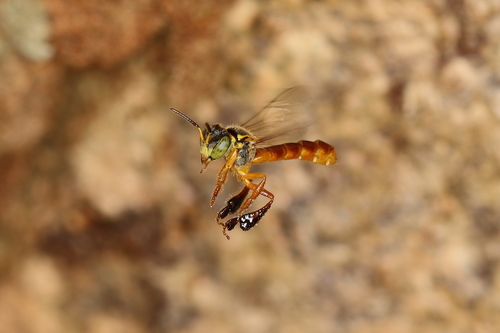
The narrow stingless bee is a very small, social bee that lives in many habitats across Mexico to Argentina. It builds nests in cavities such as tree holes or walls and produces a lot of honey, which beekeepers often keep. Workers live about three weeks, start foraging after two weeks, and help care for the next generation.
Source: Wikipedia
How to recognize it
Like all Meliponini, it has no sting, reduced wing veins and leg bristles. It belongs to the Apidae family, subfamily Apinae, and is a eusocial stingless bee.
Source: Wikipedia
Size
Adults are only about 4 to 5 mm long, making them exceptionally tiny. Queens are noticeably larger than workers.
Source: Wikipedia
Is it a pest in the house?
Beekeepers often keep them in wooden hives for their abundant honey.
Source: Wikipedia
Does it bite or sting?
They are stingless bees in the Apidae family.
Source: Wikipedia
Where it lives
Nests are found in many settings, from recovering forests to urban areas.
Source: Wikipedia
What it eats
Workers begin foraging about 16 days after emerging and continue for the rest of their lives.
Source: Wikipedia
Life cycle
Workers typically live around 21 days but can survive up to 60 days. The colony expands by swarming and caring for new brood.
Source: Wikipedia
Where it comes from
Its range extends from Mexico through Central America down to Argentina.
Source: Wikipedia
Lookalikes
Their range overlaps with many other stingless bees, especially Paratrigona subnuda. They use pre-existing cavities like tree holes or abandoned ant nests for new colonies.
Source: Wikipedia
Status: native in North America. Source: iNaturalist
More photos

Questions people ask
Can I keep them for honey?
Yes, beekeepers often keep them in wooden hives to harvest their honey.
Source: Wikipedia
Same family (Apidae)


Sources
- Wikipedia: https://en.wikipedia.org/wiki/Tetragonisca_angustula
Look it up elsewhere: GBIF · iNaturalist · BugGuide · ITIS · Wikipedia
Text written 2026-10-22 from the sources above and checked sentence by sentence against them. Data fetched 2026-10-22.