 Bug FAQ
Nannotrigona testaceicornis
Nannotrigona testaceicornis · Order: Hymenoptera · Family: Apidae
Source: Wikipedia
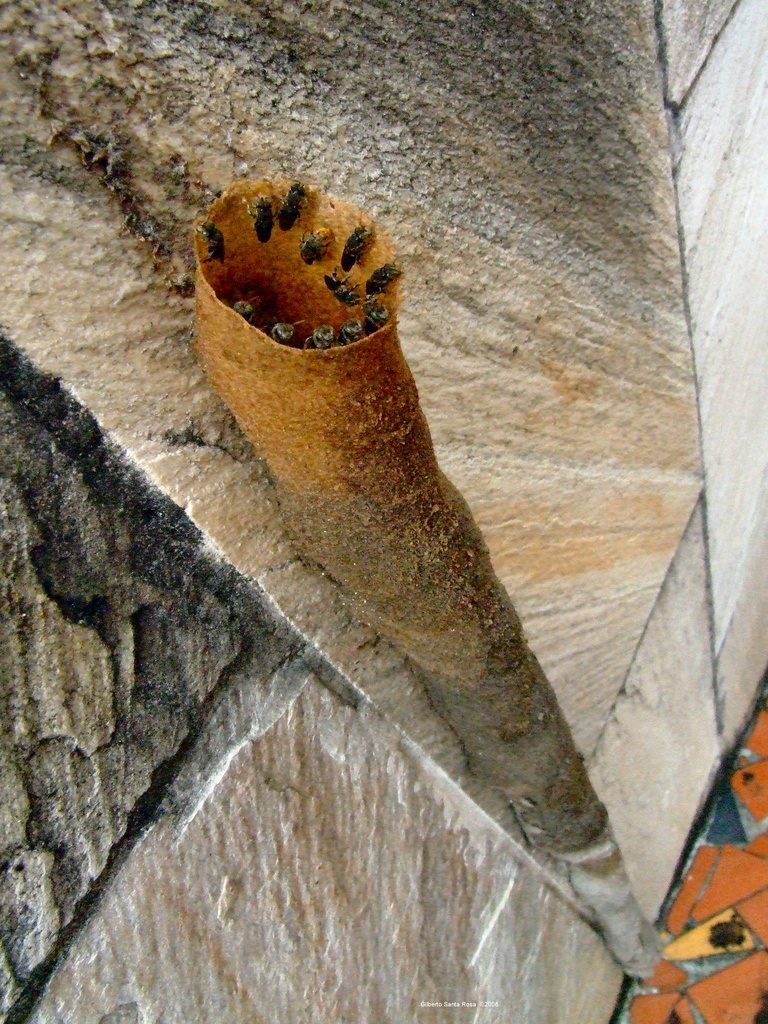
These bees are tiny, only 3 to 5 mm long, black with grey hairs and a wrinkled thorax. They nest in both natural and artificial cavities, often using human-made structures. They are important pollinators, collecting pollen from many different plants year-round.
Source: Wikipedia
How to recognize it
Black body with grey hairs and a coarse, wrinkled thorax.
Source: Wikipedia
Size
Adults measure about 3 to 5 mm in length.
Source: Wikipedia
Does it bite or sting?
Defend by biting predators; they lack a toxic stinger.
Source: Wikipedia
Where it lives
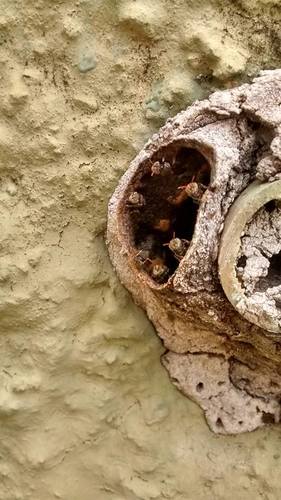
Can live in self-made nests and also occupy artificial hives. Often use cavities created by human constructions for nesting.
Source: Wikipedia
What it eats
Pollinate many plant species throughout the year.
Source: Wikipedia
Life cycle
Colonies contain roughly 2,000 to 3,000 individuals. Queens and workers are produced in the same sized cells, often in excess of need.
Source: Wikipedia
Where it comes from
Found throughout Brazil and other neotropical regions.
Source: Wikipedia
Lookalikes
The genus includes about nine species ranging from Mexico to southern Brazil and Paraguay.
Source: Wikipedia
More photos
Questions people ask
Do they bite people?
Yes, they can bite when disturbed, but the bite is only mildly painful.
Source: Wikipedia
Where do they build their nests?
They nest in natural cavities and also use artificial hives or human-made holes.
Source: Wikipedia
Are they important for gardening?
They pollinate many different plants throughout the year, helping garden crops.
Source: Wikipedia
Same family (Apidae)


Sources
- Wikipedia: https://en.wikipedia.org/wiki/Nannotrigona_testaceicornis
Look it up elsewhere: GBIF · iNaturalist · BugGuide · ITIS · Wikipedia
Text written 2026-10-23 from the sources above and checked sentence by sentence against them. Data fetched 2026-10-22.