 Bug FAQ
Mylitta Crescent
Phyciodes mylitta · Order: Lepidoptera · Family: Nymphalidae
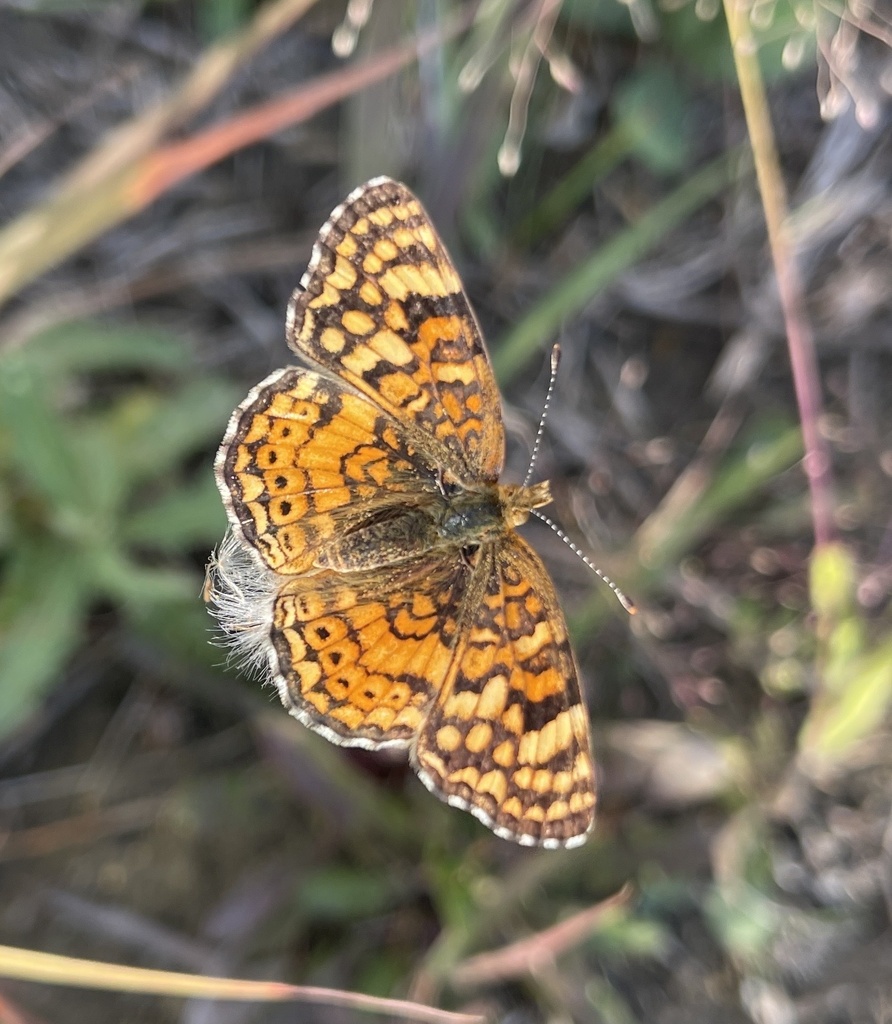
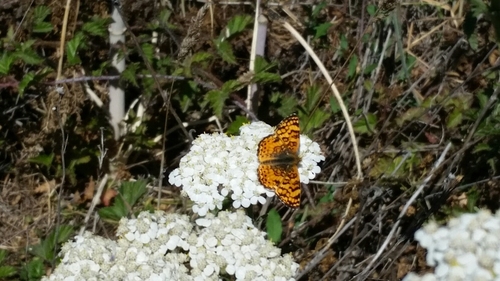
The crescent butterfly has a 26 to 37 mm wingspan and orange wings with black markings and a white fringe; females are darker than males. It lives in meadows and stream banks within forested areas of western North America and flies from June to late July in Canada, extending into fall in California.
Source: Wikipedia
How to recognize it
Wings are orange with black markings and a white fringe; females are darker than males.
Source: Wikipedia
Size
Wingspan ranges from 26 to 37 mm.
Source: Wikipedia
Where it lives
Found in many habitats, especially meadows and stream banks in forested areas.
Source: Wikipedia
What it eats
Adults sip nectar from flowers.
Source: Wikipedia
Life cycle
Adults are on the wing from June through late July in Canada and continue into the fall in California.
Source: Wikipedia
When you see it
Flight period matches June-July in Canada and extends to fall in California.
Source: Wikipedia
Where it comes from
Occurs in western North America.
Source: Wikipedia
Lookalikes
Looks similar to the pale crescent butterfly, Phyciodes pallida.
Source: Wikipedia
Where it is found in the US
Recorded in 16 of 51 states and DC. Most records: California, Oregon, Idaho, Washington, New Mexico, Arizona, Utah, Colorado.
Darker = more records. Counts are museum and citizen-science records, not population size.
Source: GBIF
Status: native in North America; native in Canada; native in United States. Source: iNaturalist
Months it is reported in the US
Source: GBIF
More photos
Same family (Nymphalidae)






Sources
- Wikipedia: https://en.wikipedia.org/wiki/Phyciodes_mylitta
Look it up elsewhere: GBIF · iNaturalist · BugGuide · ITIS · Wikipedia
Text written 2026-10-22 from the sources above and checked sentence by sentence against them. Data fetched 2026-10-22.