 Bug FAQ
Mountain monkey beetle
Hoplia argentea · Order: Coleoptera · Family: Scarabaeidae
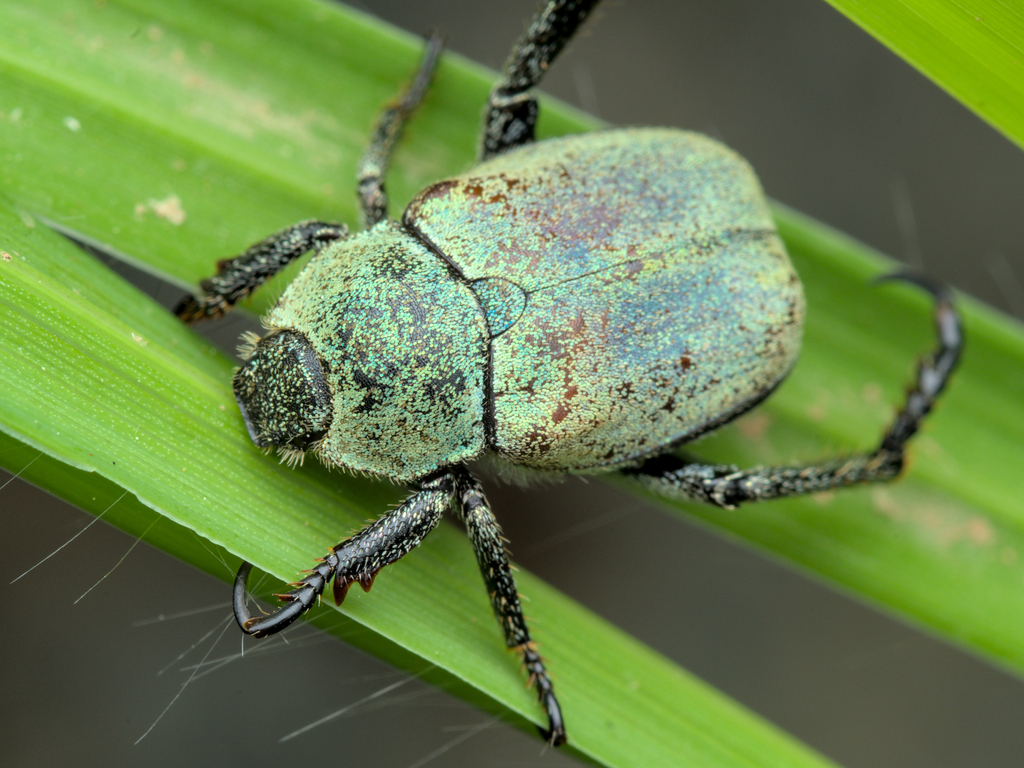
Adults are 9 to 12 mm long and have pale green to yellow-ochre scales that fade to brown in old specimens. They live in open areas, parks, forest edges and meadows across most of Europe. Adults feed on flower pollen from May to September, while larvae live in soil eating plant roots.
Source: Wikipedia
Size
Adults grow to about 9 to 12 mm (0.35 to 0.47 in) long.
Source: Wikipedia
What it eats
Adults feed on pollen of flowers, especially Apiaceae, from May through September. Larvae develop in soil and eat the roots of various plants during summer.
Source: Wikipedia
Life cycle
Larvae feed on roots in summer, then hibernate and emerge as adults in spring.
Source: Wikipedia
When you see it
Adults are most commonly seen from May to September.
Source: Wikipedia
Where it comes from
They occur in most European countries, including Austria, France, Germany, Italy and Spain.
Source: Wikipedia
Lookalikes
Like other Hoplia species, it has relatively long hind legs ending in a single nail.
Source: Wikipedia
Questions people ask
When can I expect to see these beetles?
Adults are most active from May through September.
Source: Wikipedia
What do the larvae eat?
The larvae live in soil and feed on the roots of various plants during the summer.
Source: Wikipedia
Where are mountain monkey beetles found?
They inhabit open areas, parks, forest edges and meadows across much of Europe.
Source: Wikipedia
Same family (Scarabaeidae)
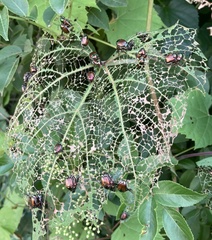 Japanese BeetlePopillia japonicaDamages trees, gardens or crops
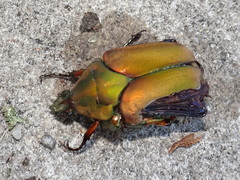 Common Green June BeetleCotinis nitidaDamages trees, gardens or crops
 Phyllophaga crinitaPhyllophaga crinitaDamages trees, gardens or crops
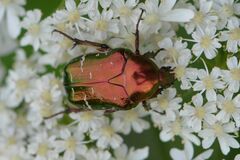 European Rose ChaferCetonia aurata
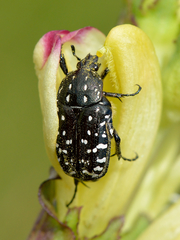 Mediterranean Spotted ChaferOxythyrea funestaDamages trees, gardens or crops
 Oriental BeetleExomala orientalisDamages trees, gardens or crops
Sources
- Wikipedia: https://en.wikipedia.org/wiki/Hoplia_argentea
Look it up elsewhere: GBIF · iNaturalist · BugGuide · Wikipedia
Text written 2026-10-22 from the sources above and checked sentence by sentence against them. Data fetched 2026-10-22.