 Bug FAQ
Monkey Puzzle
Rathinda amor · Order: Lepidoptera · Family: Lycaenidae
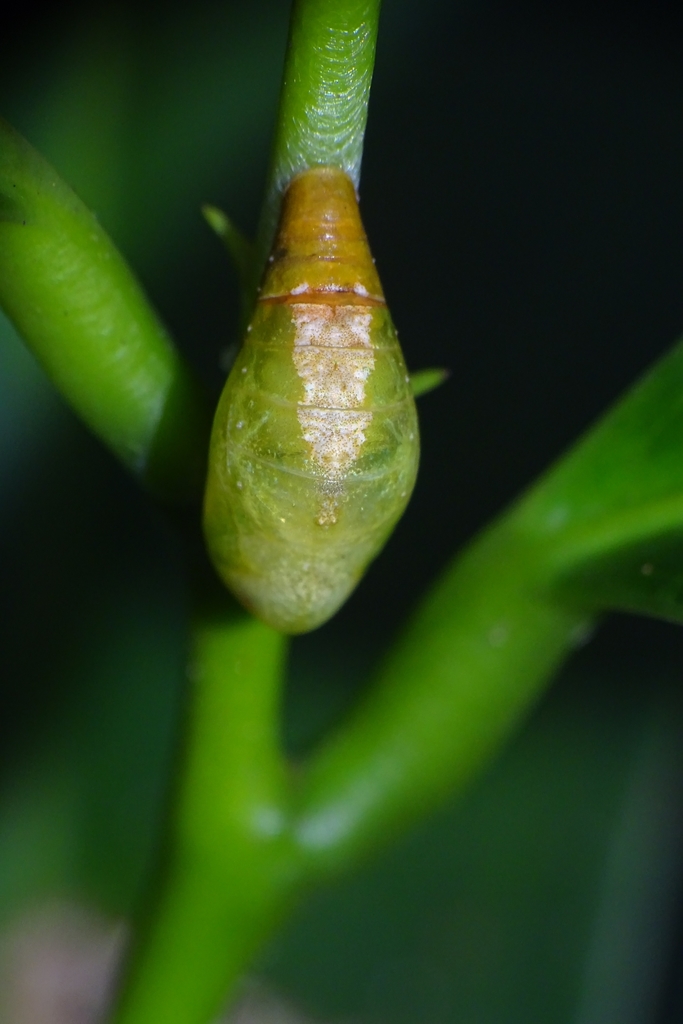
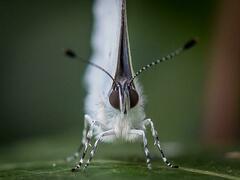
The monkey puzzle butterfly has dark upper wings with a violet tint and distinctive white and orange-capped spots on its fore- and hindwings. It lives in jungle and scrub forest undergrowth below about 900 m, especially in the Western Ghats, southern Indian plains, Bangladesh and Sri Lanka. Adults feed on soapberries, myrtles, mangoes and several plant families such as Rubiaceae, Dipterocarpeae, Euphorbiaceae and Loranthaceae, and they are weak fliers that often turn and waggle their tail filaments when they land.
Source: Wikipedia
How to recognize it
Upperside is brownish-black with a violet tint. Hindwing has two black lunular spots between the tails, a possible third spot above, all capped with orange and edged with a fine blue line; tails are black with white tips.
Source: Wikipedia
Where it lives
Found in moderate to heavy-rainfall jungles and scrub forests below 900 m. Prefers forest undergrowth but can be seen on paths and clearings.
Source: Wikipedia
What it eats
Feeds on soapberries, myrtles, mangoes and plants from Rubiaceae (e.g., Ixora coccinea), Dipterocarpeae, Euphorbiaceae and Loranthaceae.
Source: Wikipedia
Life cycle
A weak flier that often turns, sidesteps and wiggles its tail filaments when it lands.
Source: Wikipedia
Where it comes from
Endemic to South Asia: India's Western Ghats, southern Indian plains, Bangladesh and Sri Lanka.
Source: Wikipedia
Same family (Lycaenidae)

Sources
- Wikipedia: https://en.wikipedia.org/wiki/Rathinda
Look it up elsewhere: GBIF · iNaturalist · BugGuide · Wikipedia
Text written 2026-10-23 from the sources above and checked sentence by sentence against them. Data fetched 2026-10-22.