 Bug FAQ
Mexican Fruit Fly
Anastrepha ludens · Order: Diptera · Family: Tephritidae
Source: Wikipedia
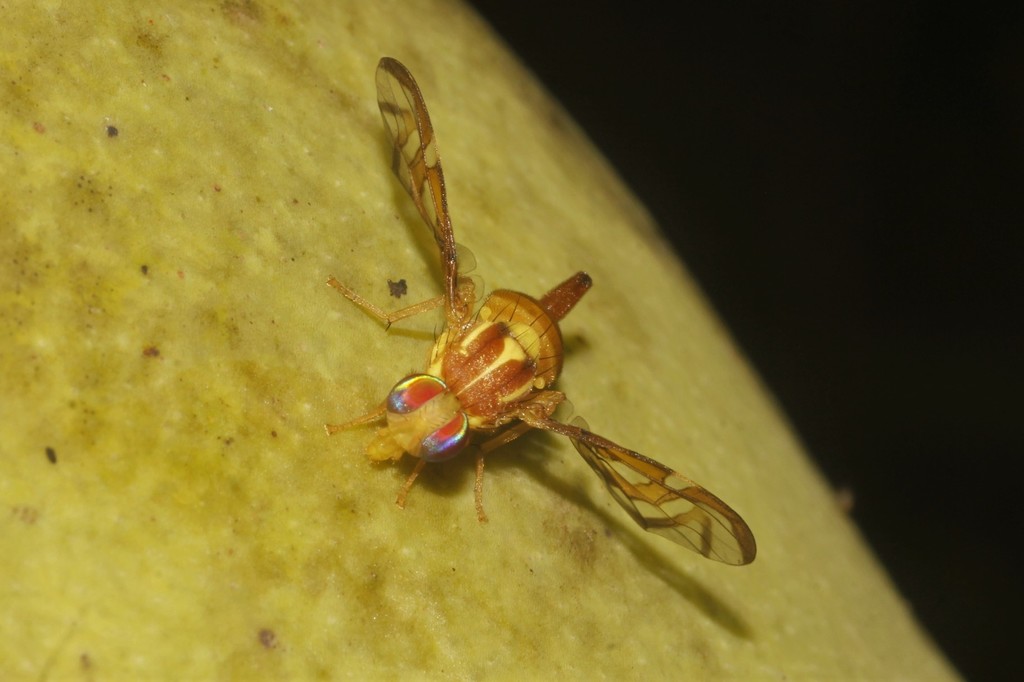
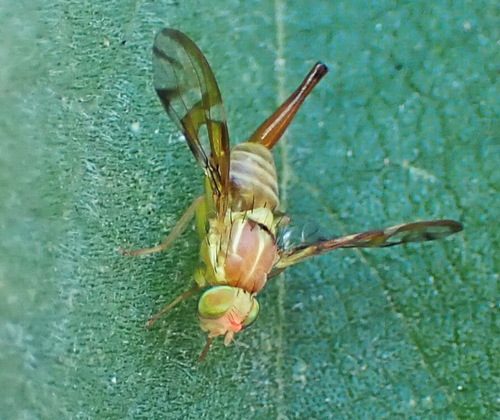
The Mexican fruit fly (Anastrepha ludens) is a tephritid fruit fly native to Mexico, Guatemala and possibly Costa Rica. It damages citrus, mango and grapefruit production and is managed in the US with integrated pest management and sterile-insect releases.
Source: Wikipedia
How to recognize it
The Mexican fruit fly, also called Mexfly, belongs to the genus Anastrepha in the fruit-fly family Tephritidae.
Source: Wikipedia
How to get rid of it
USDA uses integrated pest management to limit its spread.
Source: Wikipedia
Where it lives
It lives in Mexico and Central America where it attacks citrus and mango farms. It is considered invasive in southern California and Arizona and threatens Florida grapefruit production.
Source: Wikipedia
What it eats
The larvae develop by feeding on many kinds of fruit.
Source: Wikipedia
Life cycle
Its cells are diploid with 12 chromosomes. Genetic studies show the species is diverse with moderate differentiation among populations.
Source: Wikipedia
Where it comes from
Its native range includes Mexico, Guatemala and possibly Costa Rica.
Source: Wikipedia
Where it is found in the US
Recorded in 3 of 51 states and DC. Most records: Texas, California, Kansas.
Darker = more records. Counts are museum and citizen-science records, not population size.
Source: GBIF
Months it is reported in the US
Source: GBIF
More photos
Questions people ask
How is the Mexican fruit fly controlled?
USDA relies on integrated pest management, and the sterile insect technique has removed it from most of the United States and northern Mexico.
Source: Wikipedia
Same family (Tephritidae)
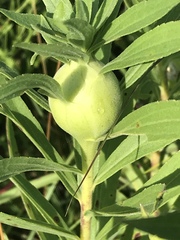 Goldenrod Gall FlyEurosta solidaginis
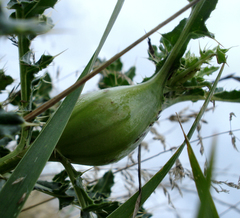 Thistle Stem Gall FlyUrophora cardui
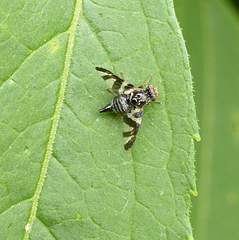 Goldenrod Brussels Sprout Gall FlyProcecidochares atra
 Mediterranean Fruit FlyCeratitis capitataDamages trees, gardens or crops
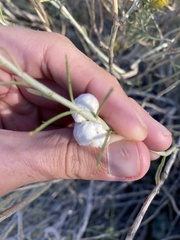 Cotton-gall TephritidAciurina bigeloviae
 Oriental Fruit FlyBactrocera dorsalisDamages trees, gardens or crops
Sources
- Wikipedia: https://en.wikipedia.org/wiki/Anastrepha_ludens
Look it up elsewhere: GBIF · iNaturalist · BugGuide · ITIS · Wikipedia
Text written 2026-10-26 from the sources above and checked sentence by sentence against them. Data fetched 2026-10-26.