 Bug FAQ
Mediterranean Fruit Fly
Ceratitis capitata · Order: Diptera · Family: Tephritidae
Also called: Common Fruit Fly
Source: Wikipedia, USDA APHIS
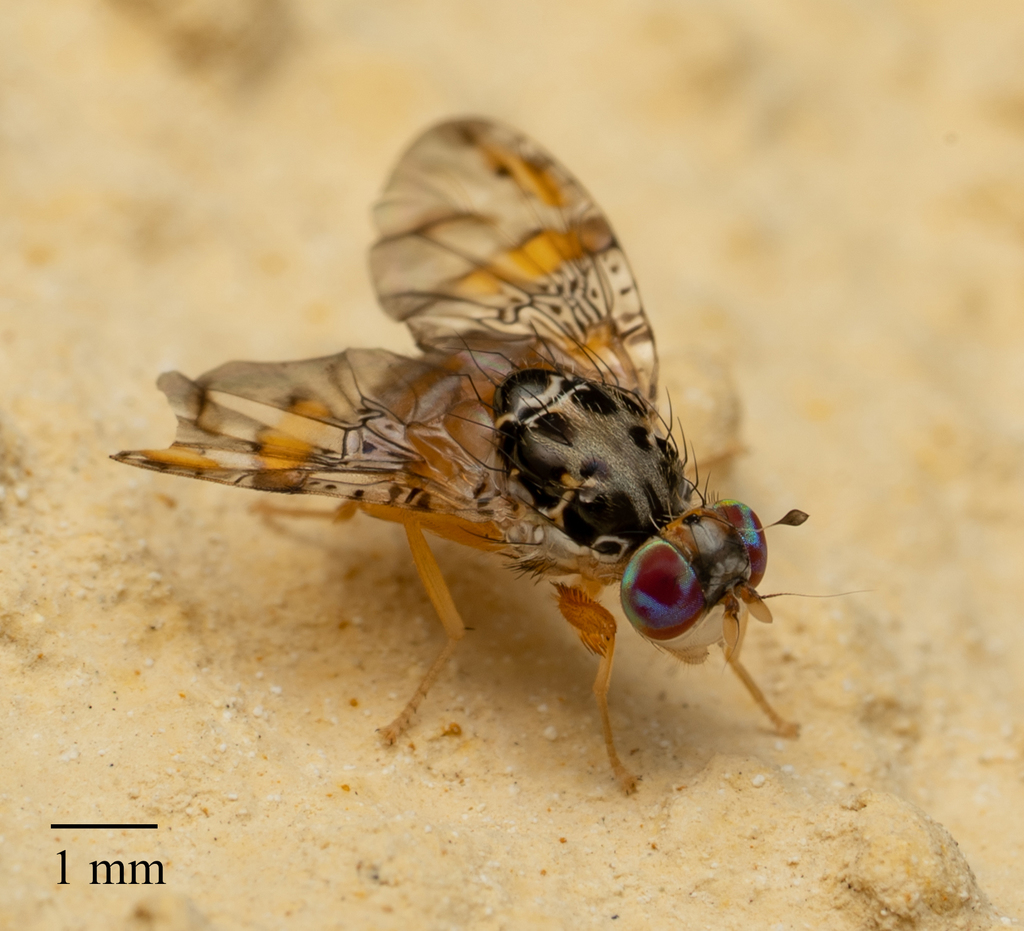
The Mediterranean fruit fly is a yellow-brown fly that originated in sub-Saharan Africa and attacks many kinds of fruit and vegetables. Females lay batches of about 10 to 14 eggs just under the skin of host fruit, and the life cycle includes egg, larva, pupa and adult stages. Control relies on sterile-insect releases, traps, quarantines and removal of infested fruit, but eradication can be costly and difficult.
Source: Wikipedia, USDA APHIS
How to recognize it
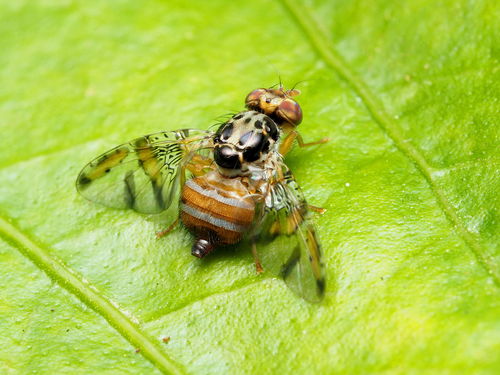
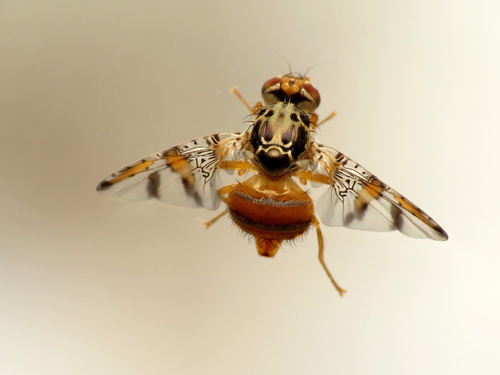
The fly is yellow-brown in color.
Source: Wikipedia
Is it a pest in the house?
Infestations lower crop yields and require costly sorting of fresh produce.
Source: Wikipedia, USDA APHIS
How to get rid of it
The Sterile Insect Technique was used to eradicate the species in Western Australia in 1984. Integrated pest-management combines chemical, non-chemical, traps, quarantines and fruit removal.
Source: Wikipedia, USDA APHIS
Where it lives
It is one of the most destructive fruit pests worldwide.
Source: Wikipedia
What it eats
It feeds on more than 200 tropical fruits and vegetables, causing severe damage. Flies can carry bacteria for up to a week after feeding on contaminated fruit.
Source: Wikipedia
Life cycle
The life cycle has four stages: egg, larva, pupa and adult. Females deposit groups of about 10 to 14 eggs just under the fruit skin.
Source: Wikipedia
When you see it
When host fruit is abundant, flies usually stay within 300 to 700 ft of the source.
Source: Wikipedia
Where it comes from
Its native range is sub-Saharan Africa.
Source: Wikipedia
Lookalikes
In the Western Hemisphere it has no close relatives; a similar species is the European cherry fruit fly.
Source: Wikipedia, USDA APHIS
Where it is found in the US
Recorded in 6 of 51 states and DC. Most records: California, Hawaii, Florida, Kansas, Missouri, New Mexico.
Darker = more records. Counts are museum and citizen-science records, not population size.
Source: GBIF
Status: introduced in North America; introduced in Canada. Source: iNaturalist
Months it is reported in the US
Source: GBIF
More photos


Questions people ask
How can I get rid of a medfly infestation?
Control programs use sterile-insect releases, traps, quarantines and removal of infested fruit.
Source: Wikipedia, USDA APHIS
Same family (Tephritidae)

Sources
- Wikipedia: https://en.wikipedia.org/wiki/Ceratitis_capitata
- USDA APHIS: https://www.aphis.usda.gov/plant-pests-diseases/fruit-flies
Look it up elsewhere: GBIF · iNaturalist · BugGuide · ITIS · Wikipedia
Text written 2026-10-22 from the sources above and checked sentence by sentence against them. Data fetched 2026-10-22.