 Bug FAQ
Cotton-gall Tephritid
Aciurina bigeloviae · Order: Diptera · Family: Tephritidae
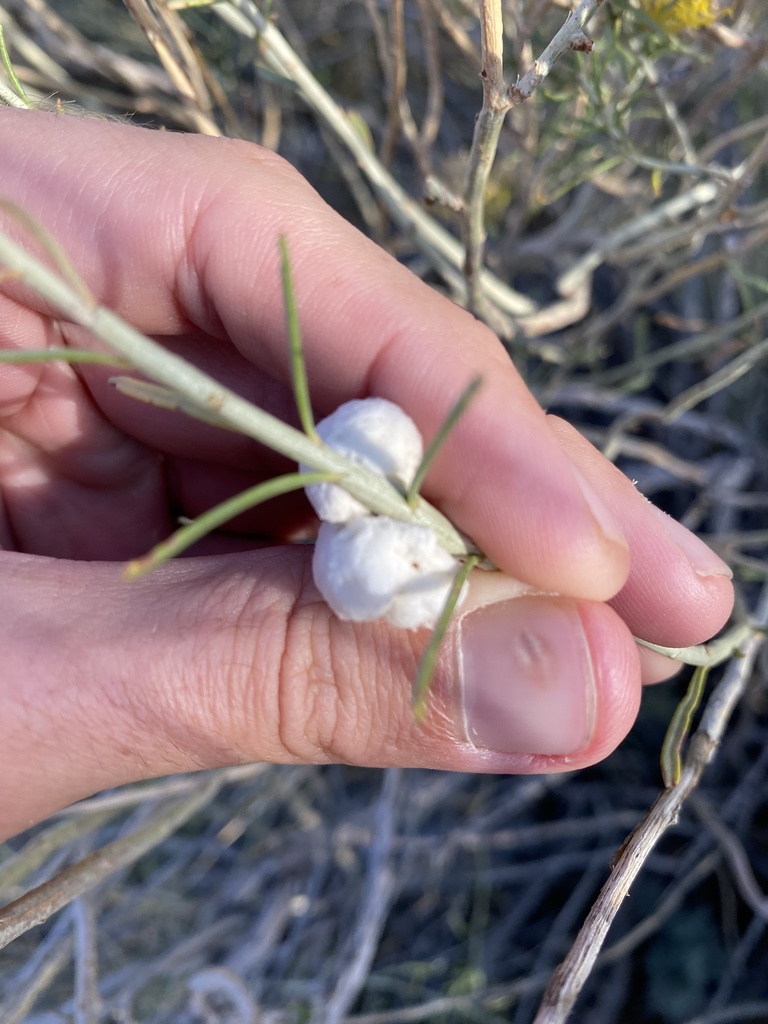
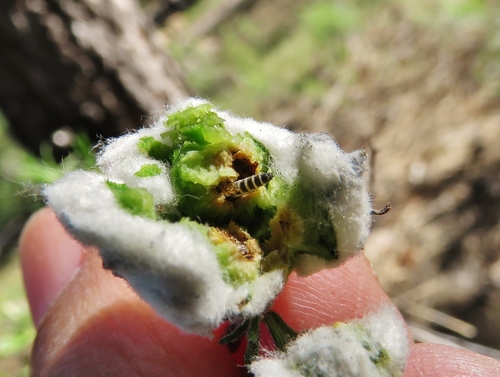
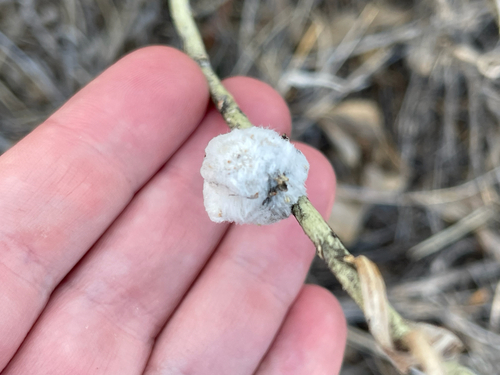
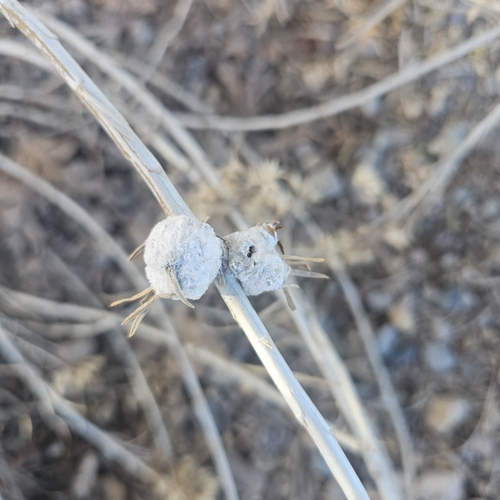
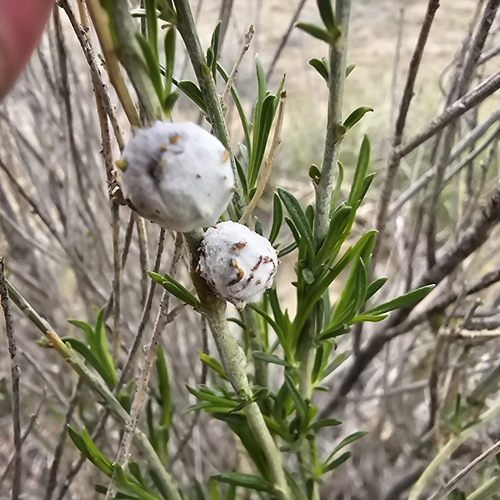
The cotton-gall tephritid lays its eggs on the buds of Ericameria nauseosa, causing the plant to produce a gall where the larvae develop through the fall. It is native to Canada and the United States.
Source: Wikipedia
Where it lives
It creates galls on Ericameria nauseosa buds.
Source: Wikipedia
Life cycle
Eggs are laid on the plant bud, the resulting gall houses the larvae, which develop through the fall.
Source: Wikipedia
Where it comes from
It occurs in Canada and the United States.
Source: Wikipedia
Where it is found in the US
Recorded in 11 of 51 states and DC. Most records: Colorado, Utah, New Mexico, Arizona, California, Oregon, Nevada, Montana.
Darker = more records. Counts are museum and citizen-science records, not population size.
Source: GBIF
Status: native in North America; native in Canada. Source: iNaturalist
Months it is reported in the US
Source: GBIF
More photos
Questions people ask
Which plant does the cotton-gall tephritid affect?
It forms galls on the buds of Ericameria nauseosa.
Source: Wikipedia
Same family (Tephritidae)
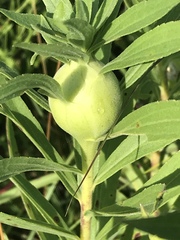 Goldenrod Gall FlyEurosta solidaginis
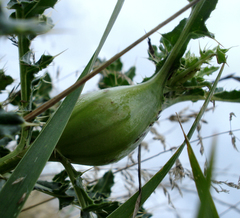 Thistle Stem Gall FlyUrophora cardui
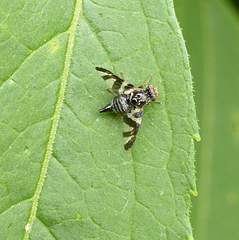 Goldenrod Brussels Sprout Gall FlyProcecidochares atra
 Mediterranean Fruit FlyCeratitis capitataDamages trees, gardens or crops
 Oriental Fruit FlyBactrocera dorsalisDamages trees, gardens or crops
 Mottled Thistle FlyXyphosia miliaria
Sources
- Wikipedia: https://en.wikipedia.org/wiki/Aciurina_bigeloviae
Look it up elsewhere: GBIF · iNaturalist · BugGuide · ITIS · Wikipedia
Text written 2026-10-23 from the sources above and checked sentence by sentence against them. Data fetched 2026-10-22.