 Bug FAQ
Mexican Bromeliad Weevil
Metamasius callizona · Order: Coleoptera · Family: Dryophthoridae
Source: Wikipedia
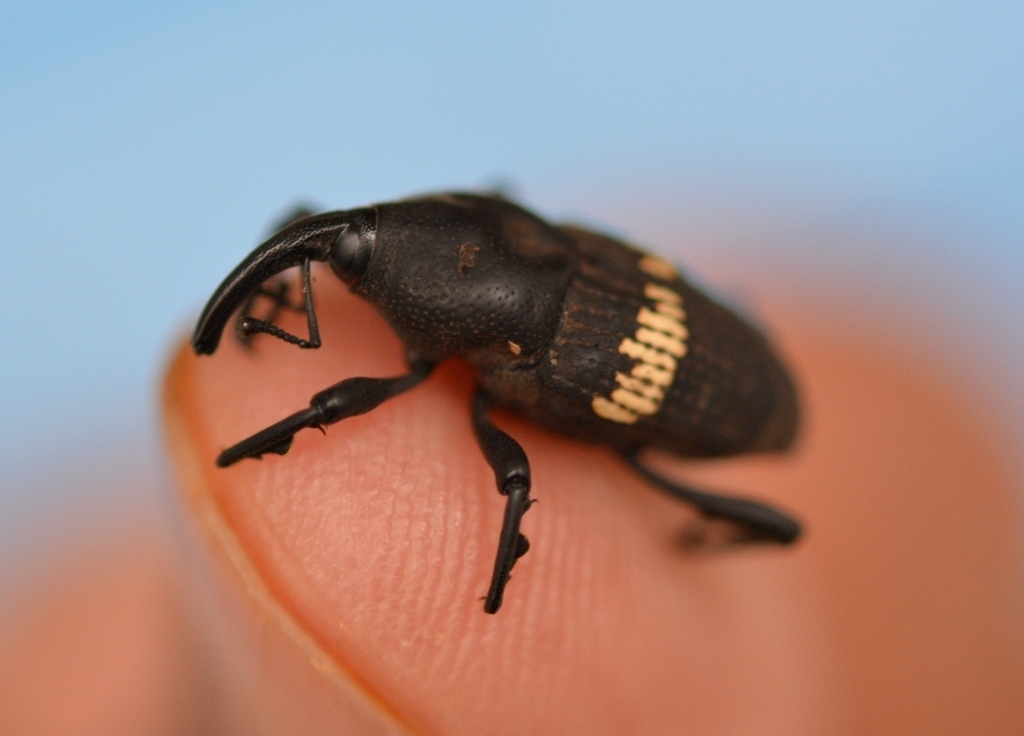
Adult Mexican Bromeliad Weevils are 11 to 16 mm long, black with a thin orange band across the elytra, and females lay 2 mm × 1 mm eggs that change from white to yellow to light brown. They develop in about 58 days from egg to adult, passing through five larval instars, and all stages stay on a single bromeliad host where females cut leaf slices to deposit eggs. Native to southern Mexico, Guatemala and Panama, they are invasive in Florida where they attack several bromeliad species; chemical dips and import restrictions are used to limit their spread.
Source: Wikipedia
How to recognize it
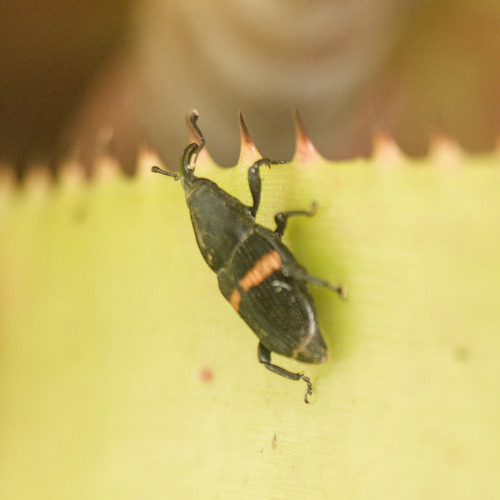
Females lay elongated eggs about 2 mm long and 1 mm wide that turn from white to yellow to light brown over time. Adults are black with a thin orange band running width-wise across the elytra.
Source: Wikipedia
Size
Adults measure between 11 mm and 16 mm in length.
Source: Wikipedia
Is it a pest in the house?
It is an invasive species in Florida that attacks several bromeliad species.
Source: Wikipedia
How to get rid of it
- Preventing spread is the most effective way to limit its impact.
- Treating imported bromeliads with chemical dips and restricting imports to seeds only are suggested control measures.
Source: Wikipedia
Where it lives
The species is multivoltine, holometabolous, and has five larval instars, completing development in roughly 58 days. All life stages can be found on a single host plant; females chew leaf slices and lay eggs inside the fresh cuts.
Source: Wikipedia
What it eats
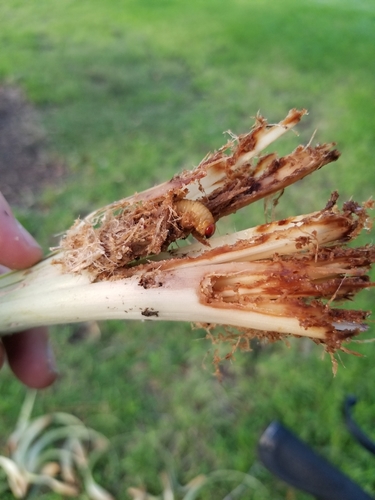
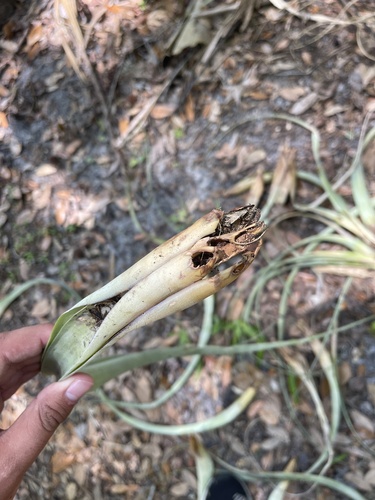
Adults feed on bromeliad leaves, usually without killing the plant. Larvae mine the stems of bromeliads and often cause plant death. In its native range it specializes on Tillandsia bromeliads.
Source: Wikipedia
Life cycle
Development from egg to adult takes about 58 days, passing through five larval instars.
Source: Wikipedia
Where it is found in the US
Recorded in 1 of 51 states and DC. Most records: Florida.
Darker = more records. Counts are museum and citizen-science records, not population size.
Source: GBIF
Months it is reported in the US
Source: GBIF
More photos

Questions people ask
How can I identify the Mexican Bromeliad Weevil?
Look for a 11 to 16 mm black beetle with a thin orange band across its wing covers; females lay small elongated eggs that change color from white to yellow to light brown.
Source: Wikipedia
What plants does this weevil affect?
It feeds on bromeliad leaves as an adult and its larvae mine the stems, often killing the host plant, especially Tillandsia species.
Source: Wikipedia
Is the Mexican Bromeliad Weevil a problem in my garden?
Yes, it is an invasive pest in Florida that attacks several bromeliad species, and its larvae can kill the plants.
Source: Wikipedia
How can I prevent this weevil from spreading to my plants?
Use chemical dips on imported bromeliads and limit imports to seeds only; overall, preventing its spread is the most effective control method.
Source: Wikipedia
Same family (Dryophthoridae)
 Rice WeevilSitophilus oryzaeCan damage your home
 Wheat WeevilSitophilus granariusDamages trees, gardens or crops
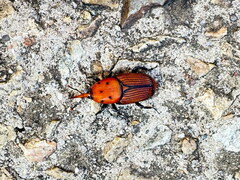 Red Palm WeevilRhynchophorus ferrugineusDamages trees, gardens or crops
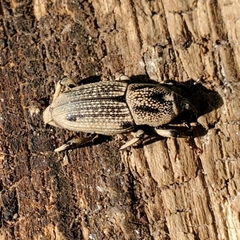 Hunting BillbugSphenophorus venatus
 Cocklebur WeevilRhodobaenus quinquepunctatus
 South American Palm WeevilRhynchophorus palmarumDamages trees, gardens or crops
Sources
- Wikipedia: https://en.wikipedia.org/wiki/Metamasius_callizona
Look it up elsewhere: GBIF · iNaturalist · BugGuide · Wikipedia
Text written 2026-10-29 from the sources above and checked sentence by sentence against them. Data fetched 2026-10-29.