 Bug FAQ
Wheat Weevil
Sitophilus granarius · Order: Coleoptera · Family: Dryophthoridae
Also called: Grain Weevil, Granary weevil
Source: Wikipedia

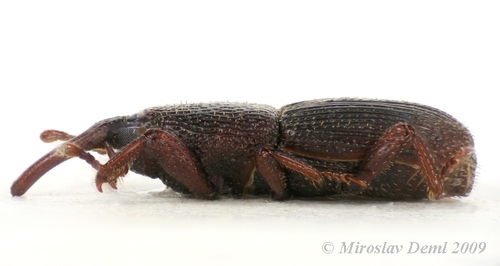
Adult wheat weevils are small, reddish-brown beetles about 3 to 5 mm long and cannot fly. They live only in human food-storage sites, where females lay one egg per grain kernel and the larvae eat the grain from the inside. The life cycle takes five weeks in warm conditions and up to twenty weeks when cooler.
Source: Wikipedia
How to recognize it
Adults are reddish-brown and have no distinctive markings. They cannot fly.
Source: Wikipedia
Is it a pest in the house?
They are common pests of stored grains and can cause serious loss of pantry foods.
Source: Wikipedia
How to get rid of it
Good sanitation and regular inspection are essential to keep infestations out. Methods tried include pesticides, odor-masking scents, and introducing natural predators.
Source: Wikipedia
Where it lives
They are found only in human grain-storage environments, not in the wild.
Source: Wikipedia
What it eats
Wheat weevils feed on cereal grains such as wheat, oats, rye, barley, rice and maize. Larvae develop inside grain kernels, eating the interior.
Source: Wikipedia
Life cycle
Development from egg to adult takes about five weeks in summer, up to twenty weeks in cooler temperatures.
Source: Wikipedia
Where it is found in the US
Recorded in 13 of 51 states and DC. Most records: New York, Kentucky, New Mexico, Minnesota, Michigan, California, Texas, Hawaii.
Darker = more records. Counts are museum and citizen-science records, not population size.
Source: GBIF
Status: native in North America; native in Canada. Source: iNaturalist
Months it is reported in the US
Source: GBIF
More photos
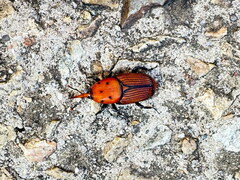
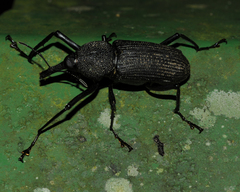
Same family (Dryophthoridae)



Sources
- Wikipedia: https://en.wikipedia.org/wiki/Wheat_weevil
Look it up elsewhere: GBIF · iNaturalist · BugGuide · ITIS · Wikipedia
Text written 2026-10-23 from the sources above and checked sentence by sentence against them. Data fetched 2026-10-22.