 Bug FAQ
Golden Paper Wasp
Polistes aurifer · Order: Hymenoptera · Family: Eumenidae
Also called: Gold-bearing Paper Wasp, Paper wasp
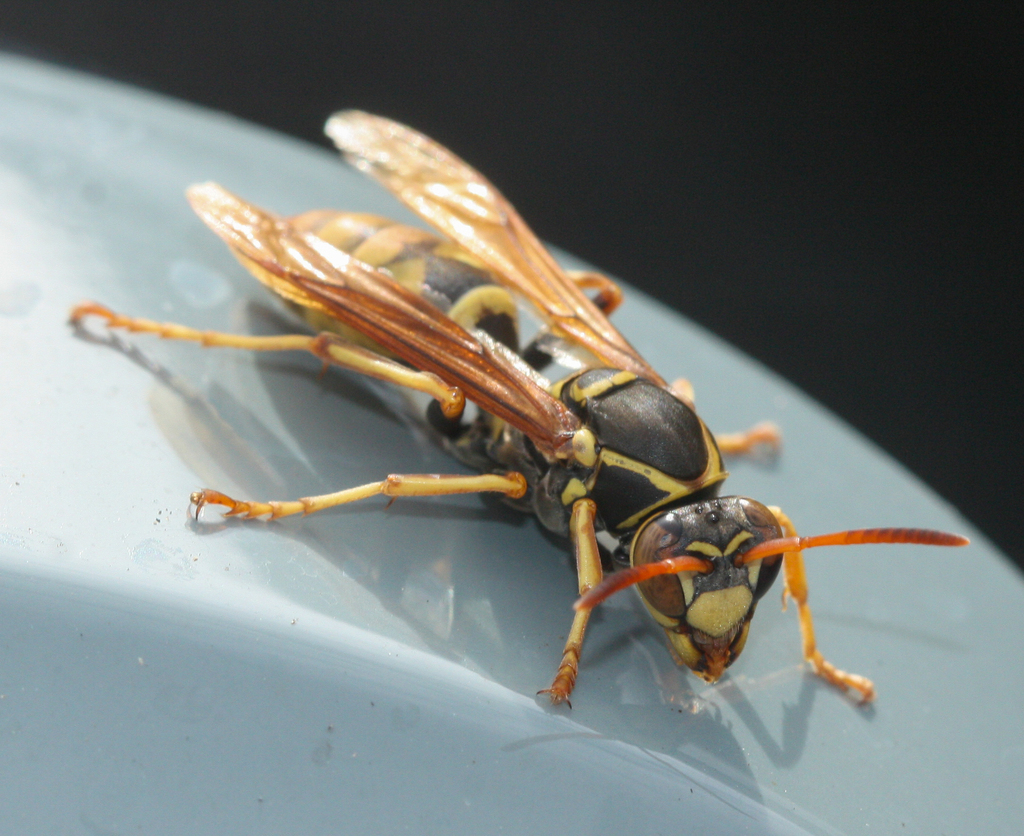
The golden paper wasp is a social wasp that builds nests in protected spots and lives across western North America from southern Canada to northern Mexico. Adults can be seen most of the year, from January to November in warm southern areas and from April to October in cooler northern regions.
Source: Wikipedia
How to recognize it
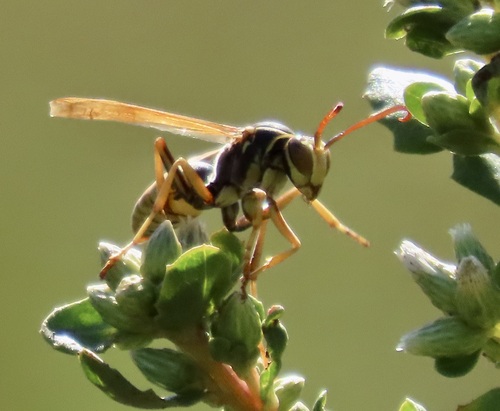
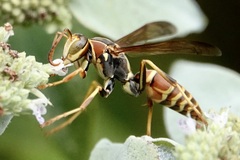
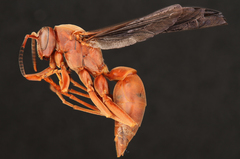
Northern insects are mostly black with yellow markings and only a little rust-red color. In some southern U.S. and northwestern Mexican groups the rust-red color dominates and black is limited.
Source: Wikipedia
Where it lives
It is a eusocial wasp that nests in sheltered locations.
Source: Wikipedia
Lookalikes
It has been mistaken for very yellow specimens of Polistes apachus. It has also been confused with Polistes fuscatus.
Source: Wikipedia
Where it is found in the US
Recorded in 24 of 51 states and DC. Most records: California, Idaho, Arizona, New Mexico, Colorado, South Dakota, Utah, Washington.
Darker = more records. Counts are museum and citizen-science records, not population size.
Source: GBIF
Status: native in North America; native in Canada; native in United States. Source: iNaturalist
Months it is reported in the US
Source: GBIF
More photos
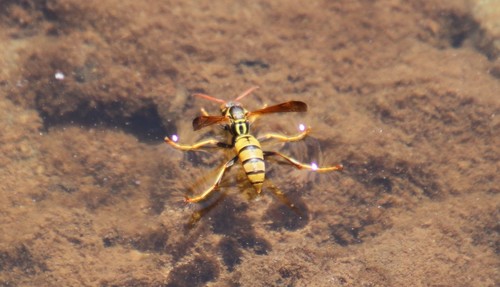
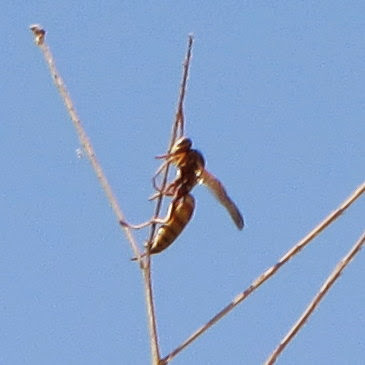
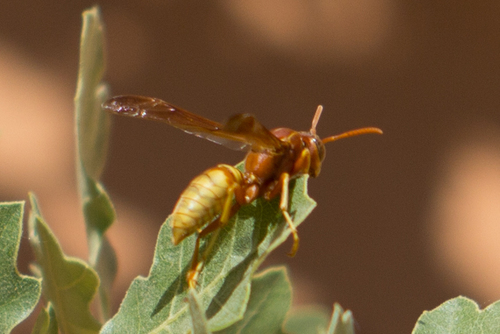
Questions people ask
Where can I find golden paper wasps?
They live in western North America, from southern Canada down through the United States to northern Mexico, nesting in sheltered spots.
Source: Wikipedia
When are golden paper wasps active?
Adults are seen most of the year, from January to November in warm southern regions and from April to October in cooler northern areas.
Source: Wikipedia
Same family (Eumenidae)

Sources
- Wikipedia: https://en.wikipedia.org/wiki/Polistes_aurifer
Look it up elsewhere: GBIF · iNaturalist · BugGuide · Wikipedia
Text written 2026-10-22 from the sources above and checked sentence by sentence against them. Data fetched 2026-10-22.