 Bug FAQ
Melon Fly
Bactrocera cucurbitae · Order: Diptera · Family: Tephritidae
Source: Wikipedia
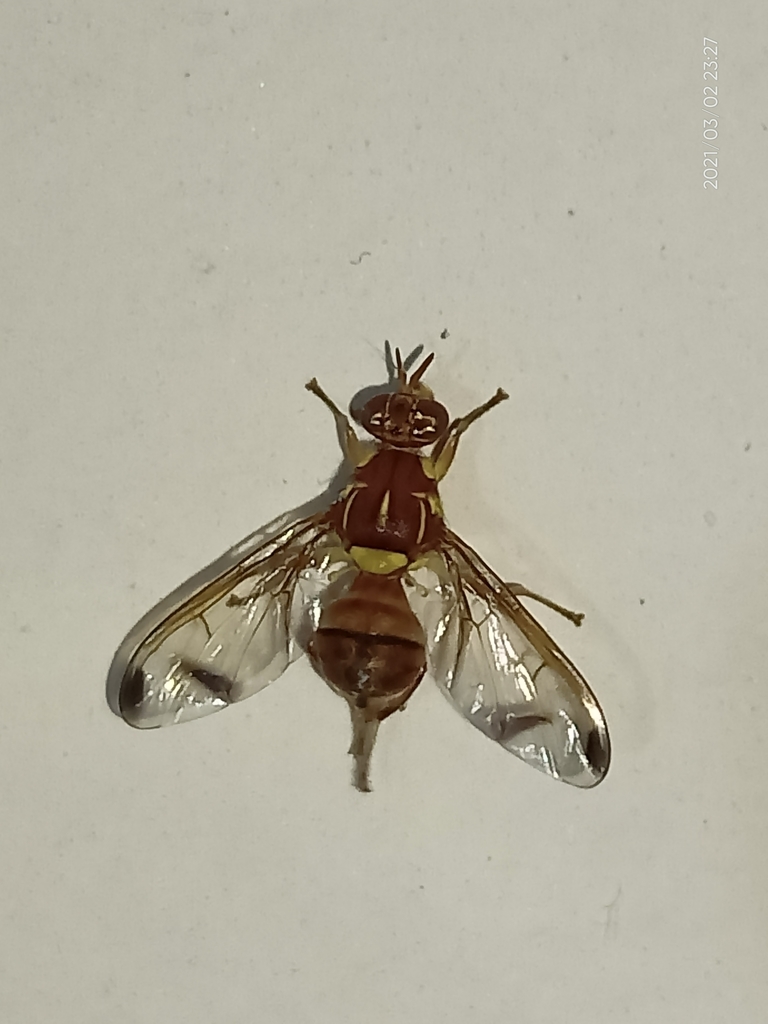
Adult melon flies are tiny, about 6 to 8 mm long and have a reddish-yellow thorax with light yellow markings, a yellowish head with black spots, a long third antennal segment, and a distinctive wing pattern. They develop from egg to adult in 12 to 28 days and can produce up to eight to ten generations each year.
Source: Wikipedia
How to recognize it
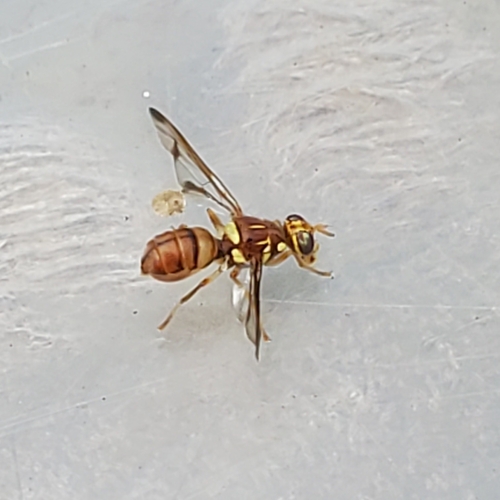
Key ID marks are the wing pattern, a long third antennal segment, a reddish-yellow thorax with light yellow markings, and a yellowish head spotted with black.
Source: Wikipedia
Size
Adults measure about 6 to 8 mm in length.
Source: Wikipedia
Is it a pest in the house?
Larvae can attack flowers, stems, roots and fruit, causing damage to crops. In Hawaii, larvae damage squash and pumpkin crops even before the fruit sets.
Source: Wikipedia
How to get rid of it
Wrapping developing fruit in protective covers can keep flies away. Sprays that contain proteinaceous liquid attractants combined with insecticide are effective at reducing populations.
Source: Wikipedia
Where it lives
They are usually found on low, leafy, succulent plants close to cultivated fields.
Source: Wikipedia
Life cycle
From egg to adult takes between 12 and 28 days. There can be as many as eight to ten generations in a single year.
Source: Wikipedia
Where it is found in the US
Recorded in 3 of 51 states and DC. Most records: Hawaii, Kansas, California.
Darker = more records. Counts are museum and citizen-science records, not population size.
Source: GBIF
Months it is reported in the US
Source: GBIF
More photos
Questions people ask
How can I identify a melon fly?
Look for a tiny 6 to 8 mm fly with a reddish-yellow thorax, yellowish head with black spots, a long third antennal segment and a distinctive wing pattern.
Source: Wikipedia
What crops does the melon fly damage?
Its larvae feed on flowers, stems, roots and fruit of cucurbits such as squash and pumpkin, often damaging the plants before fruit sets.
Source: Wikipedia
How fast does the melon fly reproduce?
The whole life cycle takes 12 to 28 days, allowing up to eight to ten generations each year.
Source: Wikipedia
What control methods work for melon flies?
Covering developing fruit and using insecticide sprays with proteinaceous attractants are common mechanical controls.
Source: Wikipedia
Same family (Tephritidae)
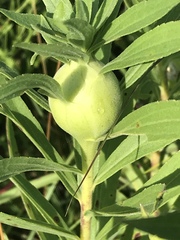 Goldenrod Gall FlyEurosta solidaginis
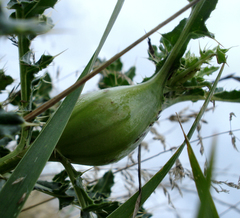 Thistle Stem Gall FlyUrophora cardui
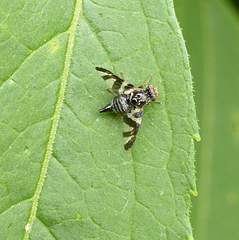 Goldenrod Brussels Sprout Gall FlyProcecidochares atra
 Mediterranean Fruit FlyCeratitis capitataDamages trees, gardens or crops
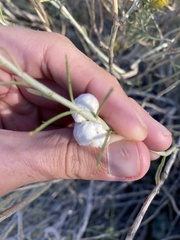 Cotton-gall TephritidAciurina bigeloviae
 Oriental Fruit FlyBactrocera dorsalisDamages trees, gardens or crops
Sources
- Wikipedia: https://en.wikipedia.org/wiki/Bactrocera_cucurbitae
Look it up elsewhere: GBIF · iNaturalist · BugGuide · ITIS · Wikipedia
Text written 2026-10-23 from the sources above and checked sentence by sentence against them. Data fetched 2026-10-23.