 Bug FAQ
Megetra vittata
Megetra vittata · Order: Coleoptera · Family: Meloidae
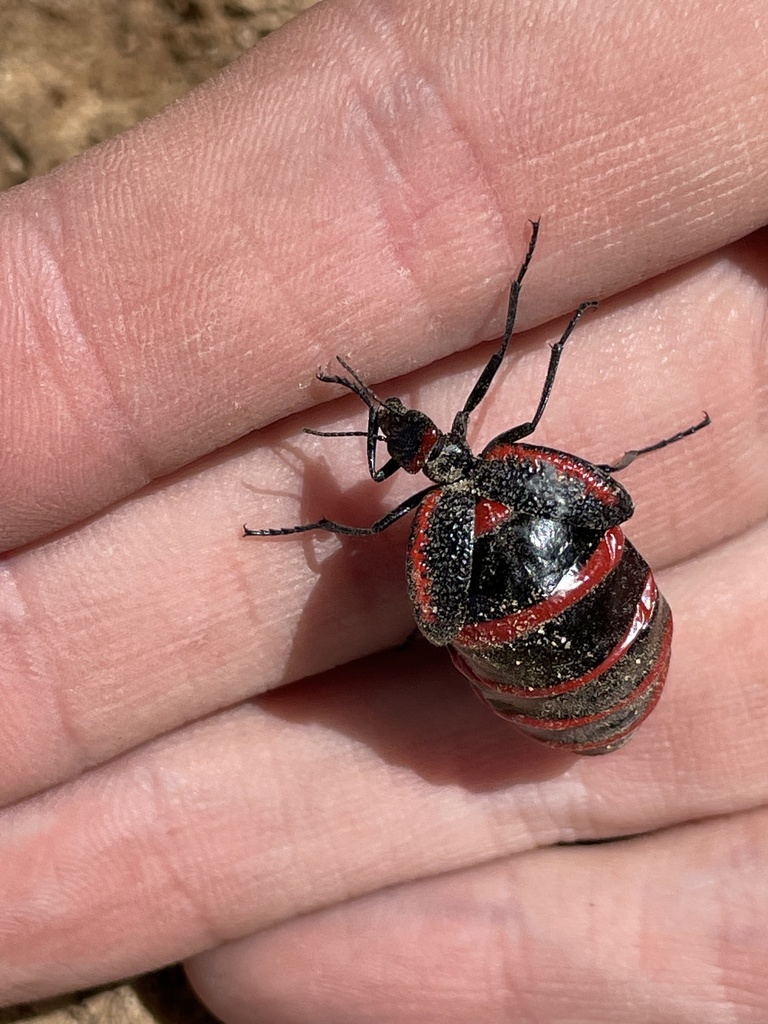
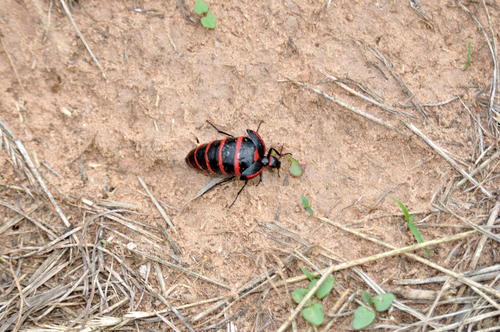
Megetra vittata is a blister beetle that releases the toxic chemical cantharidin as a defense. It lives in North America and has been reported to poison horses that eat many of the beetles mixed in feed.
Source: Wikipedia
Is it a pest in the house?
Horses can become ill or die after eating many of these beetles that get mixed into hay and feed.
Source: Wikipedia
Where it lives
It is found in North America.
Source: Wikipedia
Where it comes from
Its native range includes North America.
Source: Wikipedia
Where it is found in the US
Recorded in 5 of 51 states and DC. Most records: New Mexico, Arizona, Kansas, Texas, Colorado.
Darker = more records. Counts are museum and citizen-science records, not population size.
Source: GBIF
Status: native in North America; native in United States. Source: iNaturalist
Months it is reported in the US
Source: GBIF
More photos
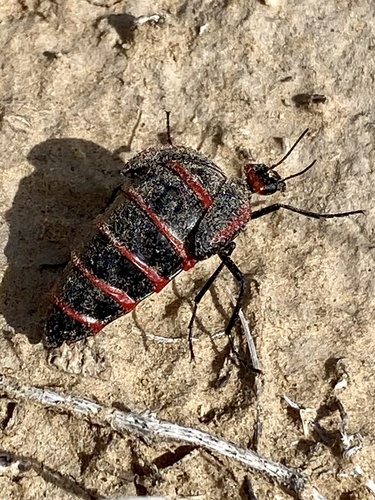
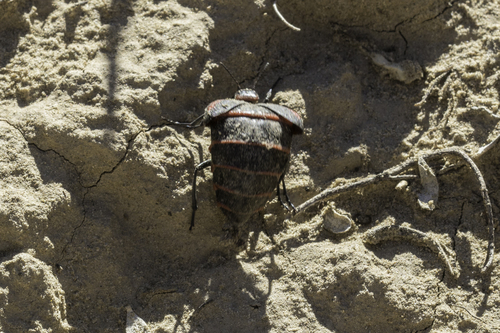
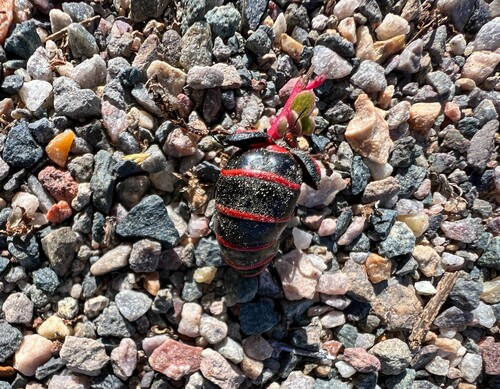
Questions people ask
What toxin does Megetra vittata produce?
It releases cantharidin, a toxic chemical used for defense.
Source: Wikipedia
Can this beetle harm horses?
Yes, horses can become ill or die after ingesting many of these beetles in their feed.
Source: Wikipedia
Same family (Meloidae)




Sources
- Wikipedia: https://en.wikipedia.org/wiki/Megetra_vittata
Look it up elsewhere: GBIF · iNaturalist · BugGuide · ITIS · Wikipedia
Text written 2026-10-27 from the sources above and checked sentence by sentence against them. Data fetched 2026-10-27.