 Bug FAQ
Martineziana dutertrei
Martineziana dutertrei · Order: Coleoptera · Family: Scarabaeidae
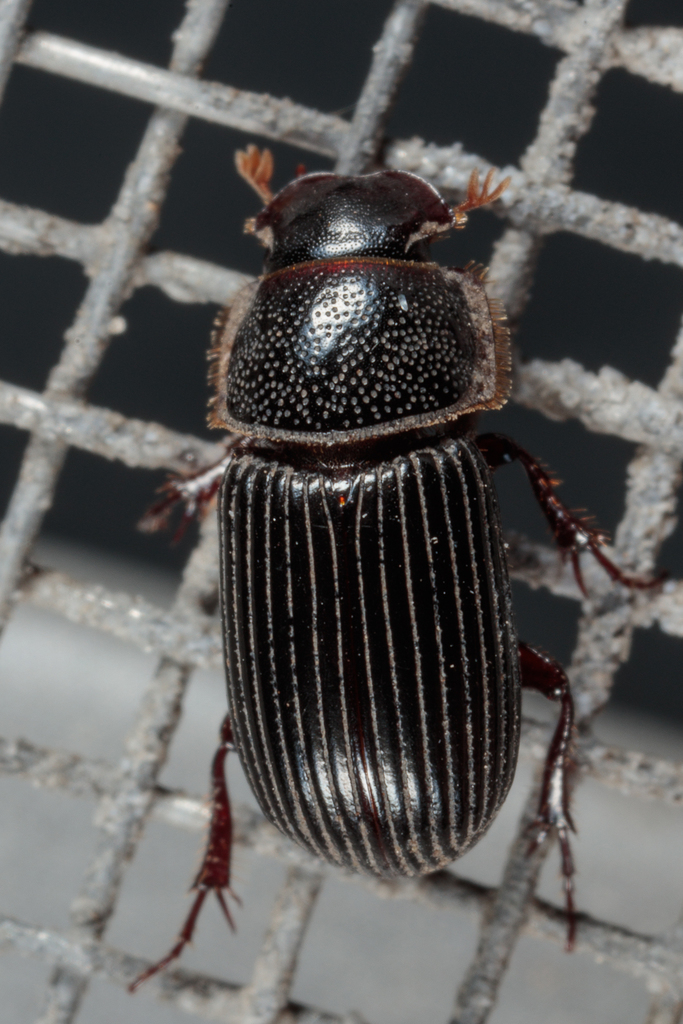
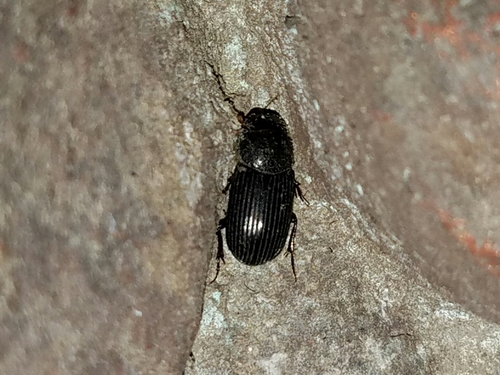
Adults are about 5.6 mm long and have a thin, dark brown body with a strongly gibbous head marked by longitudinal wrinkles. They are found inside nests of several fire-ant species and occur in parts of South America, the Caribbean, and the southeastern United States.
Source: Wikipedia
How to recognize it
The pronotum shows a mix of dense fine punctures and larger punctures that become bigger toward the rear and sides. The elytra are long and do not widen much at the back.
Source: Wikipedia
Size
Adults reach roughly 5.6 mm (0.22 in) in length.
Source: Wikipedia
Where it lives
Specimens have been collected from nests of Solenopsis invicta, S. richteri, S. geminata, S. xyloni and Linepithema humile.
Source: Wikipedia
Where it comes from
It is present in the United States, especially in southeastern states such as Alabama, Florida, Georgia and Texas. Its range also includes several South American countries, Cuba, the Dominican Republic and other Caribbean locations.
Source: Wikipedia
Where it is found in the US
Recorded in 11 of 51 states and DC. Most records: Texas, Mississippi, Florida, Alabama, South Carolina, Louisiana, Georgia, Kansas.
Darker = more records. Counts are museum and citizen-science records, not population size.
Source: GBIF
Status: native in North America; native in United States. Source: iNaturalist
Months it is reported in the US
Source: GBIF
More photos
Questions people ask
How can I recognize Martineziana dutertrei?
Look for a tiny (about 5.6 mm) thin, dark brown beetle with a strongly gibbous head that has longitudinal wrinkles, a pronotum with mixed fine and larger punctures, and long elytra that stay narrow toward the rear.
Source: Wikipedia
Where might I find this beetle?
It is commonly found inside nests of fire-ants such as Solenopsis invicta and related species, and it occurs in parts of the southeastern United States as well as several South American and Caribbean countries.
Source: Wikipedia
Same family (Scarabaeidae)
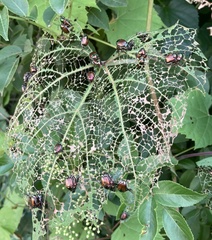 Japanese BeetlePopillia japonicaDamages trees, gardens or crops
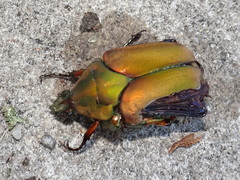 Common Green June BeetleCotinis nitidaDamages trees, gardens or crops
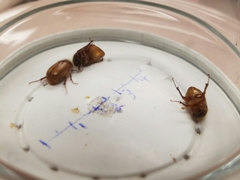 Phyllophaga crinitaDamages trees, gardens or crops
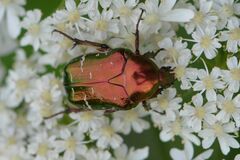 European Rose ChaferCetonia aurata
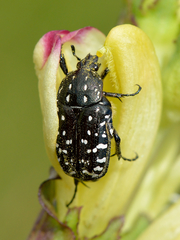 Mediterranean Spotted ChaferOxythyrea funestaDamages trees, gardens or crops
 Oriental BeetleExomala orientalisDamages trees, gardens or crops
Sources
- Wikipedia: https://en.wikipedia.org/wiki/Martineziana_dutertrei
Look it up elsewhere: GBIF · iNaturalist · BugGuide · ITIS · Wikipedia
Text written 2026-10-26 from the sources above and checked sentence by sentence against them. Data fetched 2026-10-26.