 Bug FAQ
Marbled Piercer
Cydia splendana · Order: Lepidoptera · Family: Tortricidae
Source: Wikipedia
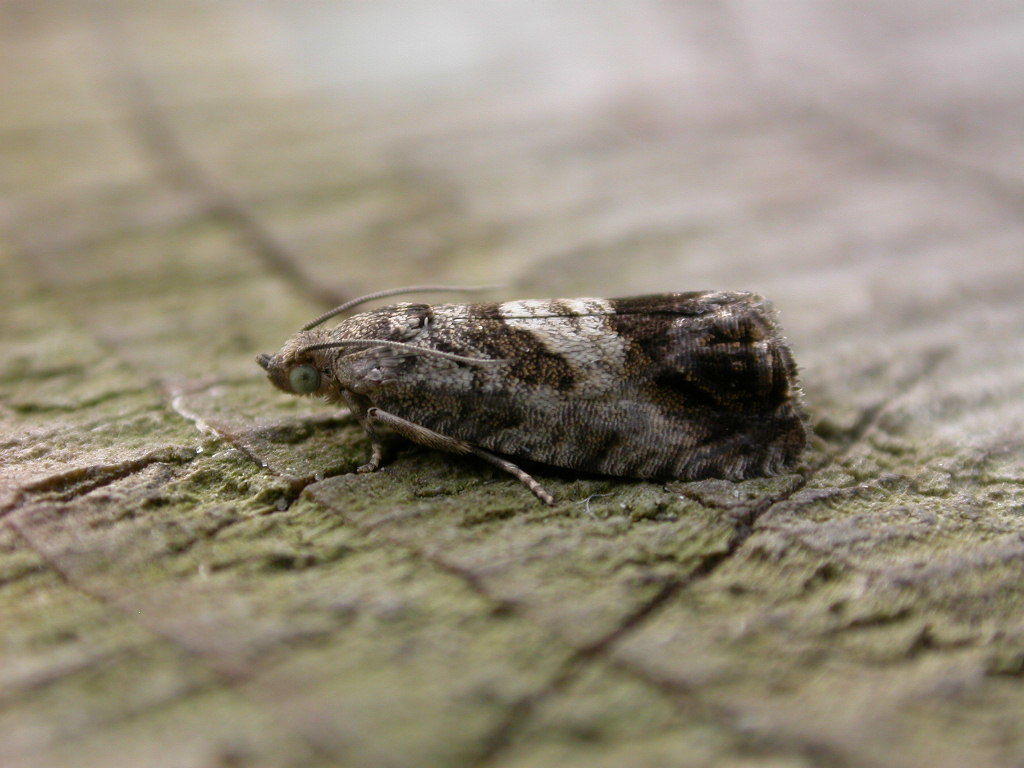
Cydia splendana is a small moth found in Europe. Its larvae feed on oak, sweet chestnut and possibly walnut, developing mainly inside mature chestnut fruits. Adults fly from May to September, depending on location.
Source: Wikipedia
Size
Its wingspan is about 12 to 16 mm.
Source: Wikipedia
Where it lives
It is found throughout Europe.
Source: Wikipedia
What it eats
The larvae feed on oak, sweet chestnut and possibly walnut species, and they develop mainly in mature chestnut fruits.
Source: Wikipedia
When you see it
The moth flies from May through September, varying with region.
Source: Wikipedia
Where it comes from
Its native range is Europe.
Source: Wikipedia
Lookalikes
It is also called the acorn moth, a name that can refer to the North American Blastobasis glandulella, which belongs to a different family.
Source: Wikipedia
Where it is found in the US
Recorded in 1 of 51 states and DC. Most records: New Jersey.
Darker = more records. Counts are museum and citizen-science records, not population size.
Source: GBIF
Questions people ask
What trees does the chestnut tortrix damage?
Its larvae feed on oak and sweet chestnut, developing inside mature chestnut fruits.
Source: Wikipedia
When can I see adult chestnut tortrix moths?
Adults are active from May to September, depending on where you are.
Source: Wikipedia
Same family (Tortricidae)
 Oblique-banded Leafroller MothChoristoneura rosaceanaDamages trees, gardens or crops
 Garden TortrixClepsis peritanaDamages trees, gardens or crops
 Common MarbleSyricoris lacunanaDamages trees, gardens or crops
 Red-banded Leafroller MothArgyrotaenia velutinanaDamages trees, gardens or crops
 Light Brown Apple MothEpiphyas postvittanaDamages trees, gardens or crops
 Filbertworm MothCydia latiferreanaDamages trees, gardens or crops
Sources
- Wikipedia: https://en.wikipedia.org/wiki/Cydia_splendana
Look it up elsewhere: GBIF · iNaturalist · BugGuide · Wikipedia
Text written 2026-10-22 from the sources above and checked sentence by sentence against them. Data fetched 2026-10-22.