 Bug FAQ
Malachite
Siproeta stelenes · Order: Lepidoptera · Family: Nymphalidae
Also called: Malachite Butterfly
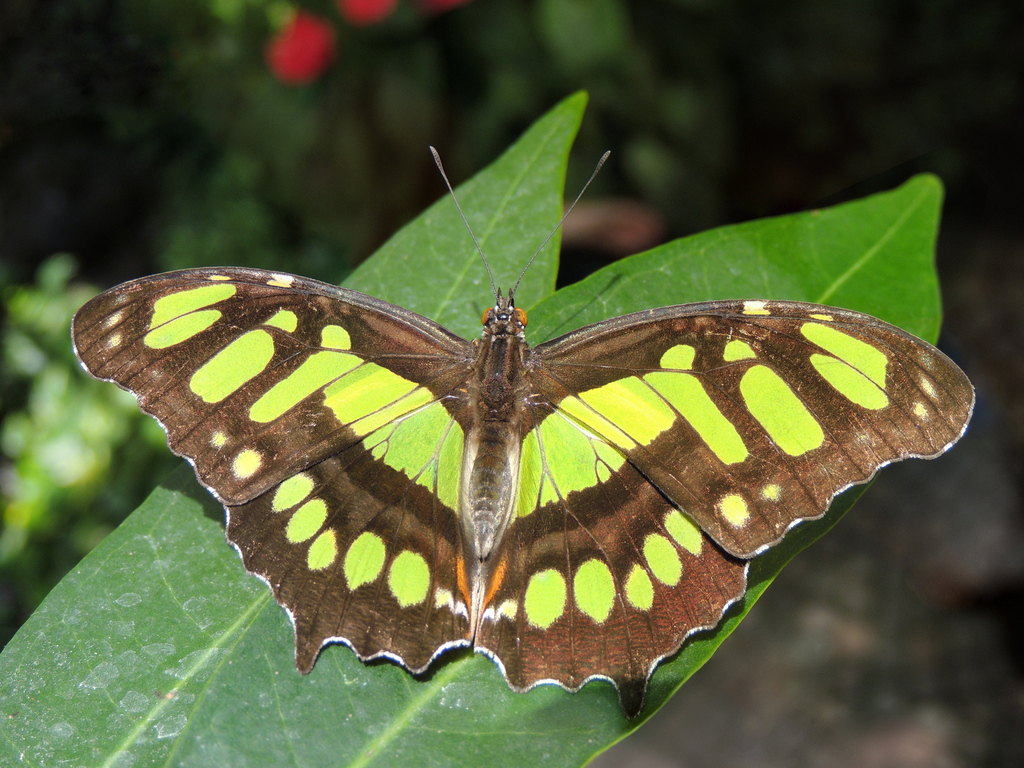
The malachite butterfly has a wingspan of about 8.5 to 10 cm and bright green upper wings with black edges. It lives from southern Texas and Florida through Central America down to Brazil, including Cuba.
Source: Wikipedia
How to recognize it
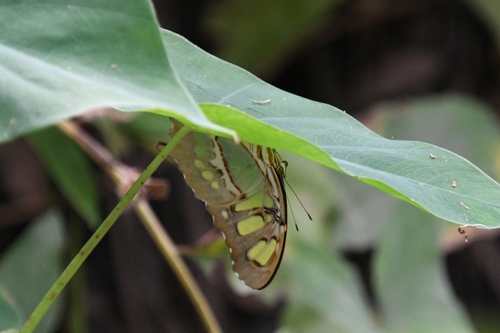
The upper side of the wings is black with a brilliant green or yellow-green color, and the underside is light brown with olive green. It is named for the mineral malachite because of the bright green wing color.
Source: Wikipedia
Size
Its wingspan usually measures between 8.5 and 10 cm.
Source: Wikipedia
What it eats
Adults drink nectar, eat rotting fruit, dead animals and bat dung. Females lay eggs on new leaves of plants in the Acanthaceae family, especially Ruellia, Blechum and Plantago.
Source: Wikipedia
Life cycle
The caterpillars are black, spiny, and have red markings; the pupae are green with sharp gold spines.
Source: Wikipedia
Where it comes from
The species is native to Central and northern South America, extending north to southern Texas and Florida and south to Brazil.
Source: Wikipedia
Lookalikes
It can be confused with the heliconiine Philaethria dido, which has similar colors but a different wing shape.
Source: Wikipedia
Where it is found in the US
Recorded in 7 of 51 states and DC. Most records: Texas, Florida, Kansas, Arizona, California, New York, New Mexico.
Darker = more records. Counts are museum and citizen-science records, not population size.
Source: GBIF
Status: native in North America. Source: iNaturalist
Months it is reported in the US
Source: GBIF
More photos
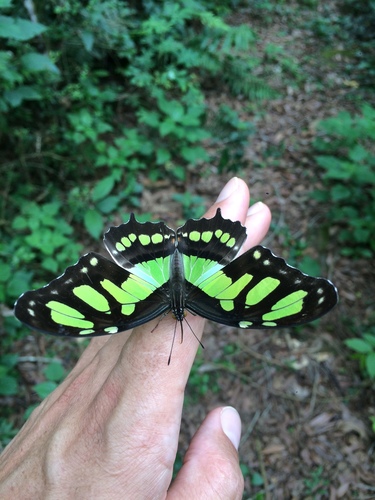
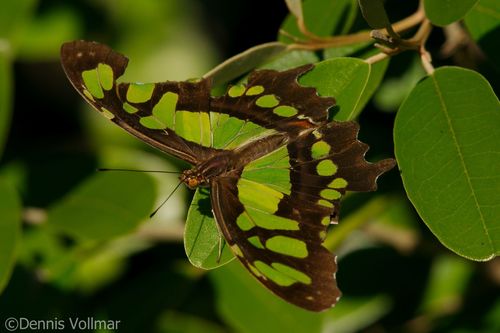
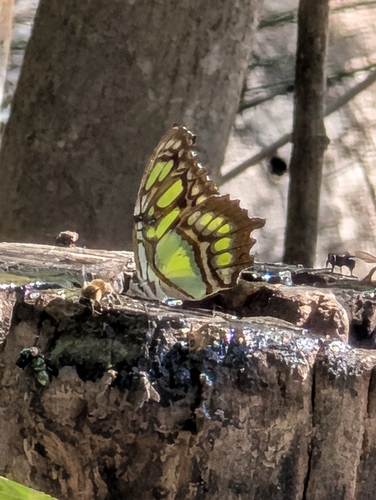
Same family (Nymphalidae)






Sources
- Wikipedia: https://en.wikipedia.org/wiki/Siproeta_stelenes
Look it up elsewhere: GBIF · iNaturalist · BugGuide · ITIS · Wikipedia
Text written 2026-10-22 from the sources above and checked sentence by sentence against them. Data fetched 2026-10-22.