 Bug FAQ
Maize Weevil
Sitophilus zeamais · Order: Coleoptera · Family: Dryophthoridae
Also called: Greater Rice Weevil, Palm weevil, greater grain weevil
Source: Wikipedia

Adults are small brown weevils about 2.3 to 4.9 mm long, with size varying by the food the larvae ate. They infest stored grains such as maize, wheat, oats, barley, sorghum, rye, buckwheat, pasta, cassava and even apples. A female can lay 300 to 400 eggs and the whole life cycle takes roughly 36 days, with adults living up to eight months.
Source: Wikipedia
How to recognize it
The beetle is brown with four reddish-brown spots on each elytron. It has a long, thin snout and elbowed antennae.
Source: Wikipedia
Size
Adults range from 2.3 mm to 4.9 mm in length.
Source: Wikipedia
Is it a pest in the house?
Stored apples are also vulnerable to infestation.
Source: Wikipedia
How to get rid of it
- Detecting an infestation early is difficult.
- In large grain stores, a rise in temperature may indicate the presence of the weevil.
Source: Wikipedia
Where it lives
It occurs in many tropical regions worldwide and is a major pest of maize in the United States.
Source: Wikipedia
What it eats
It also attacks stored pasta, cassava and other coarse milled grains. Stored fruit like apples can be damaged by this weevil.
Source: Wikipedia
Life cycle
Development from egg to adult takes about 36 days on average. A female lays 300 to 400 eggs in her lifetime and adults can live 5 to 8 months.
Source: Wikipedia
When you see it
Peak flying activity occurs between 15:00 and 17:00.
Source: Wikipedia
Where it comes from
It is found throughout warm, humid areas of the United States and other maize-growing regions.
Source: Wikipedia
Lookalikes
It looks very similar to the rice weevil, but differences in external features allow most adults to be distinguished.
Source: Wikipedia
Where it is found in the US
Recorded in 8 of 51 states and DC. Most records: Arizona, Texas, Kansas, Mississippi, Florida, Hawaii, Oregon, South Carolina.
Darker = more records. Counts are museum and citizen-science records, not population size.
Source: GBIF
Status: native in North America; native in Canada. Source: iNaturalist
Months it is reported in the US
Source: GBIF
Questions people ask
How long does a maize weevil live?
Adults may survive for five to eight months, and a female can lay 300 to 400 eggs during that time.
Source: Wikipedia
When are maize weevils most active?
They are most active in flight between 3 p.m. and 5 p.m.
Source: Wikipedia
What foods do maize weevils infest?
They attack stored cereals like wheat, oats, barley, sorghum, rye, buckwheat, as well as pasta, cassava, other milled grains, and even stored apples.
Source: Wikipedia
Same family (Dryophthoridae)
 Rice WeevilSitophilus oryzaeCan damage your home
 Wheat WeevilSitophilus granariusDamages trees, gardens or crops
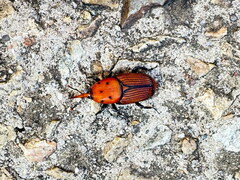 Red Palm WeevilRhynchophorus ferrugineusDamages trees, gardens or crops
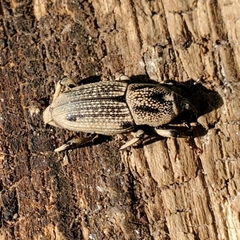 Hunting BillbugSphenophorus venatus
 Cocklebur WeevilRhodobaenus quinquepunctatus
 South American Palm WeevilRhynchophorus palmarumDamages trees, gardens or crops
Sources
- Wikipedia: https://en.wikipedia.org/wiki/Maize_weevil
Look it up elsewhere: GBIF · iNaturalist · BugGuide · ITIS · Wikipedia
Text written 2026-10-27 from the sources above and checked sentence by sentence against them. Data fetched 2026-10-27.