 Bug FAQ
Magdalena Alpine
Erebia magdalena · Order: Lepidoptera · Family: Nymphalidae

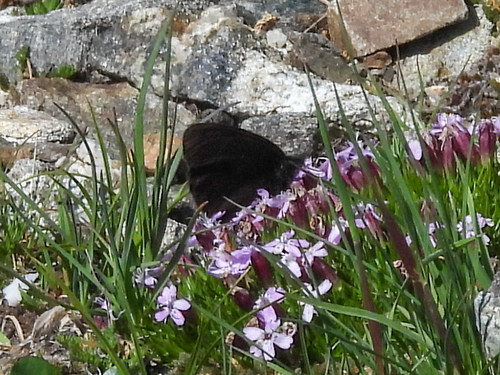
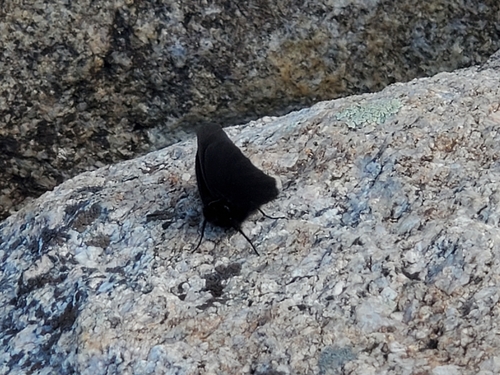
The Magdalena alpine butterfly has a wingspan of about 41 to 45 mm and its wings are solid black on both sides. Adults fly in late June and July, and the caterpillars probably feed on grasses, sedges or rushes.
Source: Wikipedia
How to recognize it
Both the upper and lower surfaces of the wings are black.
Source: Wikipedia
Size
The wingspan ranges from 41 to 45 mm.
Source: Wikipedia
Where it lives
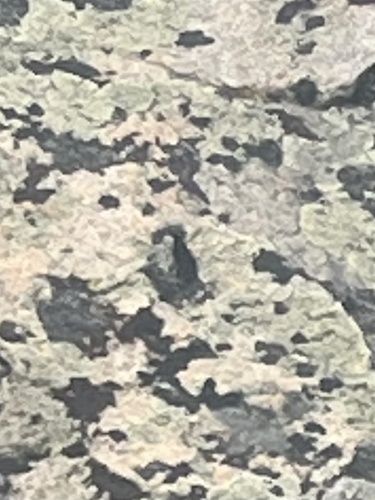
It inhabits rockslides with some vegetation, typically at or above the treeline.
Source: Wikipedia
What it eats
The larvae are thought to feed on grasses, sedges or rushes.
Source: Wikipedia
When you see it
The flight period is late June and July.
Source: Wikipedia
Where it comes from
In North America it occurs in Montana, Colorado, Utah, New Mexico, and in western Canada including parts of Alberta, British Columbia and Yukon.
Source: Wikipedia
Where it is found in the US
Recorded in 6 of 51 states and DC. Most records: Colorado, Utah, Wyoming, Alaska, New Mexico, Kansas.
Darker = more records. Counts are museum and citizen-science records, not population size.
Source: GBIF
Status: native in North America; native in Canada; native in United States. Source: iNaturalist
Months it is reported in the US
Source: GBIF
More photos

Questions people ask
Same family (Nymphalidae)




Sources
- Wikipedia: https://en.wikipedia.org/wiki/Magdalena_alpine
Look it up elsewhere: GBIF · iNaturalist · BugGuide · ITIS · Wikipedia
Text written 2026-10-26 from the sources above and checked sentence by sentence against them. Data fetched 2026-10-26.