 Bug FAQ
Maculated Scarab
Gnorimella maculosa · Order: Coleoptera · Family: Scarabaeidae
Also called: Maculate flower beetle
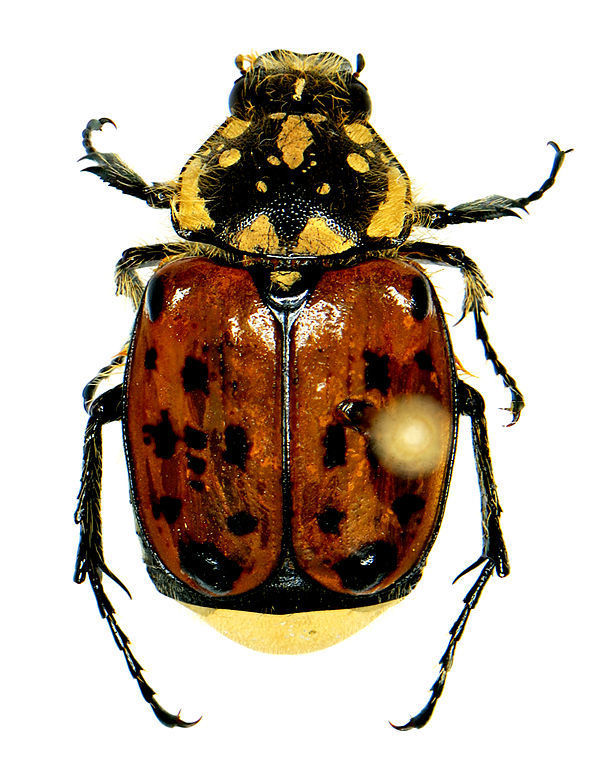
The Maculated Scarab measures about 15 mm long. Its common name comes from the spotted pattern on its back. It lives near deciduous woodlands and often visits dogwood or viburnum flowers. It is native to eastern North America.
Source: Wikipedia
How to recognize it
The beetle’s name refers to its spotted (maculate) markings.
Source: Wikipedia
Size
Adults are about 15.2 mm long.
Source: Wikipedia
Where it lives
It prefers habitats close to deciduous woodland and may be seen buzzing around dogwood or viburnum flowers.
Source: Wikipedia
Where it comes from
The species occurs in eastern North America.
Source: Wikipedia
Where it is found in the US
Recorded in 28 of 51 states and DC. Most records: Tennessee, Indiana, Massachusetts, Ohio, Virginia, Pennsylvania, Maryland, Connecticut.
Darker = more records. Counts are museum and citizen-science records, not population size.
Source: GBIF
Status: native in North America; native in Canada. Source: iNaturalist
Months it is reported in the US
Source: GBIF
More photos
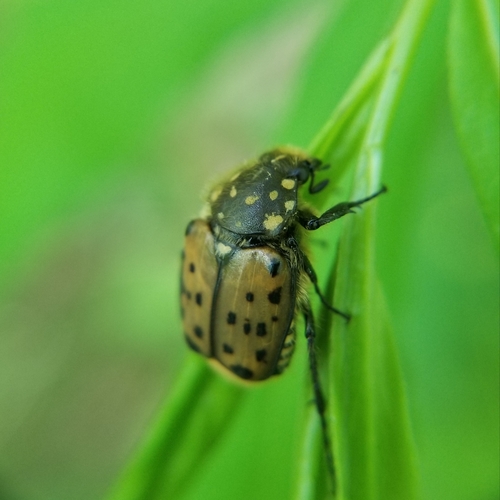
Questions people ask
Where is the Maculated Scarab found?
It is native to eastern North America and is typically found near deciduous woodlands, often around dogwood or viburnum flowers.
Source: Wikipedia
Same family (Scarabaeidae)
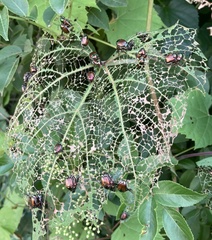 Japanese BeetlePopillia japonicaDamages trees, gardens or crops
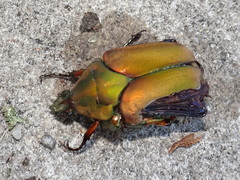 Common Green June BeetleCotinis nitidaDamages trees, gardens or crops
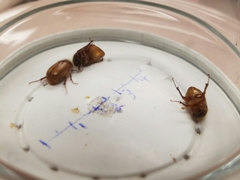 Phyllophaga crinitaDamages trees, gardens or crops
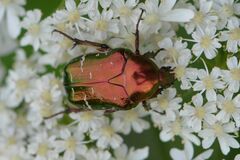 European Rose ChaferCetonia aurata
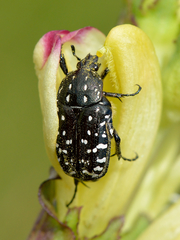 Mediterranean Spotted ChaferOxythyrea funestaDamages trees, gardens or crops
 Oriental BeetleExomala orientalisDamages trees, gardens or crops
Sources
- Wikipedia: https://en.wikipedia.org/wiki/Gnorimella
Look it up elsewhere: GBIF · iNaturalist · BugGuide · ITIS · Wikipedia
Text written 2026-10-26 from the sources above and checked sentence by sentence against them. Data fetched 2026-10-26.