 Bug FAQ
Lyre moth
Cnephasia jactatana · Order: Lepidoptera · Family: Tortricidae
Source: Wikipedia
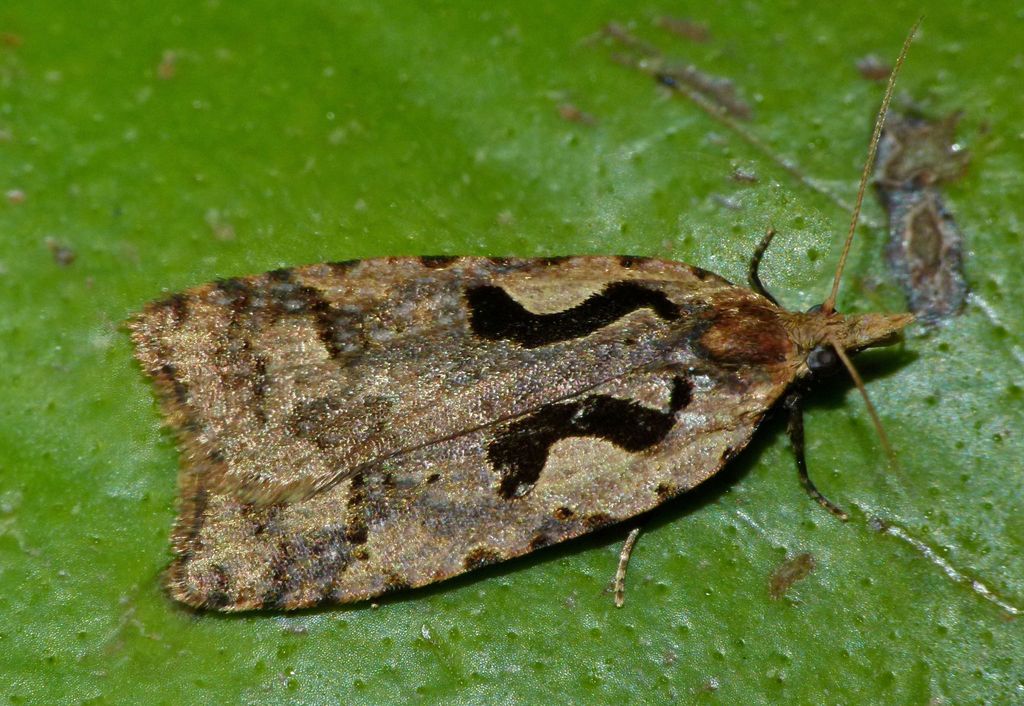
It is a native New Zealand moth that feeds on a wide range of fruit-bearing plants. Larvae live in silken tubes on the hound's tongue fern and eggs are laid on the topside of older leaves.
Source: Wikipedia
How to recognize it
Junior synonyms include Batodes jactatana, Sciaphila flexivittana, Paedisca privatana and Paedisca voluta.
Source: Wikipedia
Where it lives
The caterpillars build silken tubes on the hound's tongue fern and feed on its leaves.
Source: Wikipedia
What it eats
Caterpillars are pests of kiwifruit and also feed on citrus, hawthorn, persimmon, ebony, eucalyptus, fuchsia and grapevine leaves, sometimes damaging fruit husks.
Source: Wikipedia
Life cycle
Eggs are laid on the topside of leaves, preferably older ones.
Source: Wikipedia
Lookalikes
Synonyms listed under junior names are Batodes jactatana, Sciaphila flexivittana, Paedisca privatana and Paedisca voluta.
Source: Wikipedia
Questions people ask
What plants does the lyre moth damage?
Its larvae feed on kiwifruit and many other fruit-bearing plants such as citrus, hawthorn, persimmon, ebony, eucalyptus, fuchsia and grapevine.
Source: Wikipedia
Same family (Tortricidae)
 Oblique-banded Leafroller MothChoristoneura rosaceanaDamages trees, gardens or crops
 Garden TortrixClepsis peritanaDamages trees, gardens or crops
 Common MarbleSyricoris lacunanaDamages trees, gardens or crops
 Red-banded Leafroller MothArgyrotaenia velutinanaDamages trees, gardens or crops
 Light Brown Apple MothEpiphyas postvittanaDamages trees, gardens or crops
 Filbertworm MothCydia latiferreanaDamages trees, gardens or crops
Sources
- Wikipedia: https://en.wikipedia.org/wiki/Black-lyre_leafroller_moth
Look it up elsewhere: GBIF · iNaturalist · BugGuide · Wikipedia
Text written 2026-10-23 from the sources above and checked sentence by sentence against them. Data fetched 2026-10-23.