 Bug FAQ
Long Skimmer
Orthetrum trinacria · Order: Odonata · Family: Libellulidae
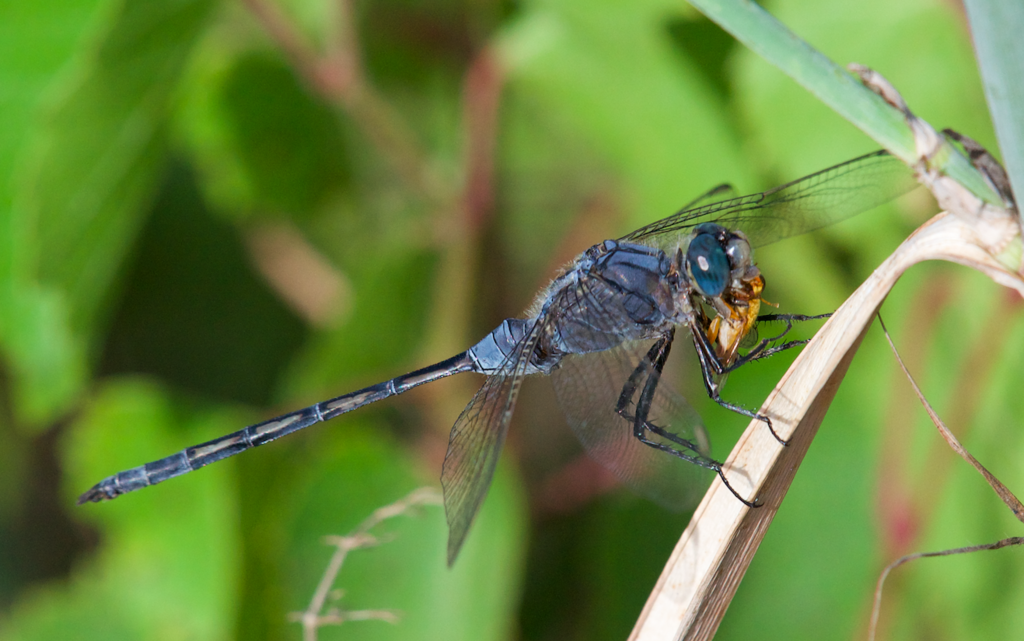
The Long Skimmer (Orthetrum trinacria) is a dragonfly in the family Libellulidae. It lives near rivers, wetlands, swamps, lakes and marshes, and it also breeds in parts of southern Spain and the Canary Islands. Its distribution includes many African countries, parts of southern Europe, and it has been recorded in the Maltese Islands where it bred on Gozo.
Source: Wikipedia
How to recognize it
Orthetrum trinacria, called the Long Skimmer, belongs to the dragonfly family Libellulidae.
Source: Wikipedia
Where it lives
It also breeds in southern Spain (Murcia and Málaga provinces) and the Canary Islands.
Source: Wikipedia
Where it comes from
It is found across many African nations, in Italy’s islands (Sicily, Sardinia, Corsica), and in parts of southern Europe.
Source: Wikipedia
Where it is found in the US
Recorded in 1 of 51 states and DC. Most records: Washington.
Darker = more records. Counts are museum and citizen-science records, not population size.
Source: GBIF
Questions people ask
Where is the Long Skimmer found?
It occurs in many African countries, Italy’s islands, France’s Corsica, and has been recorded breeding in the Maltese Islands.
Source: Wikipedia
What habitats does the Long Skimmer use?
It lives near rivers, wetlands, swamps, lakes and marshes, and also breeds in southern Spain and the Canary Islands.
Source: Wikipedia
Same family (Libellulidae)

Sources
- Wikipedia: https://en.wikipedia.org/wiki/Orthetrum_trinacria
Look it up elsewhere: GBIF · iNaturalist · BugGuide · Wikipedia
Text written 2026-10-23 from the sources above and checked sentence by sentence against them. Data fetched 2026-10-22.