 Bug FAQ
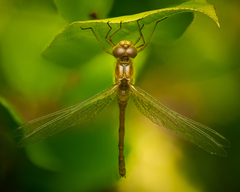
Lilypad Whiteface
Leucorrhinia caudalis · Order: Odonata · Family: Libellulidae
Also called: Dainty White-faced Darter

The lilypad whiteface is a large dragonfly with a broad clubtail and males show dark bodies with white on the face, abdomen and wing tips. It lives in swamps, lakes and other forest water bodies rich in water-lilies, ranging from central Siberia to western Europe. Adults appear from mid-May to early August, most commonly in June, while larvae develop for one to three years depending on climate.
Source: Wikipedia
Size
It is a large species with a broad clubtail.
Source: Wikipedia
Where it lives
It inhabits swamps, freshwater lakes and other aquatic sites in forests, such as ponds, pools, peat excavations and water bodies with abundant Nymphaea and Nuphar lilies.
Source: Wikipedia
What it eats
Exuviae are left on vegetation near the water. Larvae have large spines that let them survive in fish-rich waters better than other dragonflies.
Source: Wikipedia
Life cycle
Larval development can take up to three years in Scandinavia but usually only one year in warmer areas.
Source: Wikipedia
When you see it
Adults are on the wing from mid-May to early August, with peak numbers in June.
Source: Wikipedia
Where it comes from
Its Palearctic range extends from central Siberia to western Europe.
Source: Wikipedia
Questions people ask
When can I see adult lilypad whitefaces?
Adults are visible from mid-May to early August, most commonly in June.
Source: Wikipedia
Same family (Libellulidae)


Sources
- Wikipedia: https://en.wikipedia.org/wiki/Leucorrhinia_caudalis
Look it up elsewhere: GBIF · iNaturalist · BugGuide · Wikipedia
Text written 2026-10-23 from the sources above and checked sentence by sentence against them. Data fetched 2026-10-23.