 Bug FAQ
Lilac Root Weevil
Otiorhynchus meridionalis · Order: Coleoptera · Family: Curculionidae
Also called: Weevil
Source: Wikipedia
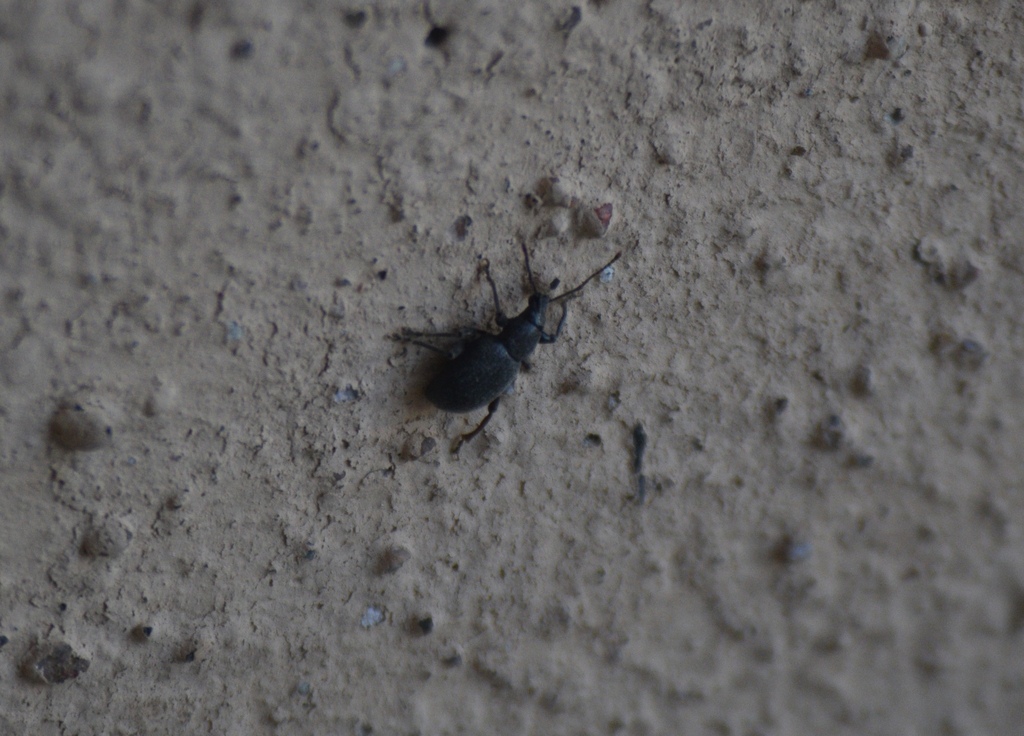
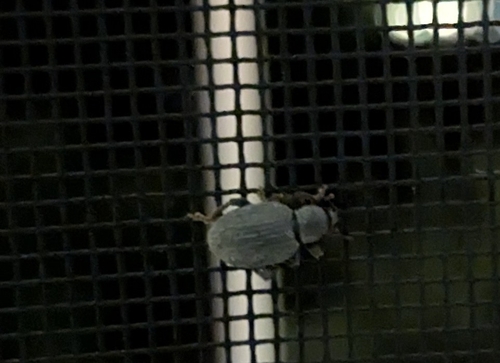
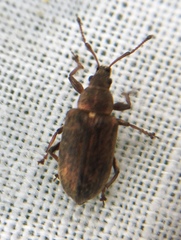
Lilac root weevils are small, shiny brownish-black beetles about 0.25 in (6 mm) long with a long snout and elbowed antennae. Adults feed on leaf edges, making numerous U-shaped notches, while larvae feed on plant roots. They often wander into homes during hot summer months seeking shade and moisture, but they do not bite or sting people.
Source: Wikipedia
How to recognize it
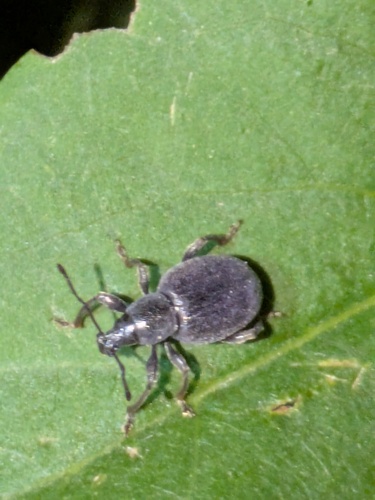
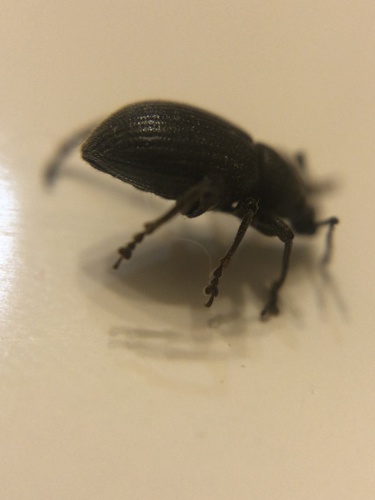
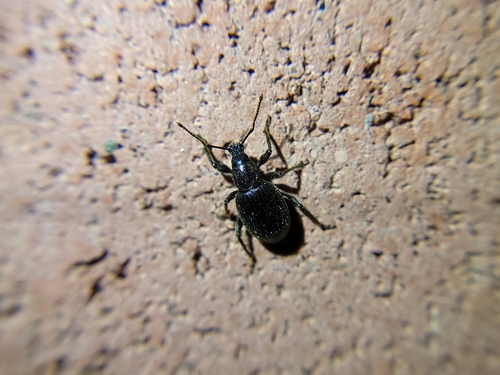
They are shiny, brownish-black beetles with a long snout and elbowed antennae.
Source: Wikipedia
Size
They measure about 0.25 inches (6 mm) in length.
Source: Wikipedia
Is it a pest in the house?
They often enter homes in summer seeking shade and moisture.
Source: Wikipedia
Does it bite or sting?
They do not bite or sting people, pets, or furnishings.
Source: Wikipedia
How to get rid of it
Use pyrethroid insecticides only for severe infestations; otherwise, remove the bugs manually.
Source: Wikipedia
Where it lives
They are commonly found on North American lilac but rarely cause lasting damage. In hot summer months they may wander into houses looking for shade and moisture.
Source: Wikipedia
What it eats
Larvae feed on plant roots, and adults eat leaf edges, leaving U-shaped notches.
Source: Wikipedia
Life cycle
Adult weevils are active at night.
Source: Wikipedia
When you see it
They are most likely to enter homes during the hot summer months.
Source: Wikipedia
Where it comes from
The species is found in North America.
Source: Wikipedia
Where it is found in the US
Recorded in 15 of 51 states and DC. Most records: Colorado, Utah, Idaho, Montana, Wyoming, Washington, Nevada, New Mexico.
Darker = more records. Counts are museum and citizen-science records, not population size.
Source: GBIF
Status: introduced in North America; introduced in United States; introduced in Canada. Source: iNaturalist
Months it is reported in the US
Source: GBIF
More photos
Questions people ask
How can I get rid of lilac root weevils?
Apply a pyrethroid insecticide only if the infestation is severe; for occasional bugs, simply pick them out.
Source: Wikipedia
Why do they appear in my house?
They wander indoors during hot summer months looking for shade and moisture.
Source: Wikipedia
Same family (Curculionidae)
 Green Immigrant Leaf WeevilPolydrusus formosusDamages trees, gardens or crops
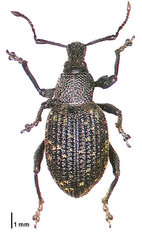 Black Vine WeevilOtiorhynchus sulcatusDamages trees, gardens or crops
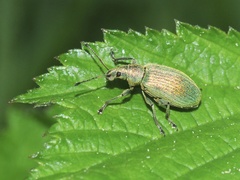 Nettle weevilPhyllobius pomaceusDamages trees, gardens or crops
 Asian Oak WeevilCyrtepistomus castaneusDamages trees, gardens or crops
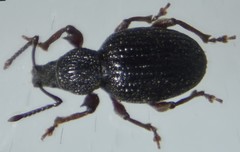 Strawberry Root WeevilOtiorhynchus ovatusDamages trees, gardens or crops
 Common Leaf WeevilPhyllobius pyriDamages trees, gardens or crops
Sources
- Wikipedia: https://en.wikipedia.org/wiki/Otiorhynchus_meridionalis
Look it up elsewhere: GBIF · iNaturalist · BugGuide · ITIS · Wikipedia
Text written 2026-10-24 from the sources above and checked sentence by sentence against them. Data fetched 2026-10-24.