 Bug FAQ
Lettered Habrosyne Moth
Habrosyne scripta · Order: Lepidoptera · Family: Drepanidae
Also called: Lettered Habrosyne
Source: Wikipedia
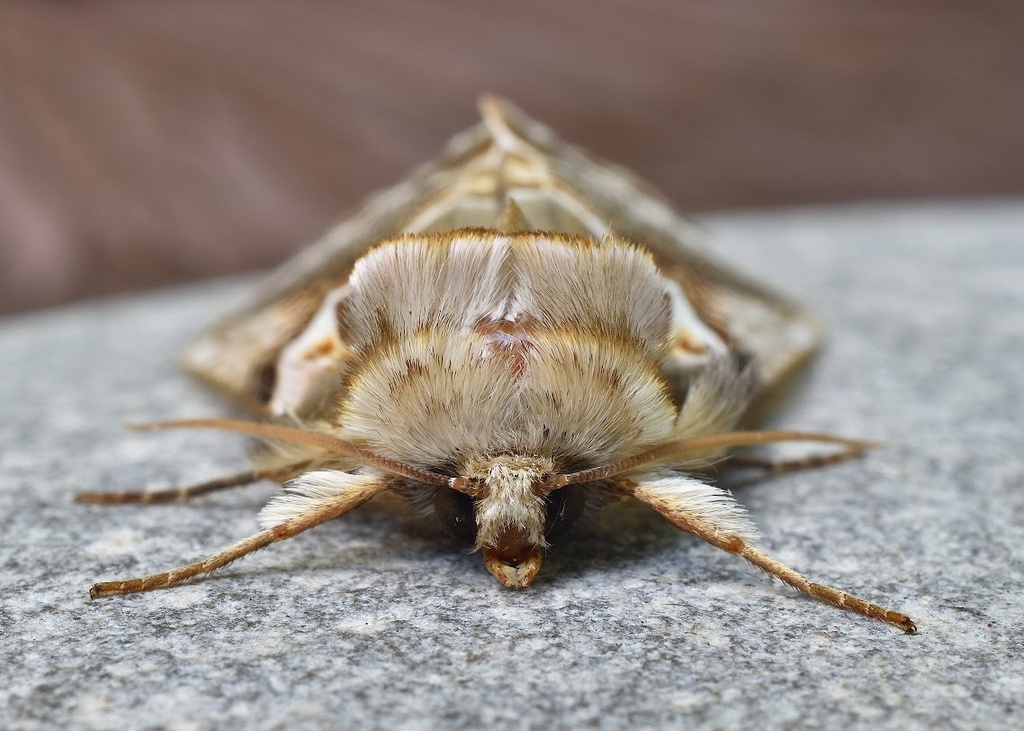
The lettered habrosyne moth has a wingspan of about 30 to 39 mm. Adults are seen flying from May through August and produce two generations each year.
Source: Wikipedia
How to recognize it
Habrosyne scripta, called the lettered habrosyne or scribe, belongs to the Drepanidae family.
Source: Wikipedia
Size
Its wingspan ranges from 30 to 39 mm.
Source: Wikipedia
What it eats
The caterpillars eat the leaves of Rubus species such as black raspberry and purple-flowering raspberry.
Source: Wikipedia
Life cycle
Adults are on the wing from May to August, producing two generations each year.
Source: Wikipedia
When you see it
Adults are active from May through August.
Source: Wikipedia
Where it comes from
Its native range includes southern Canada and the northern United States.
Source: Wikipedia
Lookalikes
It is a moth of the family Drepanidae, known as the lettered habrosyne or scribe.
Source: Wikipedia
Where it is found in the US
Recorded in 33 of 51 states and DC. Most records: Vermont, New York, Washington, Minnesota, Oregon, Alaska, Maine, Massachusetts.
Darker = more records. Counts are museum and citizen-science records, not population size.
Source: GBIF
Status: native in North America; native in Canada; native in United States. Source: iNaturalist
Months it is reported in the US
Source: GBIF
More photos

Questions people ask
What do the caterpillars eat?
They feed on the leaves of raspberry plants and other Rubus species.
Source: Wikipedia
When can I see adult lettered habrosyne moths?
Adults fly from May to August, with two generations each summer.
Source: Wikipedia
Same family (Drepanidae)


Sources
- Wikipedia: https://en.wikipedia.org/wiki/Habrosyne_scripta
Look it up elsewhere: GBIF · iNaturalist · BugGuide · Wikipedia
Text written 2026-10-23 from the sources above and checked sentence by sentence against them. Data fetched 2026-10-23.