 Bug FAQ
Buff Arches
Habrosyne pyritoides · Order: Lepidoptera · Family: Drepanidae
Source: Wikipedia
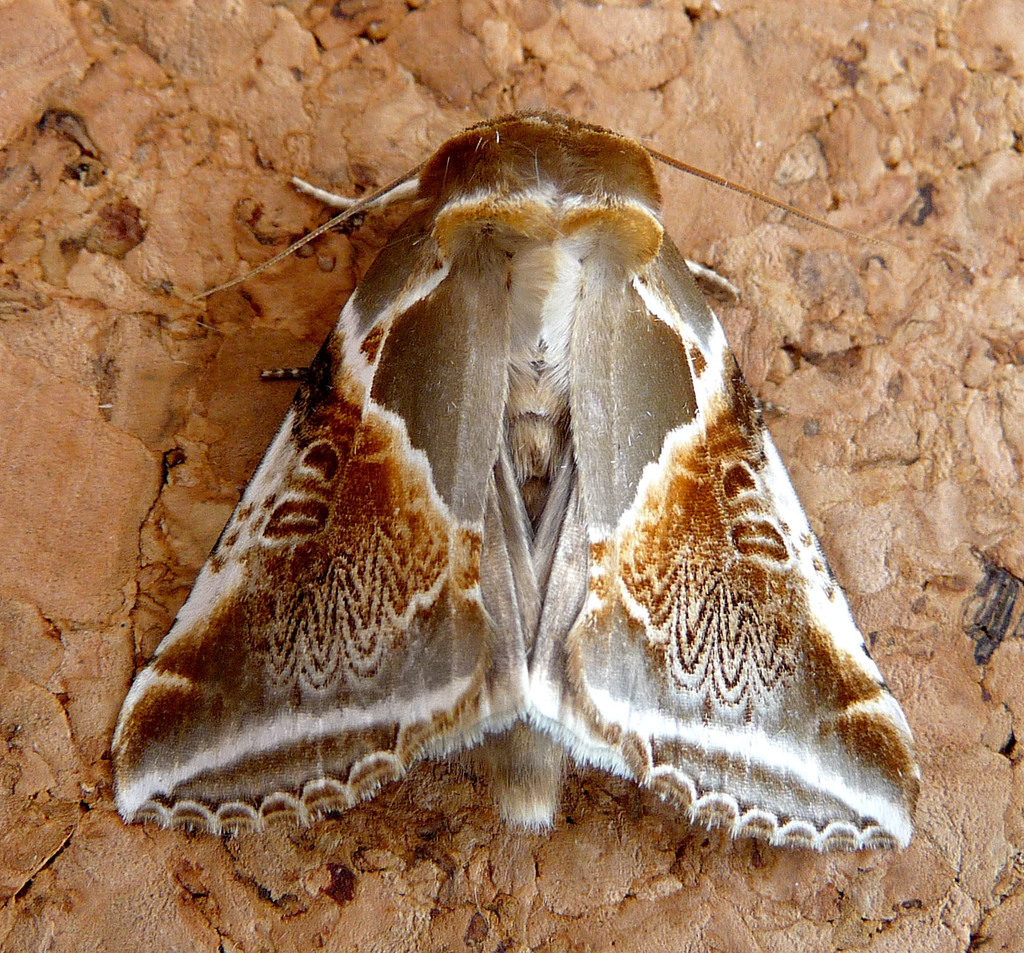
The Buff Arches moth has a wingspan of about 40 to 45 mm. Its forewings are grey-brown with bold buff-orange arches, while the hindwings are grey with white edges. It lives in both deciduous and coniferous woods as well as gardens and parks, and flies from June through August, being attracted to light and sugary baits.
Source: Wikipedia
How to recognize it
Forewings are grey-brown marked with striking buff-orange arches; hindwings are grey with white margins.
Source: Wikipedia
Size
Wingspan ranges from 40 to 45 mm.
Source: Wikipedia
Where it lives
Found in mixed forests, gardens and parks where its food plants grow.
Source: Wikipedia
What it eats
Larvae feed on the leaves of bramble, hawthorn and hazel.
Source: Wikipedia
Life cycle
Overwinters in the pupal stage.
Source: Wikipedia
When you see it
Adults are on the wing from June to August and are drawn to light and sugar.
Source: Wikipedia
Where it comes from
Distributed across Europe and most of the British Isles, except far-north England and all of Scotland.
Source: Wikipedia
Questions people ask
Do Buff Arches moths damage garden plants?
Yes, their caterpillars feed on bramble, hawthorn and hazel, which can harm those shrubs.
Source: Wikipedia
When can I see Buff Arches moths?
Adults fly during the summer months, roughly June through August, and are attracted to lights and sugary substances.
Source: Wikipedia
Same family (Drepanidae)



Sources
- Wikipedia: https://en.wikipedia.org/wiki/Buff_arches
Look it up elsewhere: GBIF · iNaturalist · BugGuide · Wikipedia
Text written 2026-10-22 from the sources above and checked sentence by sentence against them. Data fetched 2026-10-22.