 Bug FAQ
Lesser Triceratops Beetle
Hemiphileurus illatus · Order: Coleoptera · Family: Scarabaeidae
Source: Wikipedia
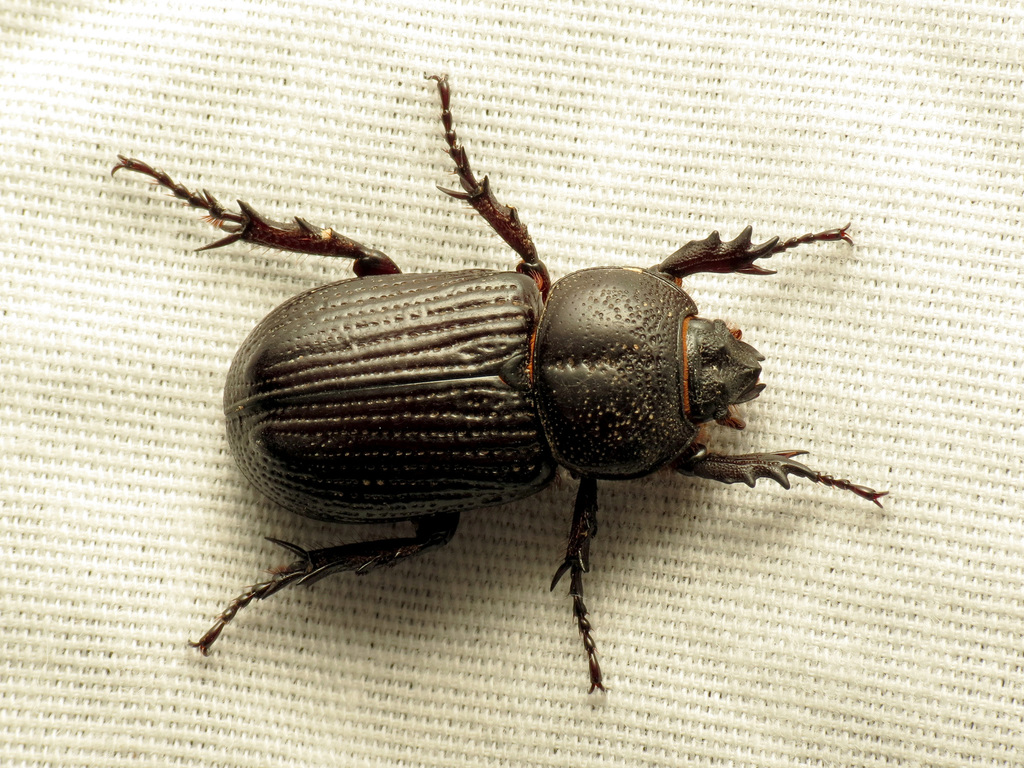
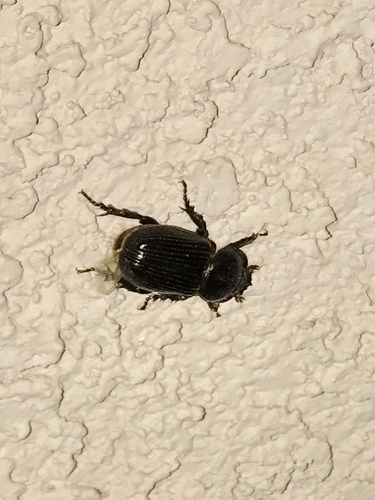
The lesser triceratops beetle is a 19-25 mm black beetle with a pitted thorax, elytra and short spines on all six legs. It lives in the southwestern United States to especially Arizona, Nevada, New Mexico and California to and can be found in both rural areas and urban compost heaps. Adults feed on decaying plant material and dead insects, and they are not a pest to crops, homes, people or pets.
Source: Wikipedia
How to recognize it
Adults are black with a pitted thorax and elytra. All six legs bear short spines.
Source: Wikipedia
Size
They measure between 19 and 25 mm in length.
Source: Wikipedia
Does it bite or sting?
They do not bite or sting people or pets.
Source: Wikipedia
How to get rid of it
They are low-maintenance but not especially popular among beetle keepers.
Source: Wikipedia
Where it lives
They occur in both urban and rural settings. In cities they are often found around compost piles.
Source: Wikipedia
What it eats
Adults are detritivores and scavengers, eating fresh or rotting plant matter and dead insects. In captivity they will accept freshly-killed mealworms, fruits and vegetables.
Source: Wikipedia
Life cycle
Larvae have cream-colored bodies with reddish-brown heads. Pupae are exarate and can move their abdominal segments.
Source: Wikipedia
When you see it
When agitated, adults can stridulate, producing a quiet audible chirp.
Source: Wikipedia
Where it comes from
Their native range is the southwestern United States. They are most common in Arizona, Nevada, New Mexico and California.
Source: Wikipedia
Lookalikes
Unlike the close relative Phileurus truncatus, neither sex has the distinctive third horn.
Source: Wikipedia
Where it is found in the US
Recorded in 10 of 51 states and DC. Most records: Arizona, California, Texas, Nevada, Florida, Arkansas, New Mexico, Georgia.
Darker = more records. Counts are museum and citizen-science records, not population size.
Source: GBIF
Months it is reported in the US
Source: GBIF
More photos
Questions people ask
How can I identify a lesser triceratops beetle?
Look for a black beetle about 2 cm long with a pitted thorax and elytra, and short spines on all six legs.
Source: Wikipedia
Where might I find them around my home?
In the southwestern US they are common in both rural areas and urban compost heaps.
Source: Wikipedia
Are they a problem for my garden or pantry?
They feed on decaying plant material and dead insects and are not a pest to crops, stored food, or household items.
Source: Wikipedia
Same family (Scarabaeidae)
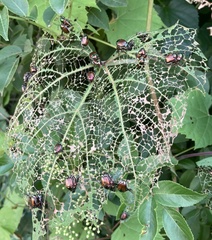 Japanese BeetlePopillia japonicaDamages trees, gardens or crops
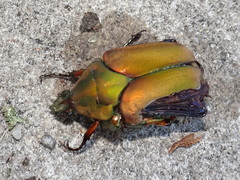 Common Green June BeetleCotinis nitidaDamages trees, gardens or crops
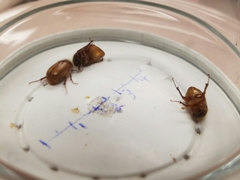 Phyllophaga crinitaDamages trees, gardens or crops
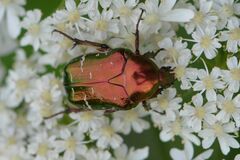 European Rose ChaferCetonia aurata
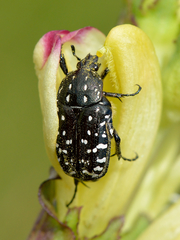 Mediterranean Spotted ChaferOxythyrea funestaDamages trees, gardens or crops
 Oriental BeetleExomala orientalisDamages trees, gardens or crops
Sources
- Wikipedia: https://en.wikipedia.org/wiki/Hemiphileurus_illatus
Look it up elsewhere: GBIF · iNaturalist · BugGuide · ITIS · Wikipedia
Text written 2026-10-24 from the sources above and checked sentence by sentence against them. Data fetched 2026-10-24.