 Bug FAQ
Lesser Marbled Fritillary
Brenthis ino · Order: Lepidoptera · Family: Nymphalidae
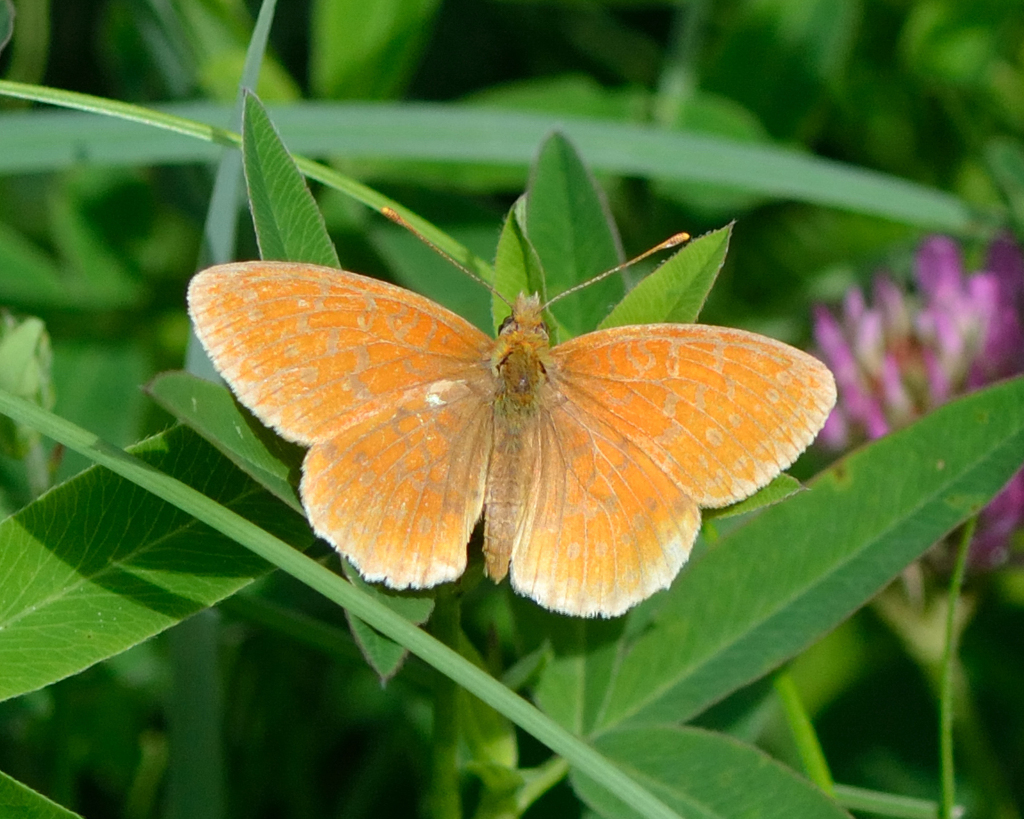
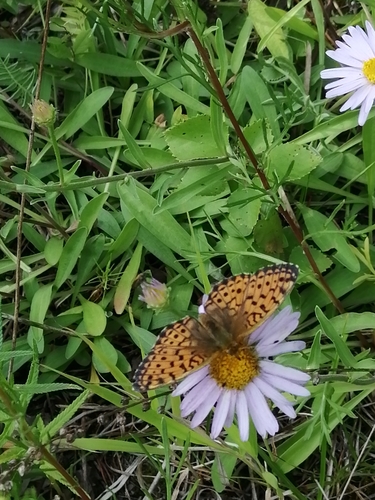
The lesser marbled fritillary is a medium butterfly with a wingspan of about 34 to 42 mm; females are larger and darker than males. Its upper wings are orange with dark brown spots, while the underside is creamy orange with indented edges and various brown and violet markings. It lives in damp meadows and bogs up to 1,500 m elevation, flies from June to August, and overwinters as a caterpillar.
Source: Wikipedia
Size
Wingspan ranges from 34 to 42 mm (1.3 to 1.7 in).
Source: Wikipedia
Where it lives
Prefers damp meadows and bogs from sea level up to 1,500 m.
Source: Wikipedia
What it eats
Caterpillars feed on meadowsweet, dropwort, stone bramble, raspberry, Aruncus, Spiraea and salad burnet.
Source: Wikipedia
Life cycle
Adults are on the wing from June to August, varying by location. Overwinters as a caterpillar.
Source: Wikipedia
When you see it
Flight period is June to August, depending on region.
Source: Wikipedia
Where it is found in the US
Recorded in 1 of 51 states and DC. Most records: Texas.
Darker = more records. Counts are museum and citizen-science records, not population size.
Source: GBIF
More photos
Questions people ask
How can I identify a lesser marbled fritillary?
Look for an orange upper wing with dark brown blotches and a creamy orange underside with indented edges and mixed brown-violet spots.
Source: Wikipedia
When are these butterflies active?
They fly from June through August, though exact timing varies by location.
Source: Wikipedia
What habitats do they prefer?
They favor damp meadows and bogs up to 1,500 m elevation.
Source: Wikipedia
What do the caterpillars eat?
Larvae feed on plants such as meadowsweet, dropwort, stone bramble, raspberry, Aruncus, Spiraea and salad burnet.
Source: Wikipedia
Same family (Nymphalidae)






Sources
- Wikipedia: https://en.wikipedia.org/wiki/Brenthis_ino
Look it up elsewhere: GBIF · iNaturalist · BugGuide · Wikipedia
Text written 2026-10-22 from the sources above and checked sentence by sentence against them. Data fetched 2026-10-22.